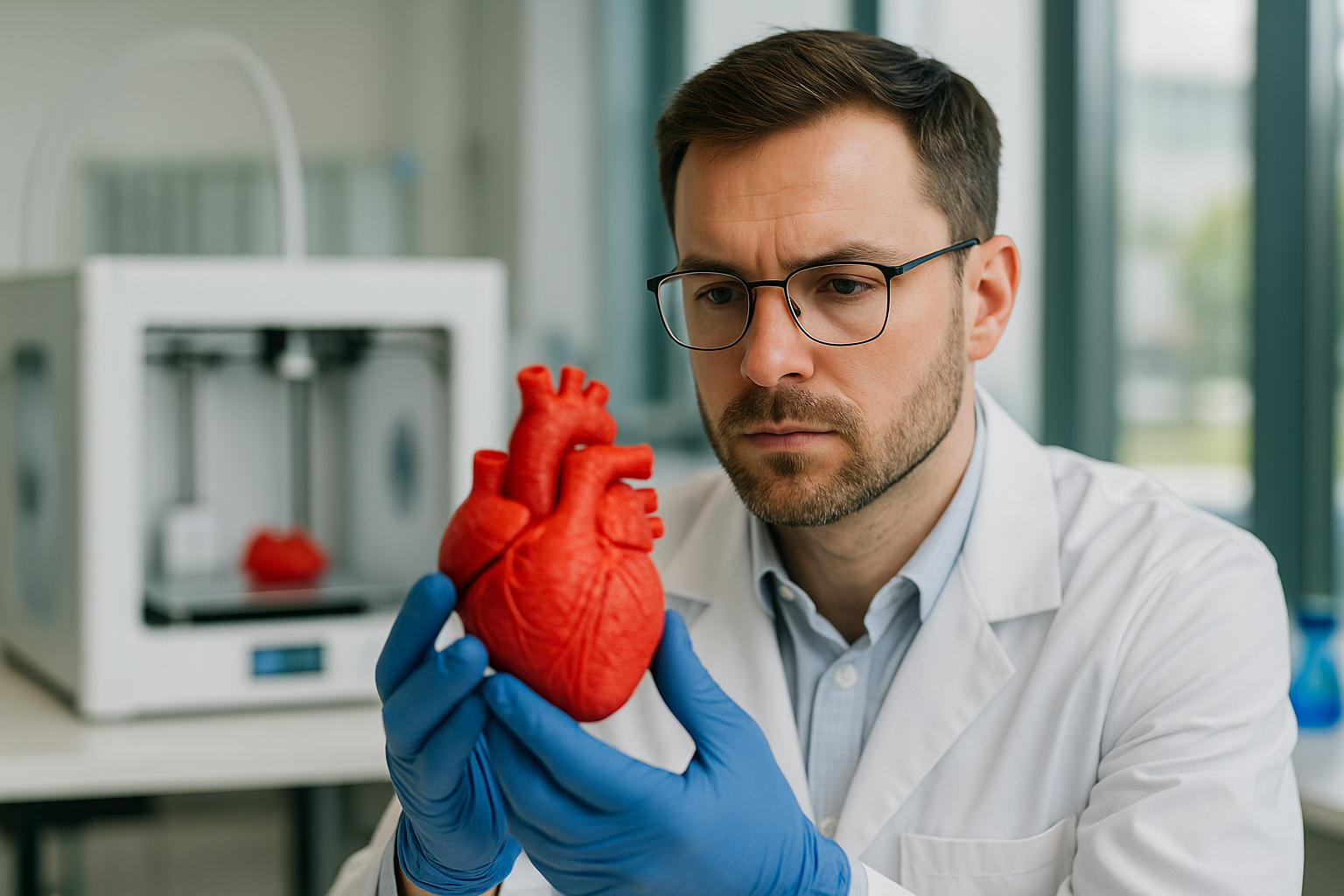
The world of medicine is being revolutionized by technology, and one of the most groundbreaking innovations is 3D printing. Once limited to manufacturing and prototyping, this technology is now shaping the future of healthcare — particularly in organ transplantation. Scientists are using 3D printing to create tissues, bones, and even functional organ structures, offering hope to millions of patients waiting for transplants.
The Organ Shortage Crisis
In the United States alone, over 100,000 people are currently waiting for organ transplants. Every day, patients die before receiving one, simply because there aren’t enough donors. Traditional organ donation — while life-saving — can’t keep up with the growing demand. That’s where 3D bioprinting steps in as a potential game changer.
By using a patient’s own cells and bio-inks (materials compatible with the human body), researchers can “print” tissues layer by layer, creating structures that closely mimic natural organs. This approach not only addresses the shortage but also reduces the risk of rejection since the tissue originates from the patient.
How 3D Bioprinting Works
3D bioprinting begins with digital modeling, often created using MRI or CT scans of the patient’s existing anatomy. The printer then uses a mixture of living cells and biodegradable materials to build the organ structure, one layer at a time. Over time, the cells grow and fuse, forming functional tissues that can perform specific biological tasks.
While full organ printing (like hearts or kidneys) is still in experimental stages, significant progress has already been made in printing skin, cartilage, bone, and liver tissue. In some cases, these tissues are used for testing new drugs or studying diseases — reducing the need for animal testing and speeding up medical research.
Advantages Beyond Transplants
Beyond addressing donor shortages, 3D-printed organs could make healthcare more personalized. Surgeons can use patient-specific organ models to plan complex surgeries, reducing risks and improving outcomes. In addition, 3D printing can help create customized prosthetics and implants that perfectly fit individual anatomy.
The technology is also cutting down on costs and time. What used to take weeks in a lab can now be achieved in a matter of hours — a potential game-changer for emergency and trauma care in the future.
The Road Ahead
Despite its promise, 3D organ printing still faces hurdles — from regulatory approvals to ensuring long-term safety and functionality. Scientists are working to integrate blood vessels into printed organs, a crucial step for full-scale transplantation. Once perfected, this innovation could eliminate donor waiting lists entirely and transform how we think about organ replacement.
Conclusion
3D printing is redefining the future of organ transplants — shifting the focus from scarcity to sustainability. As research advances, the dream of printing fully functional human organs may soon become a reality, saving countless lives and marking a new era in regenerative medicine.