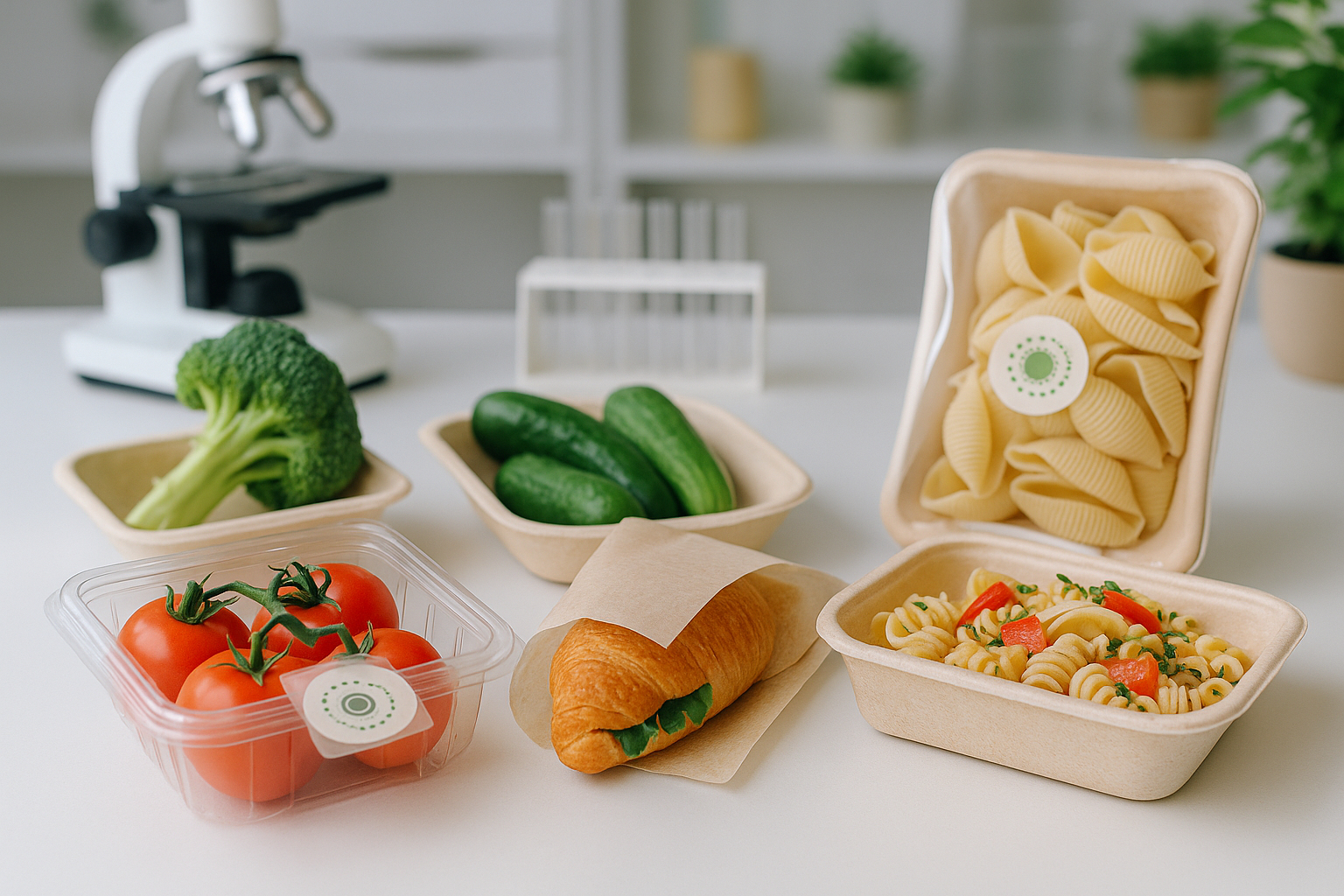
The global food industry is rapidly evolving, and packaging is at the heart of that transformation. As consumers demand safer, more sustainable products, companies are turning to smart packaging made from bio-based materials — innovations that protect both the planet and the food we eat. This new generation of packaging not only reduces environmental impact but also improves freshness, traceability, and safety throughout the supply chain.
What Is Smart Packaging?
Smart packaging refers to packaging systems that go beyond simple containment. Using sensors, indicators, and interactive technologies, it can monitor, detect, and communicate the condition of food in real time. From temperature-sensitive labels to freshness indicators, these solutions help reduce food waste and ensure consumer confidence in product quality.
When combined with bio-based materials — packaging derived from renewable sources like cornstarch, seaweed, cellulose, or sugarcane — smart packaging becomes both sustainable and functional. It’s a powerful step toward reducing reliance on plastics while maintaining food safety standards.
The Role of Bio-Based Materials in Food Safety
Bio-based packaging materials are designed to be biodegradable or compostable, addressing the environmental challenges posed by conventional plastics. But their role extends far beyond sustainability — they also enhance food safety in key ways:
-
Antimicrobial coatings: Natural bio-polymers can be infused with plant-based antimicrobials to slow bacterial growth.
-
Oxygen and moisture barriers: Advanced bioplastics regulate air and humidity, extending shelf life without chemical preservatives.
-
Edible films: Some innovations allow for edible packaging that eliminates waste entirely while maintaining freshness.
Researchers are also developing bio-sensors that detect spoilage gases or pH changes, allowing packaging to signal when food is no longer safe to consume.
How Smart Packaging Improves Traceability
Modern smart packaging integrates digital technologies such as QR codes, NFC tags, and blockchain tracking to ensure full transparency from farm to table. Consumers can scan a package to verify origin, expiration, and even storage conditions during transport.
For producers and retailers, these systems provide valuable data to optimize logistics, reduce spoilage, and ensure regulatory compliance.
Challenges and the Road Ahead
Despite its promise, bio-based smart packaging faces challenges — including production costs, material durability, and scalability. However, as innovation accelerates and consumer awareness grows, these barriers are rapidly being overcome. Governments and global brands are investing heavily in research to make sustainable packaging the industry standard.
Conclusion
Smart packaging made from bio-based materials represents the future of food safety and sustainability. By combining renewable materials with intelligent technology, the food industry is moving toward a future where packaging not only protects products — it protects people and the planet.