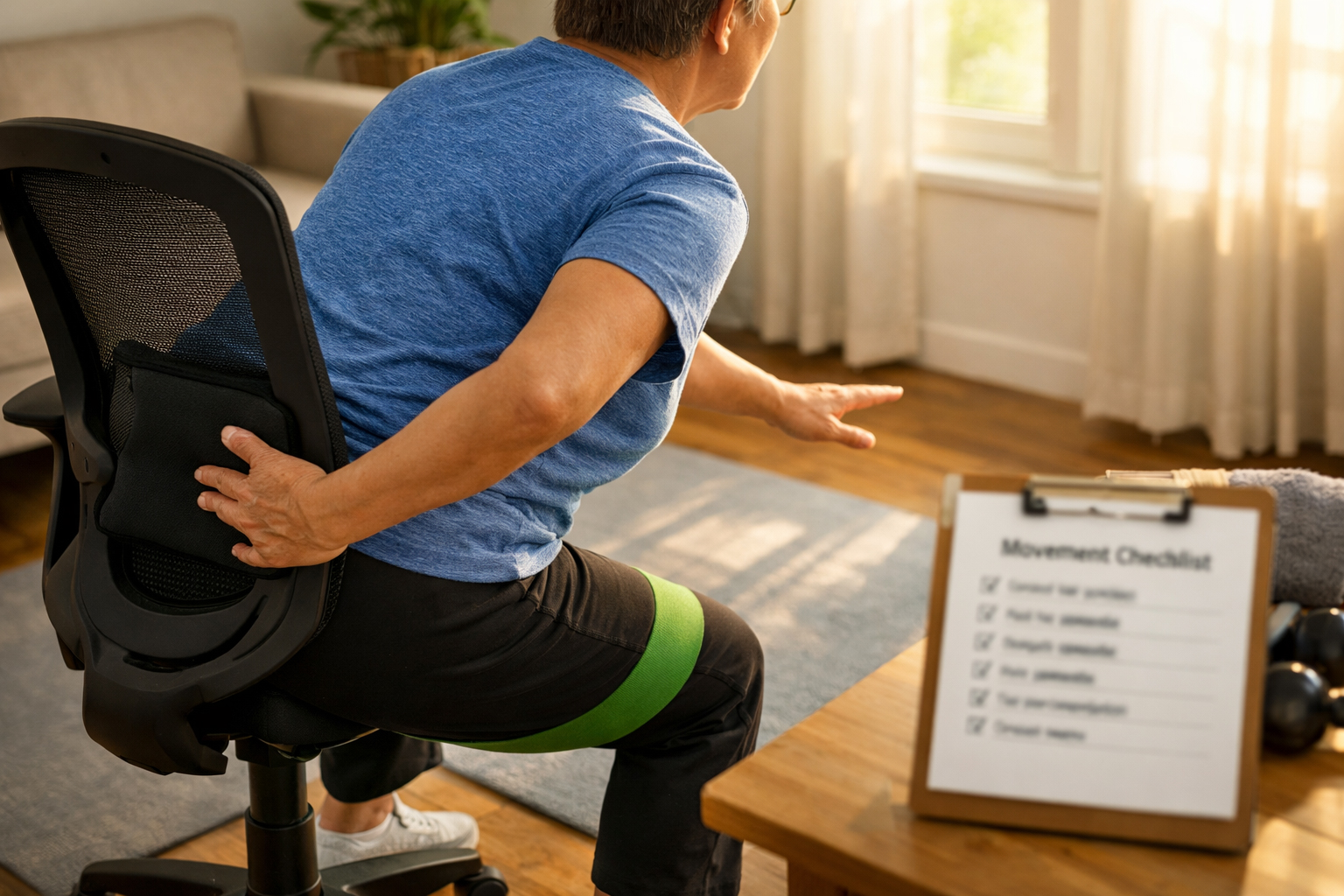
Managing ongoing muscle and joint discomfort starts with consistent, practical habits you can follow at home.
Small changes to posture, movement variety, and task setup can reduce strain and support daily function.
This article outlines approachable steps that combine gentle strengthening, flexibility, pacing, and ergonomic adjustments.
These strategies aim to keep you active while minimizing flare-ups and improving long-term comfort.
Assess Your Daily Movement Patterns
Begin by observing how you move through typical tasks: sitting, reaching, lifting, and standing. Look for repeated positions, awkward reaches, or tasks completed without breaks, since these patterns often contribute to gradual strain. Simple self-monitoring for a week reveals hotspots and opportunities to insert small changes into routines.
Use a short log or a phone reminder to note problem moments and easy fixes. Awareness is the first step; small adjustments often compound into meaningful reductions in discomfort when maintained consistently.
Build Low-Impact Strength and Flexibility
Focus on controlled, low-impact strength exercises and regular mobility work to support joints and distribute load more evenly. Aim for two to three short strength sessions per week, combined with daily flexibility or mobility flows that target tight or weak areas. Progress slowly, increasing intensity or duration only when symptoms remain stable.
- Short strength circuits: bodyweight or resistance bands, 10–15 minutes.
- Mobility flows: gentle spine, hip, and shoulder movements each day.
- Low-impact cardio: walking, cycling, or aquatic work to maintain endurance.
Consistency matters more than intensity; modest, regular practice builds resilience while reducing the risk of flare-ups. Modify exercises to avoid sharp pain and prioritize functional movement patterns.
Manage Flare-Ups and Recovery Strategies
When pain increases, adopt pacing techniques: reduce load, break tasks into smaller steps, and alternate activity with rest to avoid prolonged aggravation. Use basic self-care strategies such as targeted icing or heat, gentle movement, and prioritizing sleep and hydration to support recovery. Education about symptom behavior helps people stay active safely and avoid fear-driven inactivity.
Create a short recovery plan you can follow during flare-ups and identify activities to resume as symptoms ease. If pain prevents normal function or worsens despite sensible changes, consult a healthcare professional for tailored guidance.
Create an Ergonomic Home Environment
Arrange common work and living areas to reduce repetitive strain: optimize chair height, screen level, and reach distances for everyday tasks. Small changes like using a supportive chair, placing frequently used items within easy reach, and alternating standing and sitting can make substantial differences. Consider mattress and pillow support to protect joints overnight and reduce morning stiffness.
- Workstation: monitor at eye level, feet supported, neutral wrists.
- Kitchen and laundry: step stools and reorganized storage to avoid excessive reaching.
- Bedroom: sleep surfaces that maintain neutral spine alignment.
Ergonomic fixes are often low-cost and immediately beneficial; combine them with movement habits for best results. Regular reassessment ensures your setup evolves with changing needs.
Conclusion
Integrating ergonomic adjustments, thoughtful movement variety, and gradual strengthening supports long-term musculoskeletal health.
Small, consistent steps reduce strain and improve daily function without dramatic interventions.
Over time these practical habits create resilience and help you stay active with less discomfort.