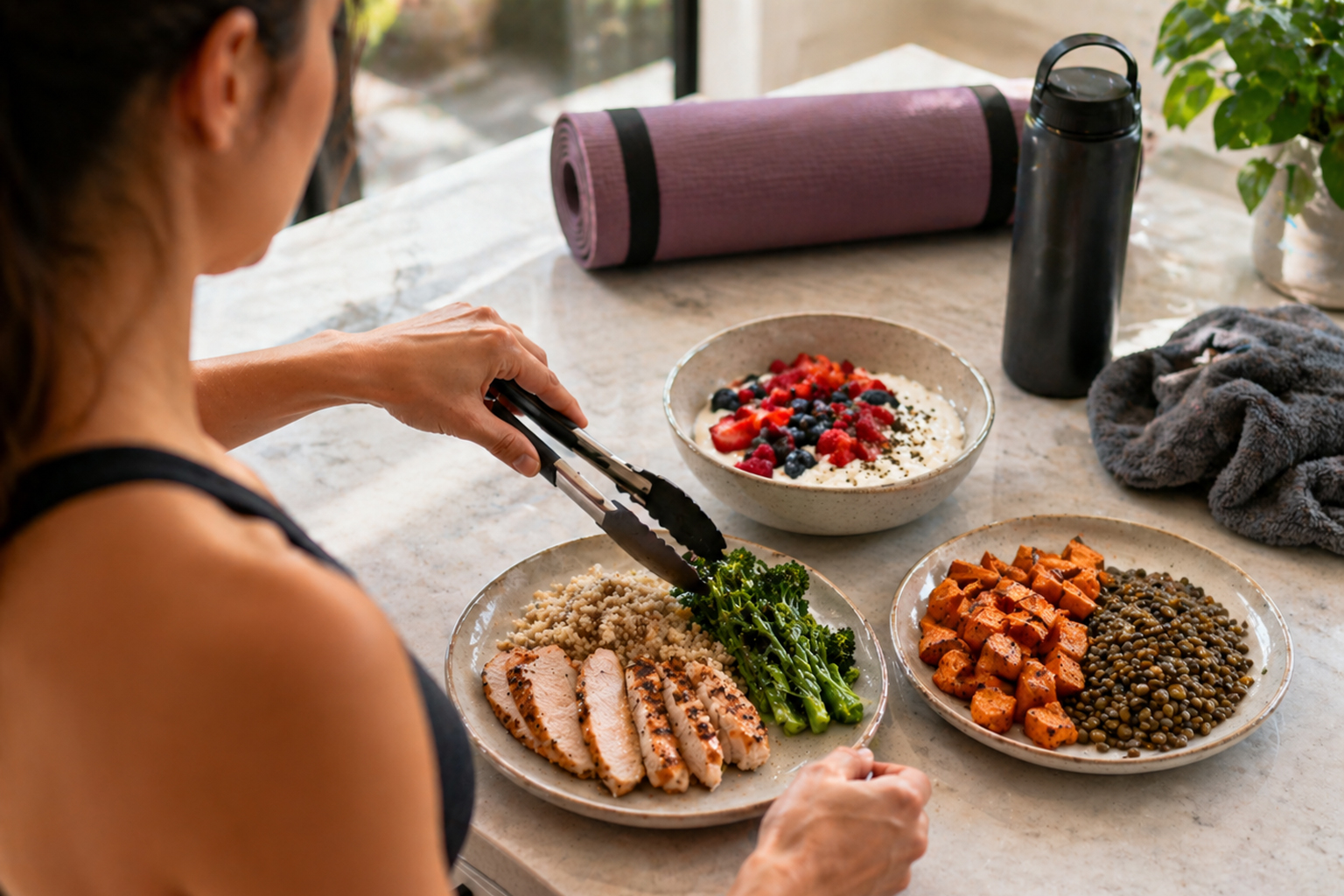
Repair, replenish, and restore are the three goals of any post-workout meal. Following a training session at home, the right plate helps muscle recovery and restores energy without overcomplicating the kitchen. This article outlines simple plate patterns you can assemble quickly with common ingredients. Use these ideas to keep nutrition consistent and support ongoing progress.
Why post-workout nutrition matters
Muscle protein synthesis, glycogen replenishment, and rehydration are the primary physiological needs after exercise. Combining protein and carbohydrate in reasonable amounts accelerates recovery and reduces next-session fatigue. For moderate home workouts, aim for a moderate portion of each rather than huge meals that can disrupt sleep or digestion. Prioritizing whole foods provides micronutrients that support immune function and repair.
Keeping portions practical and timing predictable makes it easier to stick with recovery habits. Small, repeatable plates win over occasional large meals.
What to include on your post-workout plate
A reliable post-workout plate has three components: protein to repair muscle, carbohydrates to restore energy, and a modest amount of healthy fat for satiety and nutrient absorption. Protein sources can be animal or plant-based; choose what you enjoy and can prepare quickly. Carbohydrates can be starchy vegetables, whole grains, or fruit depending on intensity and time of day. Add a colorful vegetable or salad to supply fiber and vitamins without heavy calories.
- Grilled chicken, quinoa, roasted sweet potato, steamed greens
- Greek yogurt with berries and a banana
- Lentil salad with brown rice and mixed vegetables
These combinations are easy to scale up or down. Swap ingredients to match taste and what’s in your pantry.
Timing and practical meal examples
Timing matters but is not rigid—aim to eat within 45–90 minutes after moderate workouts to optimize recovery. If a full meal isn’t possible, a small snack combining protein and carbohydrate (for example, a smoothie or yogurt with fruit) will bridge the gap. Evening sessions may benefit from lighter carbohydrate portions to avoid sleep disruption while still providing adequate protein for overnight repair. Meal prep components like cooked grains and roasted vegetables make assembly faster and reduce decision fatigue.
Plan two or three go-to plates and rotate them through the week. Consistency beats perfection when recovery is the goal.
Hydration and quick tips
Hydration is often overlooked but plays a central role in recovery and performance. Drink water steadily after training and consider an electrolyte-rich beverage after very sweaty sessions to replace sodium and potassium. Including water-rich foods such as fruit or broth-based soups can also help restore fluid balance without extra preparation.
Set a simple habit like finishing a glass before and after your meal to make it consistent. Small routines around fluid intake complement the plate and speed recovery.
Conclusion
A simple, balanced plate after home workouts supports recovery, refuels energy stores, and helps maintain momentum. Focus on protein plus carbohydrate, add vegetables, and choose portions that match your session intensity. Small, repeatable habits around food are a reliable way to improve performance over time.