Persistent muscle and joint discomfort can be managed with thoughtful, home-based routines that prioritize movement quality over intensity.
Small, consistent practices reduce stiffness, improve function, and lower flare-up risk over time.
This article outlines practical steps to assess movement, build gentle strength, and adapt your environment for lasting comfort.
These approaches focus on pacing, safe progression, and integrating habits so they fit daily life.
You can use them whether you are new to movement or returning after a setback.
Assessing Your Daily Movement Patterns
Start by tracking how and when pain or stiffness appears during everyday activities. Note patterns: time of day, positions, and tasks that worsen symptoms, and which movements feel relieving. A brief diary for one to two weeks gives a clear picture without requiring professional testing. Understanding these triggers allows you to choose targeted, low-risk exercises and timing for rest.
Begin adjustments slowly and test changes for several days before progressing. Small insights from tracking often lead to meaningful reductions in strain.
Building Gentle Strength and Flexibility
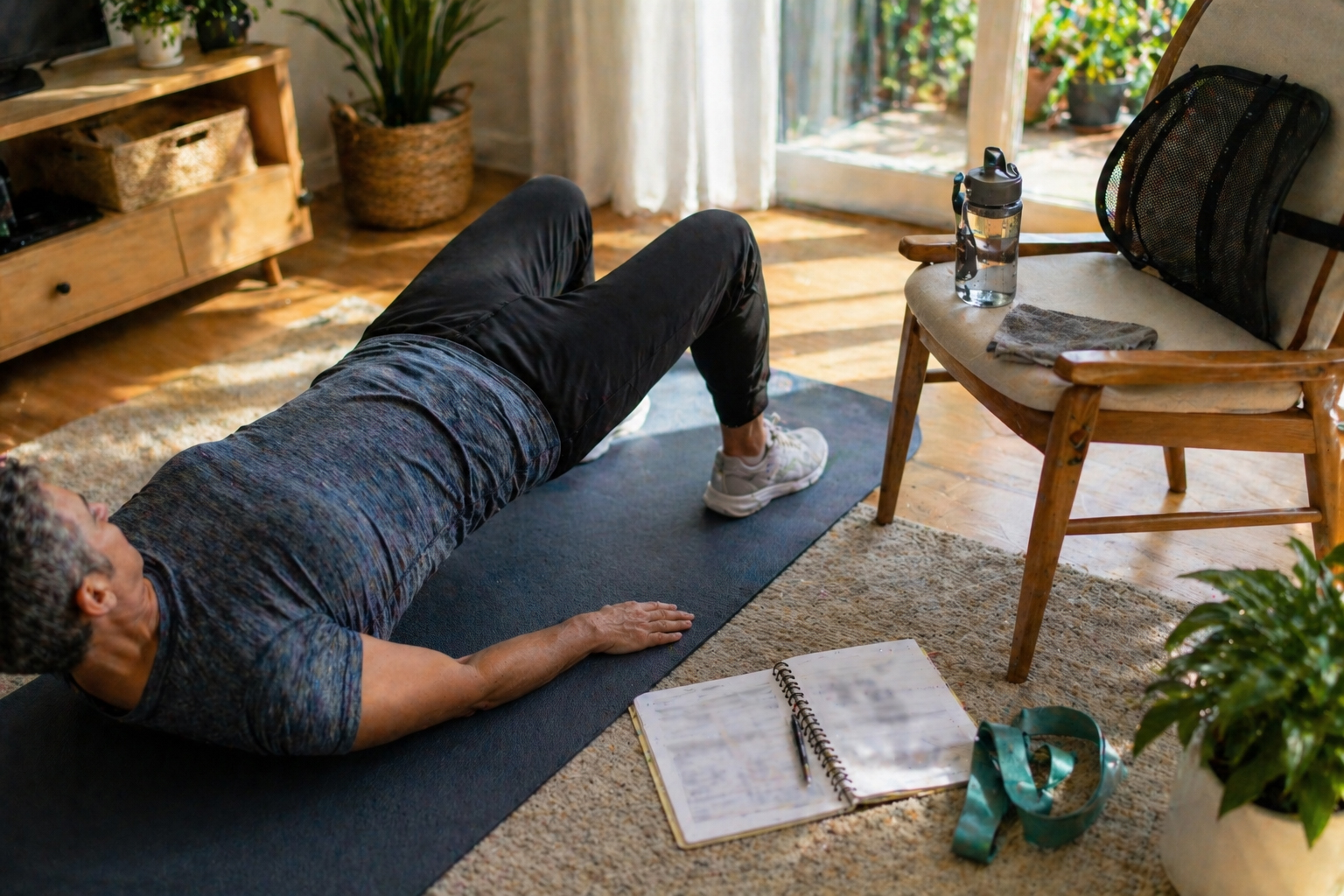
Focus on low-load strength moves that support joint alignment and muscle endurance rather than high intensity. Examples include seated leg presses against a wall, wall push-ups, and controlled hip bridges, performed with attention to breathing and form. Incorporate gentle range-of-motion work like slow hip circles, shoulder rolls, and ankle mobility routines to preserve joint health. Aim for consistency: short sessions most days outperform sporadic hard workouts.
Progress by adding gradual repetitions or slightly longer holds when you remain pain-stable. Respecting pain signals helps avoid setbacks and promotes steady gains.
Adapting Your Space and Routine
Small ergonomic changes can significantly reduce daily strain. Adjust chair height, use lumbar support, alternate between sitting and standing, and place frequently used items within easy reach to prevent awkward twisting or overreaching. Schedule micro-breaks for movement every 30 to 60 minutes to prevent stiffness accumulation. Light tools like resistance bands and a firm cushion offer inexpensive options for targeted support.
Consistency in environment and routine supports recovery by making healthy choices automatic. Make one change at a time so you can assess its effect.
When to Seek Professional Help
While many adjustments help, persistent worsening, numbness, or sudden loss of function warrant professional attention. If pain increases despite careful progression, or new systemic symptoms appear, consult a clinician for assessment and targeted guidance. A professional can help rule out serious causes, refine your program, and suggest imaging or referrals when appropriate.
Use professional advice to complement home routines and to establish safe milestones. Early guidance can speed recovery and prevent unnecessary setbacks.
Conclusion
Sustained comfort and improved movement come from small, consistent habits tailored to your daily life.
By assessing patterns, building gentle strength, and adapting your environment, you can reduce flare-ups and restore function.
Start modestly, monitor progress, and prioritize steady, pain-aware progression.