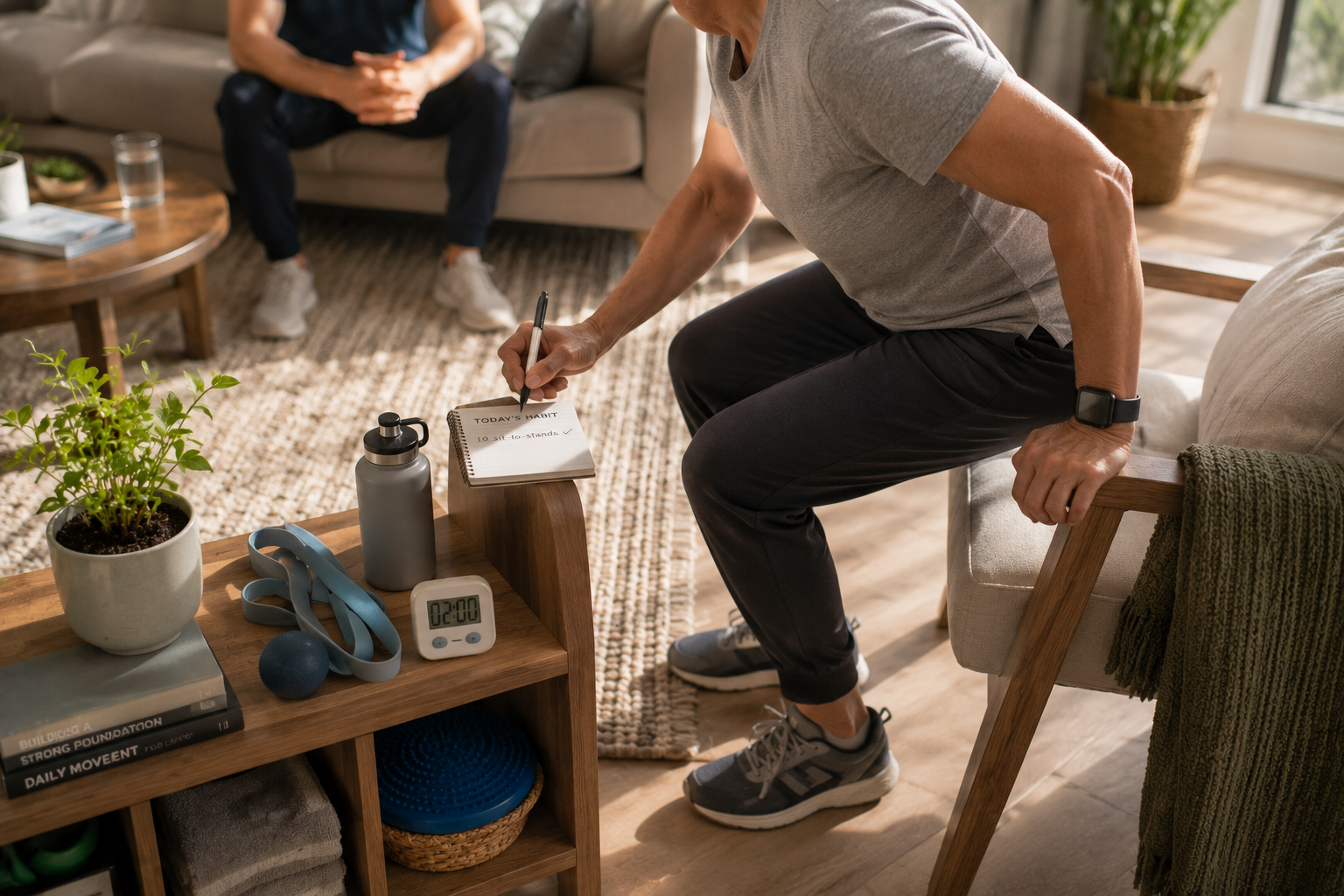
Small, consistent changes at home can interrupt the cycle of recurrent musculoskeletal flare-ups. Aim for routines that balance movement, rest, and gradual challenge to avoid sudden overload. Practical adjustments to how you move and set up daily spaces reduce the chance of symptom spikes. This approach focuses on sustainable habits rather than quick fixes.
Keeping plans simple and measurable helps maintain progress. When routines are realistic they fit into busy days. Prioritize safety and steady progression to build confidence.
Pace Activity with Micro-Progressions
Start by breaking tasks and exercises into micro-progressions that increase load or duration by small, predictable increments. Micro-progressions preserve tissue tolerance and reduce abrupt stress that often triggers flares. Track brief activity windows and rest intervals to understand your current thresholds. Over weeks, small gains add up to meaningful improvements without provoking setbacks.
Use simple data like perceived effort or minutes performed to guide increases. Gradual adjustments give you control and reduce fear of movement. Celebrate consistent adherence more than rapid advancement.
Adjust Home Ergonomics and Movement Loops
Reconfigure key zones—work, kitchen, relaxation—to minimize repetitive strain and awkward postures. Small changes such as seat height, item placement, and footwear can lower cumulative load across a day. Introduce movement loops: brief alternations between sitting, standing, and gentle mobility to prevent stiffness. These practical shifts reduce the daily burden on muscles and joints.
- Place frequently used items within easy reach.
- Alternate tasks every 20–40 minutes.
- Use supportive seating for sustained tasks.
Consistent environmental cues will make healthier patterns automatic. Adjustments should be realistic and maintainable long term.
Build Short Strength and Mobility Habits
Integrate focused micro-sessions for strength and mobility that take three to ten minutes each day. Choose exercises that target stability and controlled range rather than aggressive stretching or maximal effort. Short, frequent practice improves function and lowers injury risk compared with sporadic intense sessions. Consistency fosters neuromuscular control and resilience over time.
Keep exercises varied but simple to sustain interest. Progress only when you can perform current work comfortably and with good form.
Monitor Responses and Adapt Intentionally
Track how symptoms respond to changes in activity, sleep, and stress to identify patterns that precipitate flares. Use a brief log or app to record tolerance, pain levels, and function for informed adjustments. When a flare occurs, scale back intensity or duration and reintroduce load more gradually. Planning for predictable setbacks reduces anxiety and supports steady recovery.
Regular review of your routines helps you refine what works. Flexible plans that adapt to feedback are more sustainable.
Conclusion
Designing home routines around pacing, ergonomics, and short strength habits lowers the risk of recurrent flare-ups. Monitor responses and progress slowly to build durable improvements. Consistency and adaptability are the keys to long-term comfort and function.