Recovering mobility at home is often about small, repeatable choices more than dramatic sessions. Start with realistic expectations and a few practical changes to living routines that reduce strain and build stability. Focus on short, frequent activity bursts, thoughtful room layout, and simple aids that support movement without creating dependence. This approach helps protect healing tissue while steadily improving strength and balance.
Assess Your Spaces
Walk through the rooms you use most and note where you pause, reach, or transfer weight—these spots show where problems are likeliest to arise. Check lighting, slip hazards, and the height of chairs and counters so movements require less force and awkward twisting. A few targeted changes, like a non-slip mat by the sink or a stable chair with armrests, can make daily tasks far safer. These adjustments reduce the need for compensatory movements that slow recovery.
Keep changes simple and reversible so you can adapt as ability returns. Small fixes often offer immediate benefits to comfort and confidence.
Short Daily Practices
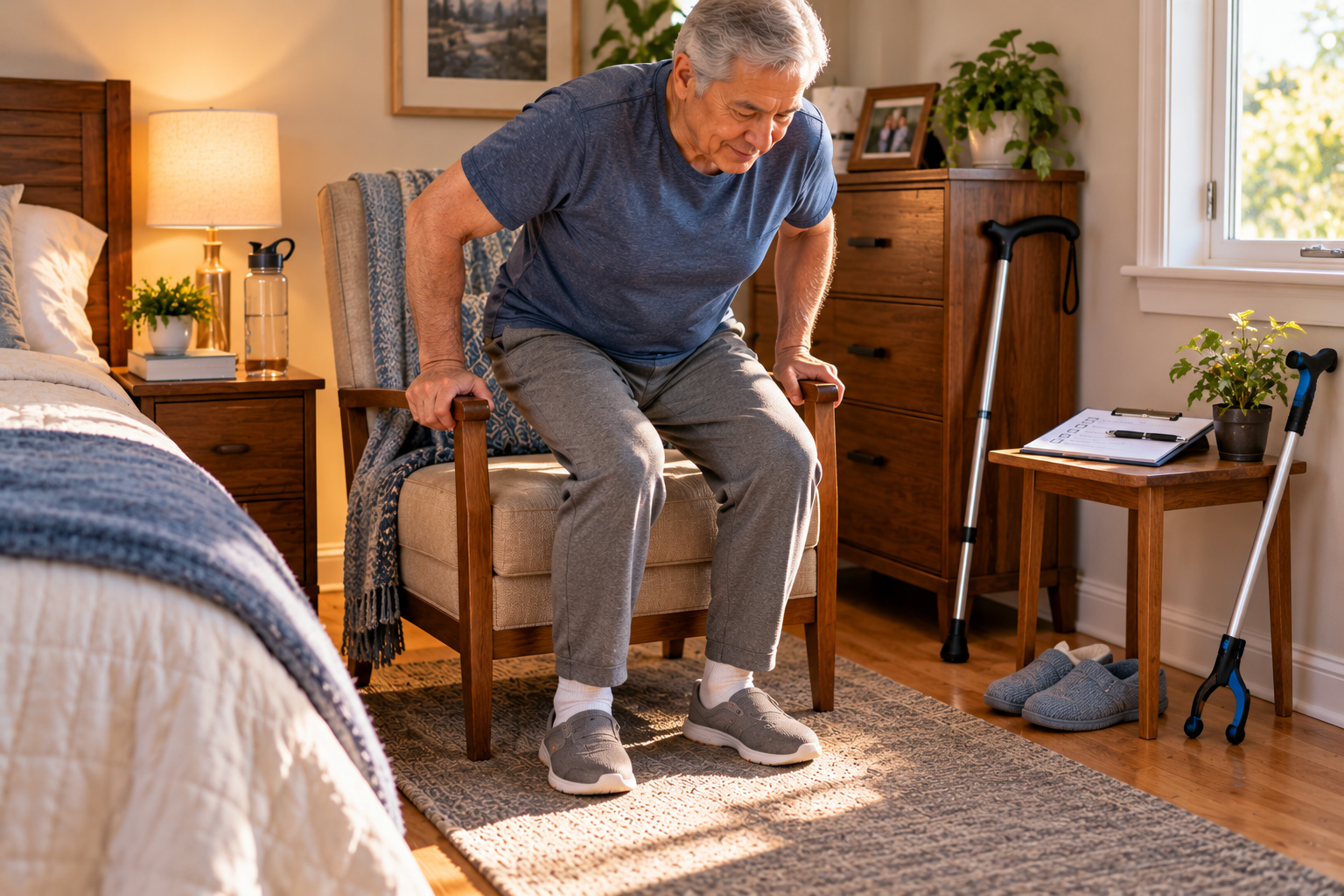
Build a routine of brief, focused movement sessions—three to five minutes several times daily—rather than one long workout. Include gentle balance challenges, sit-to-stand repetitions, and controlled reaching motions that mirror everyday tasks. Progress by adding a few more reps or slightly increasing reach distance as those movements feel easier. Consistency matters more than intensity when tissues are healing.
Record a simple checklist of three to five exercises and tick them off each day. Tracking progress helps maintain momentum without pressure.
Practical Supports and Tools
Choose aids that assist independence: grab bars near key transfers, a shower bench for seated bathing, and a cane or walker only when they improve safety. Use footwear with firm grip and cushioned soles, and keep commonly used items within easy reach to avoid unnecessary bending. Avoid over-reliance on tools that make you inactive; they should bridge gaps while you regain capacity. Select one or two tools to start and reassess their need weekly.
- Sturdy chair with armrests
- Non-slip bathroom mat
- Reach tool for high or low items
These small supports reduce risk and let you focus energy on rebuilding movement rather than preventing accidents.
When to Pause or Seek Help
Pause an activity if pain increases, swelling appears, or you feel unsteady beyond normal effort. Persistent or worsening symptoms, repeated near-falls, or difficulty performing basic tasks warrant professional advice. A therapist can refine exercises, suggest progressive goals, and recommend modifications tailored to your condition. Early guidance helps prevent setbacks and speeds reliable progress.
Plan brief re-evaluations every week or two to adjust your plan. Small, timely changes keep recovery moving forward safely.
Conclusion
Small, consistent home habits and modest environment tweaks rebuild movement without pushing healing tissues too fast. Prioritize safety, short daily practices, and practical supports that increase independence. Check in with a clinician if pain or instability persists so you can keep progressing with confidence.