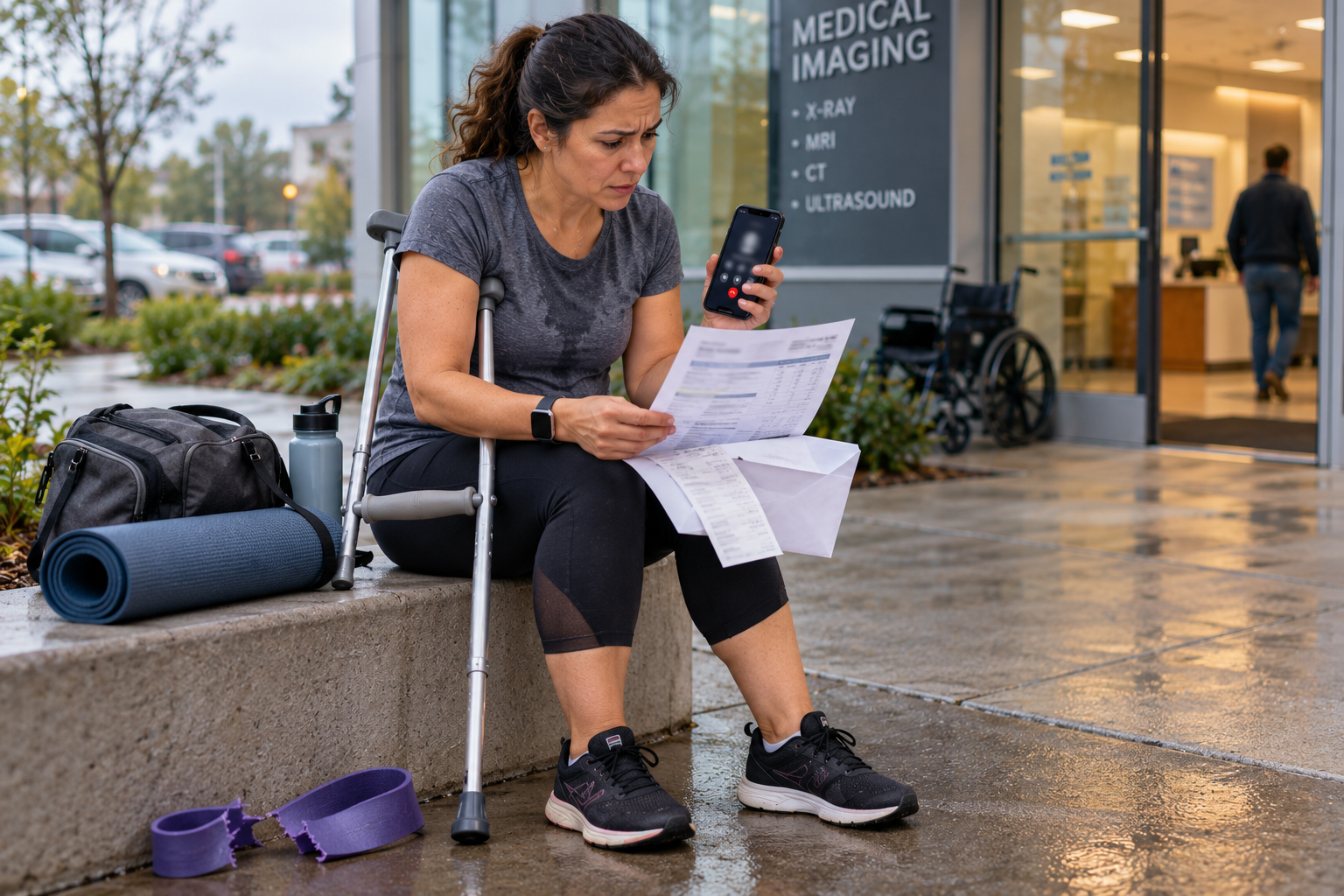
Minor strains and small slips during a home workout often feel like no big deal. But the medical bill that follows can include charges you didn’t expect. Even when a visit seems straightforward, gaps in coverage and follow-up care can add up quickly. Knowing where those costs hide makes it easier to plan before you set up your next routine.
Common out-of-pocket expenses most people overlook
A first exam at urgent care or the emergency department is only the start; imaging, splints, prescriptions and specialist follow-ups often arrive on later bills. Co‑pays can apply separately for the ER, imaging centers and physical therapy, and some facilities bill out-of-network rates even when near your home. Durable medical equipment like braces or crutches may have limited coverage, leaving you with a substantial balance. Finally, transportation costs and lost time from work are real financial consequences that policies don’t address directly.
- Diagnostic tests (X-rays, MRIs) ordered after initial visit
- Physical therapy sessions and rehabilitation supplies
- Out-of-network facility or specialist charges
Awareness of these items helps you estimate realistic outlays. A quick review of your plan’s benefits will often reveal which categories cause the largest surprises.
How insurers typically handle at-home exercise injuries
Insurers look at where and how care is delivered rather than the activity that caused the injury, so coverage depends on provider networks and service types. Emergency care is usually covered but subject to higher cost-sharing; follow-up care may require prior authorization or referrals to stay low-cost. Some plans limit benefits for durable medical equipment or cap the number of covered rehab visits in a policy year. Administrative steps, like prompt claims filing and clear medical records, influence whether you face denials or reduced reimbursements.
- Emergency visits: covered, higher deductible/copay likely
- Rehab and PT: may need preauthorization or hit visit limits
- Equipment: coverage varies widely by policy
Reading your summary of benefits and calling member services before seeking non-emergency care will often clarify expected costs. Keep notes of names, authorization numbers and reasons given by the insurer.
Practical steps to reduce surprises and protect your wallet
Before you sweat, check three things: network providers in your area, your deductible and any visit limits for therapy or imaging. If you do need care, choose urgent care over ER when appropriate, ask for in-network referrals and request cost estimates in writing. Keep receipts and organize a simple claim folder with dates, provider names and codes to speed appeals if a denial happens. Consider a health savings account or short-term emergency fund to cover deductibles and speed recovery without financial stress.
- Confirm network status for nearby clinics and imaging centers
- Ask about prior authorization for planned rehab
- Document everything promptly to support claims or appeals
Small preparations yield big savings when treatment is needed. A few minutes on the phone with your insurer now can prevent weeks of billing headaches later.
Conclusion
Home workout injuries often bring hidden costs beyond the initial visit. A quick policy check and clear documentation reduce surprises and speed reimbursement. Prepare a simple plan so recovery focuses on healing, not paperwork.