Creating consistent home routines can help people with persistent musculoskeletal pain make steady gains without provoking setbacks.
Practical, small changes in how you move and arrange your environment reduce strain and support safer activity.
This article outlines approachable strategies you can use across daily tasks to build resilience over weeks and months.
The emphasis is on steady progression, pacing, and simple home adjustments that fit into ordinary life.
Start with a straightforward assessment
Begin by observing where pain crops up during common tasks like standing, reaching, or sitting. Note positions, timing, and activities that precede discomfort and look for patterns across the day. Measure small things: chair height, countertop reach, and how long you hold a static posture. That baseline guides focused changes and helps you track gradual improvement.
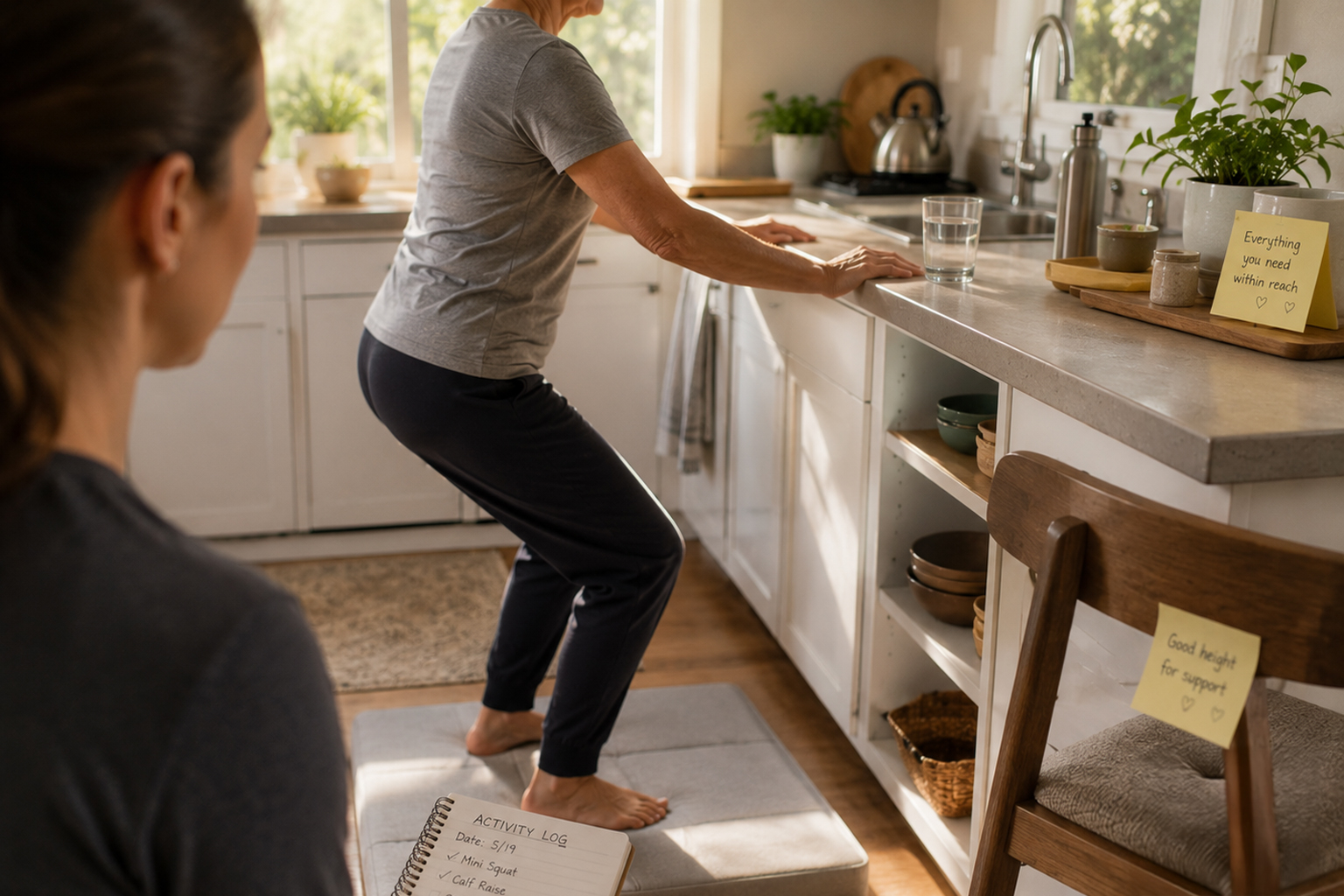
Keeping a brief activity log for a week is often enough to highlight targets for change. Use those notes to set one or two realistic goals for the coming week.
Adopt movement habits that protect and strengthen
Embed micro-movements and short mobility breaks into your routine to prevent stiffness and cumulative load. Aim for gentle, varied movement every 30–60 minutes rather than long static periods, and include low-load strengthening twice weekly. Choose exercises that mirror daily tasks to transfer gains into function and reduce fear of movement. Consistency matters more than intensity when rebuilding tolerance.
Short, repeatable drills can be done near common touchpoints like the kitchen counter or desk. These small practices add up and make daily life more manageable.
Rearrange the home to minimize unnecessary strain
Small ergonomic changes often yield big benefits: adjust chair heights, bring frequently used items within easy reach, and swap heavy lifting for slide-and-push strategies. Prioritize frequently used pathways and work areas so movements are efficient and balanced between left and right. Lighting and footwear also affect posture and confidence during movement. The goal is to reduce cumulative strain while keeping tasks practical.
Implement one or two environment tweaks each week so changes are sustainable. Test adjustments and revert anything that increases effort or discomfort.
Pace progression and build confidence gradually
Plan incremental increases in activity that feel manageable; a steady 10–20% raise in duration or difficulty every few days can rebuild capacity without flares. Learn to read early warning signs and scale back briefly when needed, then resume a slightly lower level. Celebrate small wins like extra minutes of walking or easier stair use to maintain motivation. Combining measurable goals with supportive routines helps habits stick.
Regular review keeps the program realistic and adaptive to real life demands. Seek professional advice if pain changes suddenly or functional goals stall.
Conclusion
Small, consistent systems at home can steadily reduce the burden of persistent pain and restore function.
Focus on assessment, movement variety, practical ergonomics, and paced progression as the core elements of change.
Over weeks and months these modest shifts build resilience and make daily life more comfortable and predictable.