Establishing consistent safety habits at home reduces injury risk and keeps training sustainable. Small changes to your routine and space add up over time and protect joints, muscles, and motivation. This article outlines practical habits you can adopt without major expense or disruption. Use them to build a dependable, long-term approach to safer at-home training.
Assess Your Space and Remove Immediate Hazards
Begin by evaluating the area where you exercise and remove tripping hazards, unstable furniture, and loose rugs. A dedicated space, even a small cleared corner, reduces unexpected interruptions and distractions. Ensure there is enough room to move through the full range of planned exercises without hitting objects. Lighting and ventilation are also basic checks that support safe performance and focus.
Perform a quick weekly walk-through to spot new hazards and reset equipment. Consistent assessment builds a safer baseline for every session.
Prioritize Movement Patterns and Progression
Focus first on mastering basic movement patterns like hinge, squat, push, pull, and lunge before adding load or complexity. Gradual progression—adding repetitions, sets, or resistance over weeks—helps tissues adapt and reduces overload injuries. Include mobility and stability work to support stronger movement control and reduce compensations. Regularly revisit technique, especially when fatigue increases or new exercises are introduced.
Progress deliberately and keep notes on increases to avoid sudden jumps in intensity. Small, measurable steps preserve long-term consistency.
Maintain and Use Equipment Safely
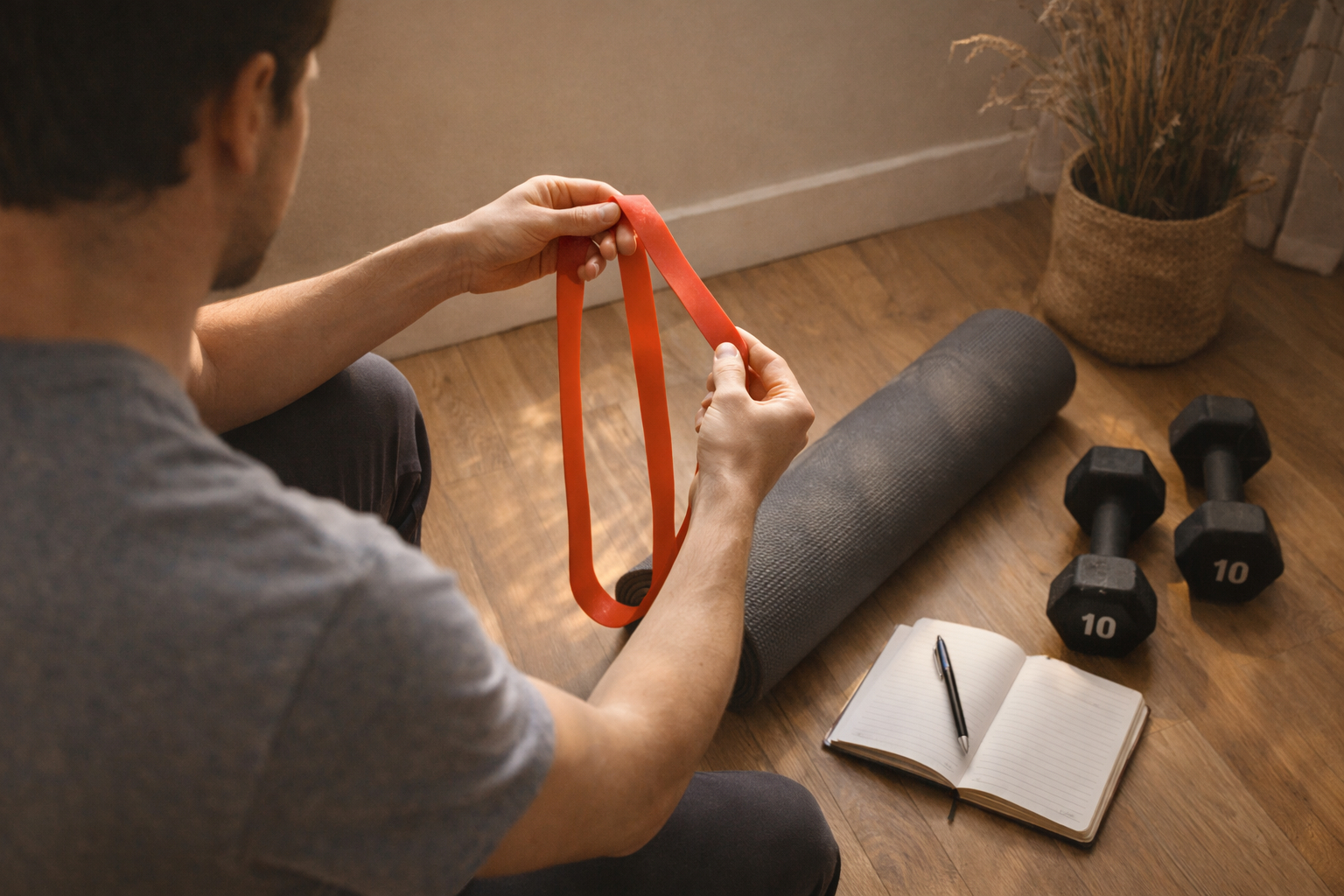
Keep mats, bands, dumbbells, and machines in good repair and stored to prevent accidents between sessions. Check resistance bands for tears, inspect weights for secure plates, and replace worn surfaces that could cause slips. Use appropriate footwear and surface choices that match the exercise—soft surfaces for mobility work, firmer for heavy lifts. When using heavier loads, consider safety accessories like collars, and ensure clear landing areas.
- Check bands for nicks or thinning.
- Secure weight plates and handles.
- Replace torn matting promptly.
Routine equipment checks prevent mishaps and make workouts smoother. Well-maintained tools save both time and injury risk.
Monitor Recovery and Respond to Early Signs
Track how you feel across sessions, noting persistent soreness, joint stiffness, or reduced performance as early warning signs. Implement recovery habits—adequate sleep, hydration, and active recovery days—to support tissue repair and resilience. When pain is sharp, worsening, or alters movement patterns, pause the activity and seek professional advice rather than pushing through. Simple modifications, like reducing range of motion or swapping exercises, can maintain fitness while protecting healing tissues.
Consistent monitoring empowers smarter choices and long-term continuity in training. Quick responses to early signals limit setbacks and maintain momentum.
Conclusion
Building safety habits is about consistency, not perfection. Prioritize assessment, gradual progression, and equipment care. Respond early to signals to sustain long-term training.