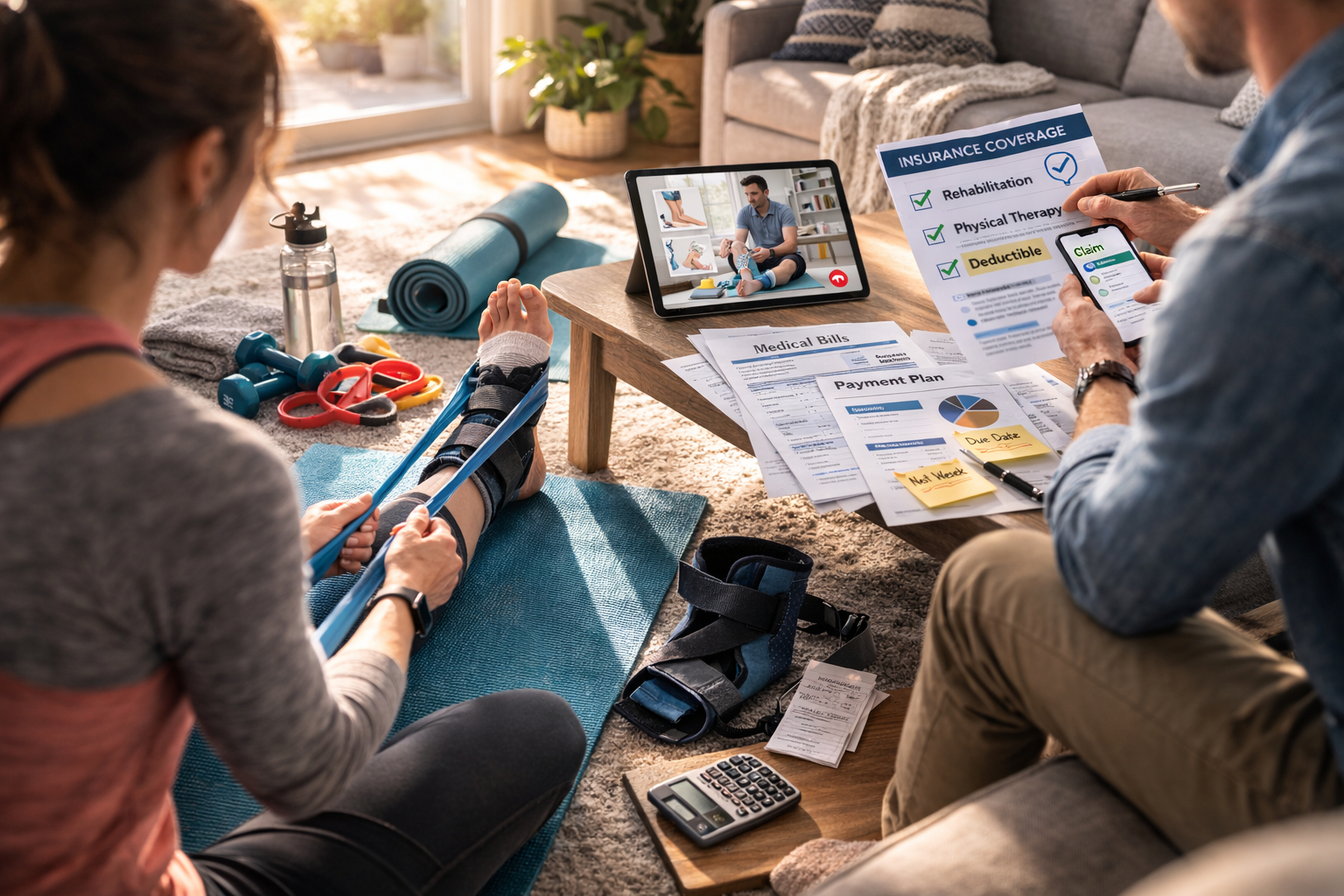
Managing health risks at home means understanding how your insurance responds to exercise-related injuries and recovery needs. This article outlines practical points to evaluate in a policy, from emergency care access to rehabilitation services. It focuses on features that support recovery after a home workout accident and on ways to limit surprise costs. Use these tips to align coverage with an active home routine.
Assess Policy Basics
Start by reviewing fundamental policy components: emergency care, hospital coverage, and provider networks. Confirm whether urgent care visits and ambulance transport for acute exercise injuries are covered and whether prior authorization is required for specialty care. Check network restrictions carefully; out-of-network treatment can dramatically raise expenses. Clear documentation of covered services reduces uncertainty when an injury occurs.
Also verify claim submission deadlines and appeals procedures so you can act quickly after an incident. Knowing these basics makes it easier to choose cost-efficient treatment paths.
Compare Rehabilitation and Telehealth Benefits
Healing from a home workout injury often depends on timely rehab and guided recovery. Compare physical therapy limits, session caps, copays, and whether telehealth physiotherapy is included for at-home guidance. Examine whether durable medical equipment and home health visits are eligible benefits when needed. Policies that integrate telemedicine can speed early intervention and reduce complications.
- Physical therapy coverage, session limits, and copays.
- Availability of telehealth for guided rehabilitation sessions.
- Coverage for home health visits and durable equipment.
Request benefit summaries or therapy coverage examples from insurers to compare effectively. These specifics shape both recovery quality and total spend.
Documenting Injuries and Filing Claims
When an injury happens at home, prompt documentation improves claim outcomes. Record the incident details, take photos of hazards, and keep treatment records and receipts. Notify your insurer according to policy timelines and request confirmation of claim receipt. Clear records speed processing and support appeals if a claim is initially denied.
Work with your provider to submit itemized bills and supporting notes when requested. Keep copies of all correspondence and follow up persistently until a decision is reached.
Minimizing Out-of-Pocket Costs
Manage costs by understanding deductibles, out-of-pocket maximums, and how copays apply to different services. Look for plans with reasonable rehabilitation copays and low specialist visit costs if you anticipate recurring therapy. Consider supplemental coverage or short-term plans for periods of elevated risk, such as when starting a new intense routine. Preventive services and wellness credits can also offset expenses related to injury prevention and recovery.
An informed approach to plan selection can keep rehabilitation affordable and accessible. Combine policy choices with practical safety measures at home to reduce claims.
Conclusion
Review policies annually as fitness routines evolve and new benefits like telehealth expand. Prioritize plans that balance network access, rehabilitation support, and predictable costs. With careful comparison you can protect your health and your budget while exercising at home.