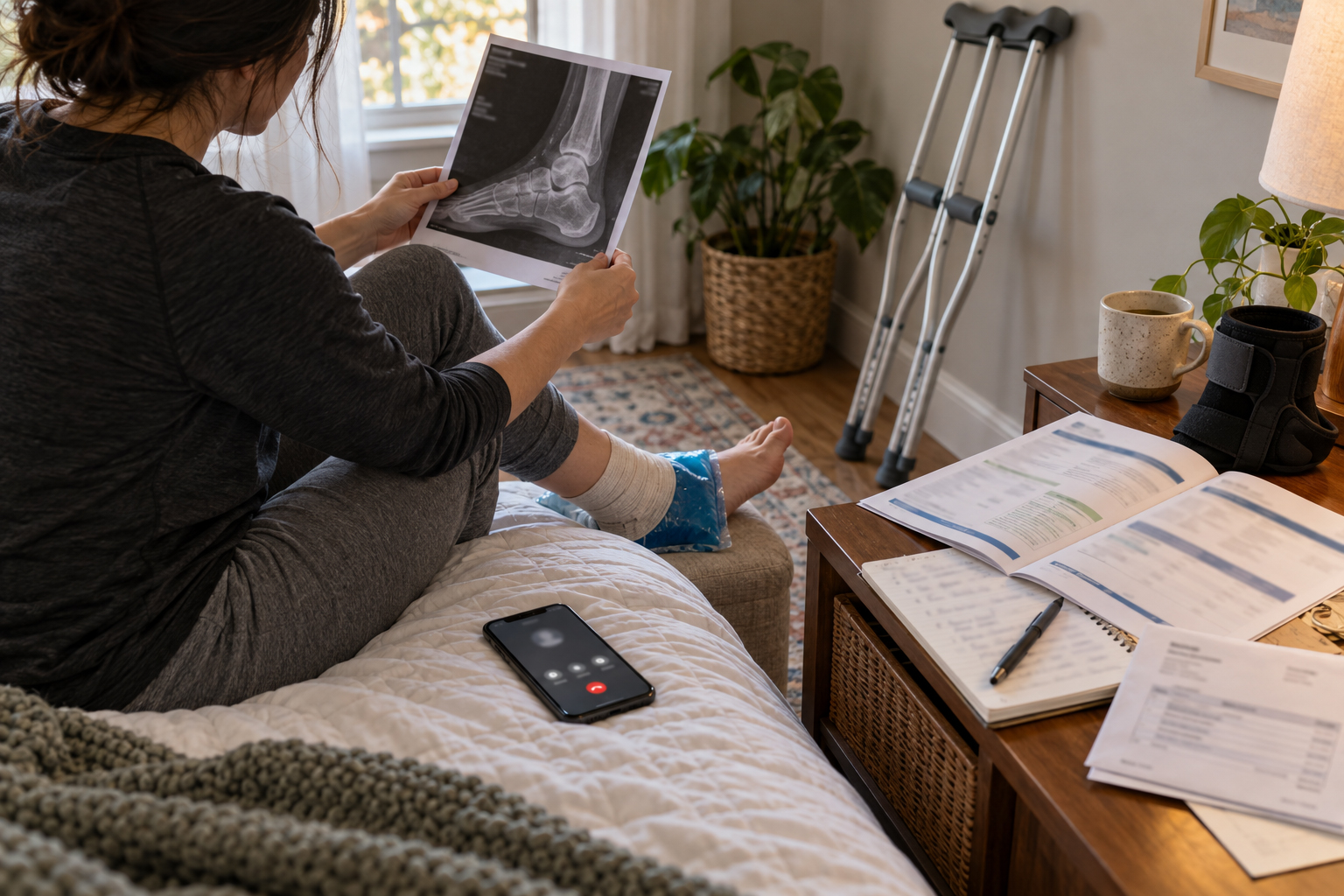
A sprain, fall or sudden pain during an at-home workout can leave you juggling pain and paperwork. Knowing how your health plan will respond matters as much as seeking the right treatment. This article breaks down the immediate choices, the policy details to verify, and the documentation that supports a smooth claim. You don’t need to become an insurance expert, but a few deliberate steps make a big difference to recovery and costs.
Assess immediate care options
First priority is medical care: decide whether the injury needs emergency attention or can be handled by urgent care or a virtual visit. If you suspect a fracture, heavy bleeding or loss of consciousness, seek emergency services and keep records of the facility and clinicians. For non‑urgent strains and minor injuries, telehealth or a prompt in-network clinic visit may reduce out-of-pocket costs. Before you go, call your insurer if possible to confirm network status and any preauthorization requirements.
Getting the right care quickly protects your health and preserves a clear timeline for any later claim. Document dates, locations and who you spoke with at every step.
Check the policy details that matter
Next, scan the policy for three high-impact items: network rules, prior authorization rules, and rehab or physical therapy benefits. Network restrictions determine which providers will be covered fully and which could trigger higher bills. Prior authorization rules apply to imaging, specialist visits and in some plans even to certain therapies—missing one can lead to denial. Rehabilitation coverage varies a lot; check limits on session counts, co‑pays and approved facilities before scheduling ongoing care.
- In-network emergency vs. out-of-network costs
- Prior authorization steps and timelines
- Physical therapy session limits and approved providers
If something is unclear, a quick call to member services or a searchable online policy summary can save surprises later. Make notes of the representative’s name and reference number for future follow‑up.
Document, file, and follow up on claims
Good documentation makes claims simpler: keep your medical records, bills, and any photos or videos of the scene. Request itemized bills and ask providers to include ICD or CPT codes; these help claims processors understand the treatment. When filing, submit a concise incident description, attach supporting documents, and track submission dates. If a claim is denied, request a written reason, file an appeal within the stated timeframe, and escalate with a supervisor when needed.
Consider a patient advocate or billing specialist if bills grow confusing; hospitals and clinics often have staff who can help. Clear records and consistent follow‑up increase the odds of a favorable resolution.
Conclusion
Choosing the right care, checking the key policy items, and documenting everything are straightforward steps that reduce stress after a home gym injury. Most plans cover urgent and necessary services, but small missteps—choosing an out-of-network provider or skipping prior authorization—can raise costs. A calm, organized approach to care and claims keeps attention on recovery, not surprise bills.