After a home workout the last thing most people want is a complicated dinner. A few straightforward choices can restore energy, support muscle repair, and help sleep without hours in the kitchen. Focus on hitting protein, a modest portion of carbohydrates, and some fiber-rich vegetables to cover the basics. This article lays out practical dinner blueprints you can assemble from pantry staples.
Build the Plate: Protein, Carbs, Vegetables
Start by centering the meal on a familiar source of protein: grilled chicken, canned tuna, eggs, tofu, or a legume-based option. Add a carbohydrate that matches the intensity of your session — a larger portion after a long workout, smaller after a quick circuit. Round the plate with vegetables for micronutrients, volume, and a bit of fiber to aid digestion and sustained fullness.
- Protein: 20–40 grams per meal depending on goals (chicken breast, Greek yogurt, lentils).
- Carbs: 1–2 fist-sized portions (rice, sweet potato, whole-grain pasta).
- Veggies: 1–2 cups leafy greens, roasted root vegetables, or steamed mixed vegetables.
Choosing components you enjoy makes the pattern sustainable, and leaning on simple cooking methods keeps prep time short. Small tweaks to seasoning or sauces prevent boredom without undoing the nutrition balance.
Timing and Portions That Help Repair
Eating within an hour or two after training is convenient for many people, but strict timing isn’t necessary for short home sessions. Concentrate on overall daily protein and total calories first, then use post-workout meals to top up. Portion control is practical: match portions to hunger and training intensity rather than a fixed plate template.
- For strength-focused sessions, favor slightly larger protein portions.
- For light cardio or short sessions, keep carbohydrates modest to avoid excess calories.
- Include a small snack if you can’t sit down to a full meal soon after training.
Hydration matters alongside food: a glass of water or a light electrolyte drink complements recovery meals. If you exercise late, choose lighter meals and avoid heavy sauces to support sleep quality.
Quick Recipes from Pantry Staples
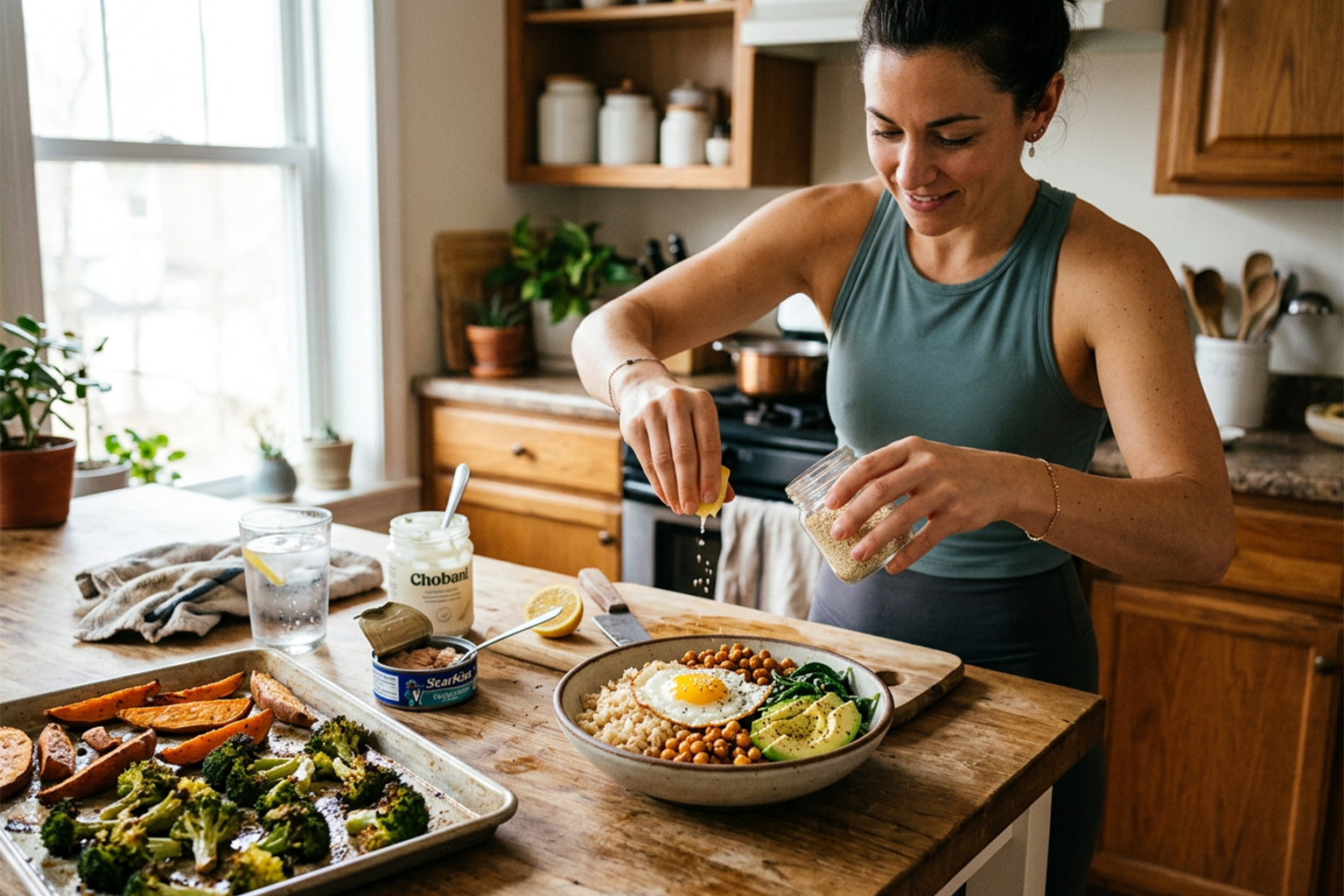
Simple combinations can turn staples into restorative dinners in 20 minutes or less. Think a tuna and white-bean salad with olive oil and lemon, an omelet loaded with vegetables and a side of toast, or a bowl of brown rice topped with beans, salsa, and a fried egg. Each option pairs protein, carbs, and vegetables efficiently.
- Stir-fry: tofu or shrimp, frozen veg mix, quick soy-garlic sauce over rice.
- Bowl: quinoa, roasted chickpeas, avocado, yogurt drizzle.
- Sheet-pan night: salmon, sweet potato wedges, broccoli roasted together.
Keep a handful of go-to recipes you can rotate to save decision fatigue. Prepping one element ahead—cooked grains or roasted vegetables—speeds assembly on busy nights.
Conclusion
Simple dinners built around protein, a sensible portion of carbs, and vegetables help recovery without overcomplication.
Pick ingredients you enjoy and keep a few quick recipes on repeat to cut planning time.
Small habits—hydration, portion awareness, and variety—make these meals sustainable for long-term progress.