A few strategic changes to lighting and layout can dramatically reduce the chance of injury during at-home workouts.
This article outlines practical steps to spot hazards, improve visibility, and arrange equipment for safer movement.
You don’t need major renovations—small adjustments often deliver large safety gains.
Follow these tips to create a dependable, low-risk exercise area in any room.
Assess and Prioritize Risk Areas
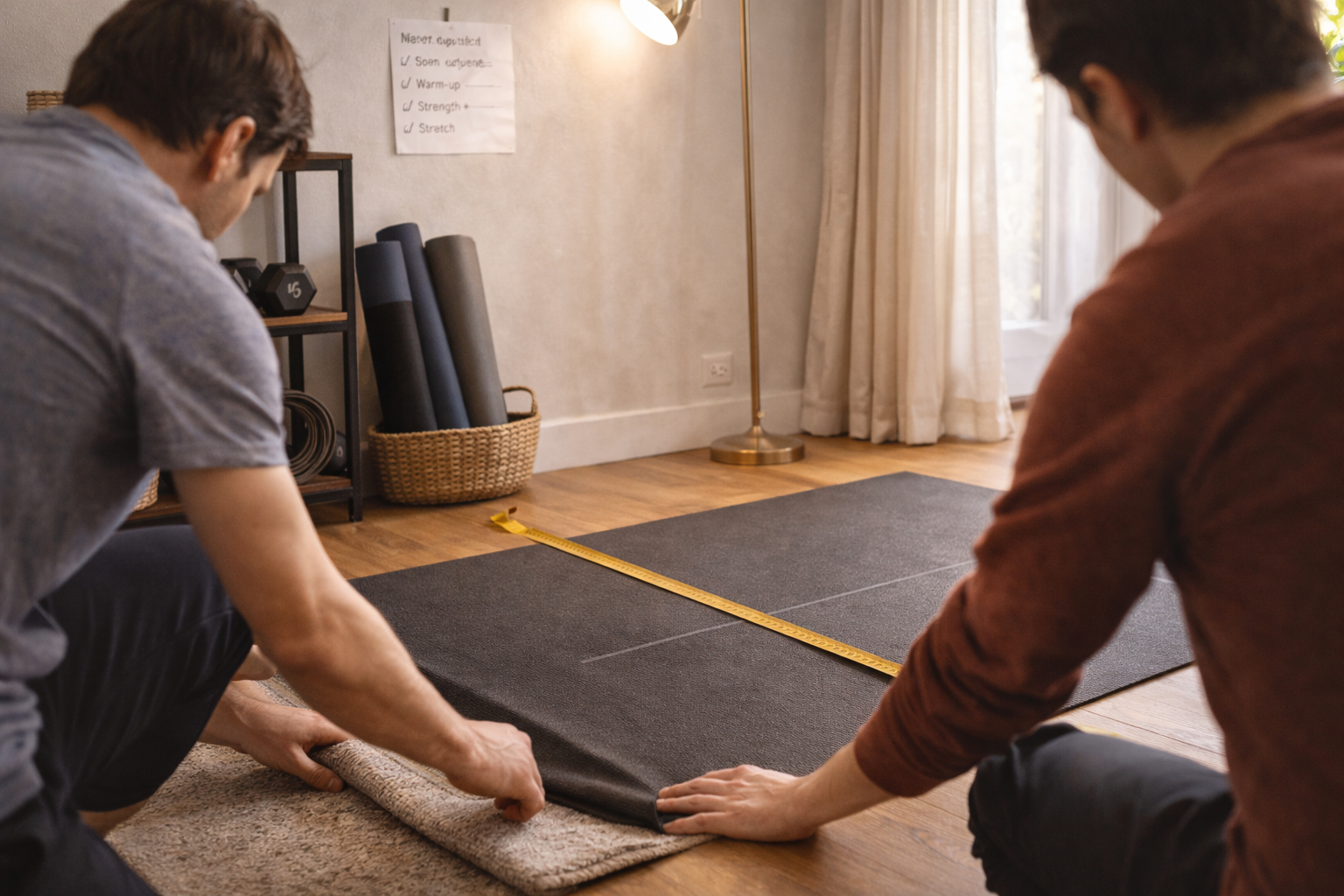
Start by walking through your intended workout area and simulating common movements to reveal tripping or collision risks. Pay attention to furniture edges, loose rugs, cords, and narrow traffic paths that could interrupt balance. Measure clearances for stretching and overhead movements so you know when space is tight. Document hazards and rank them by likelihood and potential severity to focus on the highest risk changes first.
- Clear a minimum 6–8 foot movement zone for dynamic exercises.
- Secure or remove loose rugs and electrical cords.
- Keep frequently used equipment within easy reach, off the floor.
Address the top two or three items immediately while scheduling smaller tweaks later. Repeat the quick assessment after any furniture rearrangement or new gear purchase to maintain safety.
Improve Lighting and Visibility
Good lighting reduces missteps and helps you maintain proper form throughout a session. Use a mix of ambient and task lighting so corners and exercise surfaces are evenly lit, avoiding deep shadows that obscure footholds. Consider adjustable lamps or higher-lumen bulbs if the room is dim, and position lights so they don’t glare into your eyes during movement. Motion-activated lights near entrances can also add safety when moving between spaces in low light.
Aim for consistent color temperature to reduce eye strain and ensure accurate depth perception. Replace bulbs and clean fixtures on a regular schedule to sustain adequate brightness over time.
Optimize Flooring, Layout, and Storage
Choose flooring that matches your activity—non-slip mats for strength work, firmer surfaces for balance training—and avoid layered rugs that shift unexpectedly. Arrange heavier equipment along walls and keep a clear center space for dynamic movements to reduce collision risks. Create designated storage for small items like resistance bands, jump ropes, and dumbbells so they don’t end up in walkways. A considered layout preserves flow and reduces the likelihood of accidental trips or awkward landings.
- Use wall hooks or shelving to keep gear off the floor.
- Place mats and cushioning where you expect falls or high-impact moves.
- Maintain a clear exit path for quick stops or emergencies.
Consistent organization makes safer workouts repeatable and less mentally taxing. Reassess layout periodically as your routine changes to keep safety aligned with usage.
Conclusion
Small, deliberate changes to lighting and layout cut injury risk during home exercise.
Focus first on the highest hazards, then adopt simple maintenance habits.
A well-lit, well-organized space makes safe training more enjoyable and sustainable.