Weaning into movement after medical care requires careful planning and realistic expectations.
Start with small, reliable routines that fit daily life and fluctuating energy levels.
Consistency, gradual progression and attention to safety reduce setbacks while supporting confidence.
This guide outlines practical steps to adapt your home, schedule and habits for steady improvement.
Assess your current capacity
Begin by taking stock of current limitations and strengths, ideally with input from a clinician or therapist. Note pain triggers, balance concerns and endurance so you can prioritize safe activities. Keep a simple log of movement, sleep and symptoms for a week to spot patterns and correlations. That information helps set realistic short-term goals that support steady improvement.
Start with two or three brief tasks each day and increase slowly as comfort grows. Reassess goals weekly and adjust based on comfort and progress. Use timers and gentle reminders to keep momentum and avoid sudden overexertion.
Simple, safe movement practices
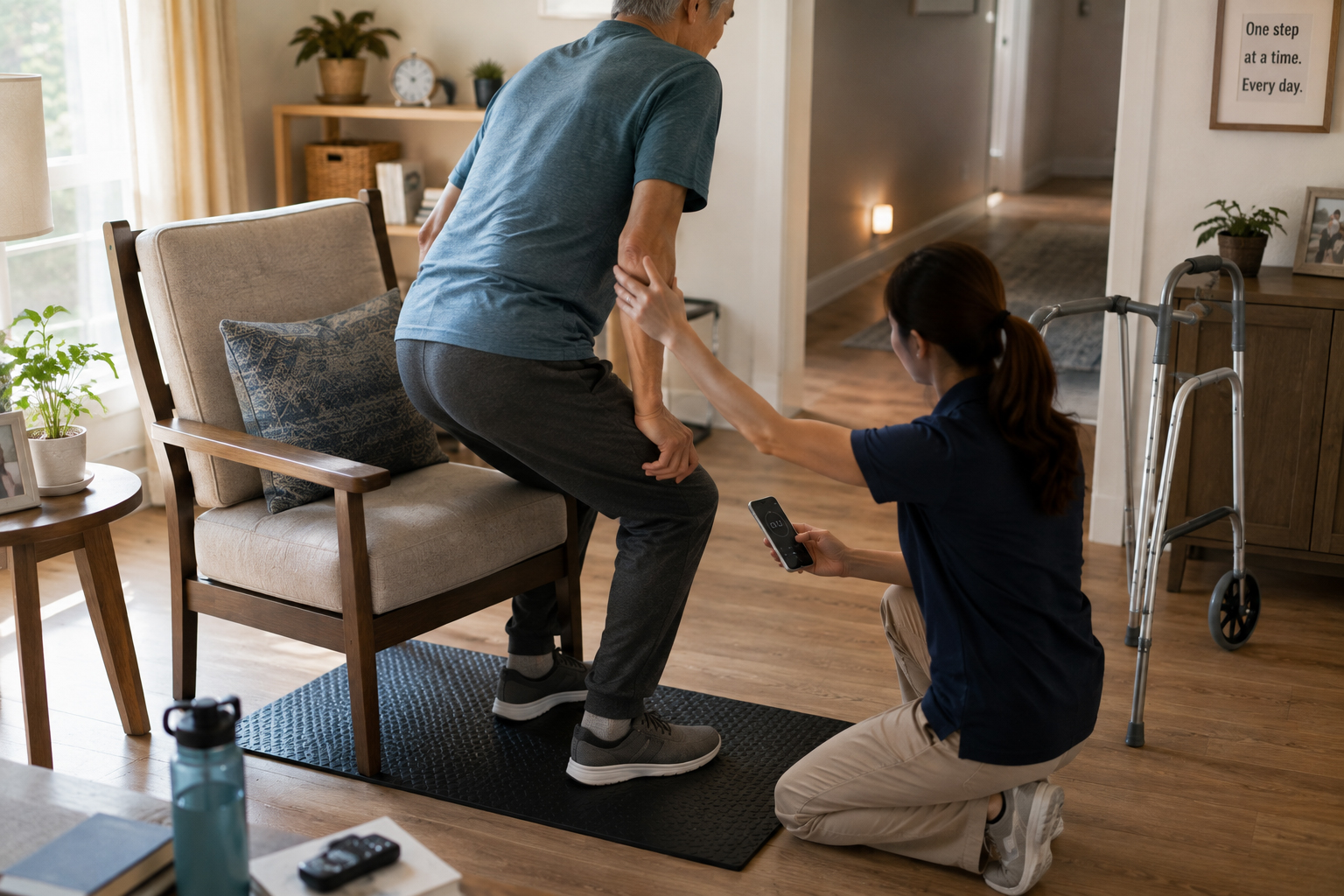
Focus on foundational patterns: sit-to-stand, controlled walking, gentle reaching and stepping to restore functional strength. Use supports such as a stable chair, counters or a walking aid until balance and confidence improve. Prioritize quality of movement over quantity, aiming for smooth, pain-limited repetitions and mindful breathing. Short sessions multiple times a day reduce fatigue and encourage habit formation.
Include basic balance and flexibility moves, and stop if pain worsens or neurologic changes occur. Consult a professional if you hit a plateau or experience new symptoms suggesting caution. Avoid pushing through sharp pain; take regular breaks and adapt intensity accordingly.
Modify your environment and schedule
Make small changes to reduce fall risk and conserve energy: rearrange clutter, secure rugs, install night lighting and ensure clear walking paths. Position frequently used items at waist height to avoid unnecessary bending or reaching that can strain healing tissues. Schedule demanding tasks for when energy is highest and break chores into short, manageable segments to prevent fatigue. These adjustments create a safer backdrop for practicing movement and building confidence.
- Non-slip mats in key areas
- Night lights along common routes
- Chairs with armrests for easier transfers
Introduce one environmental change at a time and test it for comfort. Encourage family or caregivers to support consistent routines and help reinforce safe practices. Communicate needs clearly with household members to maintain consistency and reduce risks.
Track progress and adjust intensity
Use simple measures like timed walks, step counts, or number of sit-to-stands to measure gains and guide progression. Record how long activities feel manageable and whether pain, swelling or breathlessness change with practice over days or weeks. Celebrate modest wins—improved stability, longer walks or easier stair use are important milestones in recovery. Regular tracking helps you increase repetitions, add variety, or rest more when signs of overload appear.
Reassess monthly and discuss findings with a clinician to refine your plan. Small, data-driven adjustments reduce injury risk and support steady gains.
Conclusion
Progress is steady when movement is safe, regular, and adapted to current capacity.
Small adjustments in routine and environment compound over weeks to produce meaningful improvements.
Keep goals realistic and seek professional input as needed to stay on a safe path.