Living with persistent musculoskeletal pain often means adapting daily habits rather than chasing a single cure. Small, consistent actions at home can reduce flare-ups and improve function over months and years. This article explains practical, realistic approaches that fit into ordinary routines and can complement professional care. The goal is steady improvement through manageable changes you can keep doing.
Begin by setting modest goals and focusing on consistency. Small wins compound into better pain tolerance and mobility over time.
Start with realistic daily routines
Establishing simple, repeatable patterns for movement, rest, and sleep supports pain resilience by reducing unpredictability in symptoms. Prioritize wake-up and bedtimes, regular light activity breaks through the day, and pre-bed relaxation to ease tension. Scheduling short sessions of mobility or gentle exercise prevents stiffness and helps you maintain progress without overwhelming your system. Adjust intensity and frequency based on how you feel, not how you think you should perform.
Consistency matters more than intensity in the early stages. Keep routines flexible and forgiving so you can maintain them long term.
Integrate gentle strength and mobility
Combining low-impact strength work with mobility exercises builds support around sore joints and improves overall control, which can lower pain signals. Use bodyweight movements, resistance bands, or light weights to target major muscle groups two to three times weekly, and include daily mobility sequences for joints that feel guarded. Emphasize slow, controlled movements and steady breathing to avoid compensatory patterns that could increase discomfort. Progress gradually by adding reps, range, or resistance only when pain and fatigue remain manageable.
Track small improvements like easier sit-to-stand motions or longer walks. These milestones help maintain motivation and guide safe progression.
Recognize and respond to flare-ups
Flare-ups are a normal part of chronic pain and responding calmly helps prevent setbacks from becoming discouraging. When pain increases, reduce intensity and duration of activity, focus on gentle mobility and relaxation, and prioritize sleep and hydration. Use heat or cold thoughtfully for short-term relief and avoid pushing through sharp or worsening symptoms that limit function. Communicate changes with your care team when flares persist or alter your daily abilities.
Plan a simple flare-up toolkit with easy adjustments you know work. Having a predictable response reduces anxiety and supports quicker recovery.
Create a supportive home environment
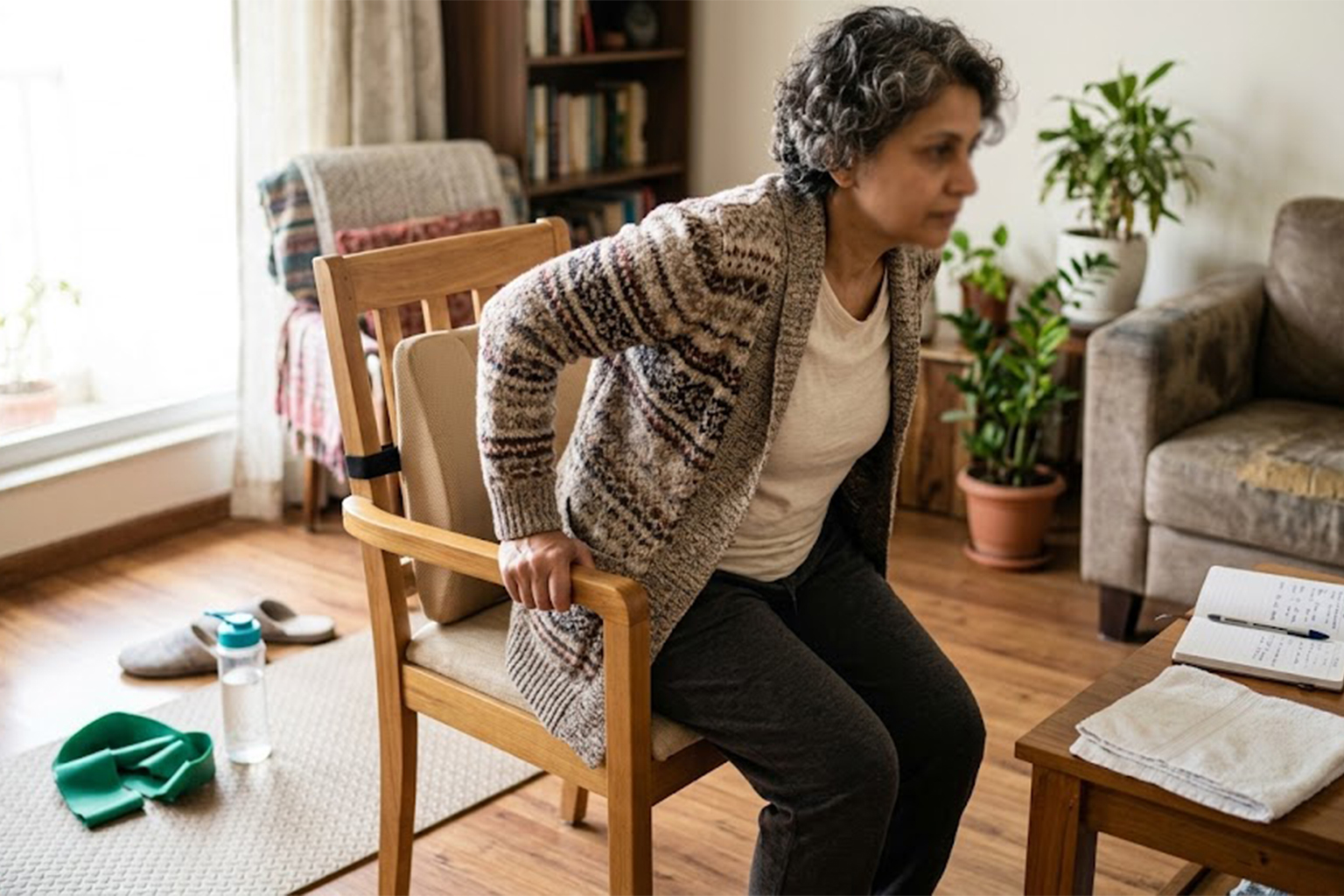
Optimize your living space to reduce strain and encourage movement without needless pain triggers. Arrange commonly used items within easy reach, create a comfortable seating area with lumbar support, and set up a small space for stretching or short exercise sessions. Good lighting, non-slip mats, and ergonomic work surfaces can cut down on compensatory posture that fuels discomfort. Making the environment inviting increases the chance you’ll follow through with helpful habits.
- Keep frequently used objects at waist height to avoid bending.
- Use a chair with firm back support to reduce slouching.
- Create a visual prompt or alarm for movement breaks.
Small environmental tweaks make routine actions less painful and more sustainable. Over time these changes lower the daily friction of managing symptoms.
Conclusion
Building pain resilience at home focuses on steady, achievable habits that prioritize function and comfort.
Be patient and adjust plans based on real progress rather than idealized goals.
Small, consistent actions can improve mobility and reduce the burden of chronic pain over time.