Recovering movement after an illness or treatment often feels slow, and that’s normal. Small, repeatable actions done safely at home rebuild strength and confidence without overwhelming your energy reserves. Choosing practical moves and simple space changes can reduce the chance of setbacks and make progress measurable. The goal is steady improvement, not perfection, so daily consistency matters more than intensity.
Start Small and Consistent
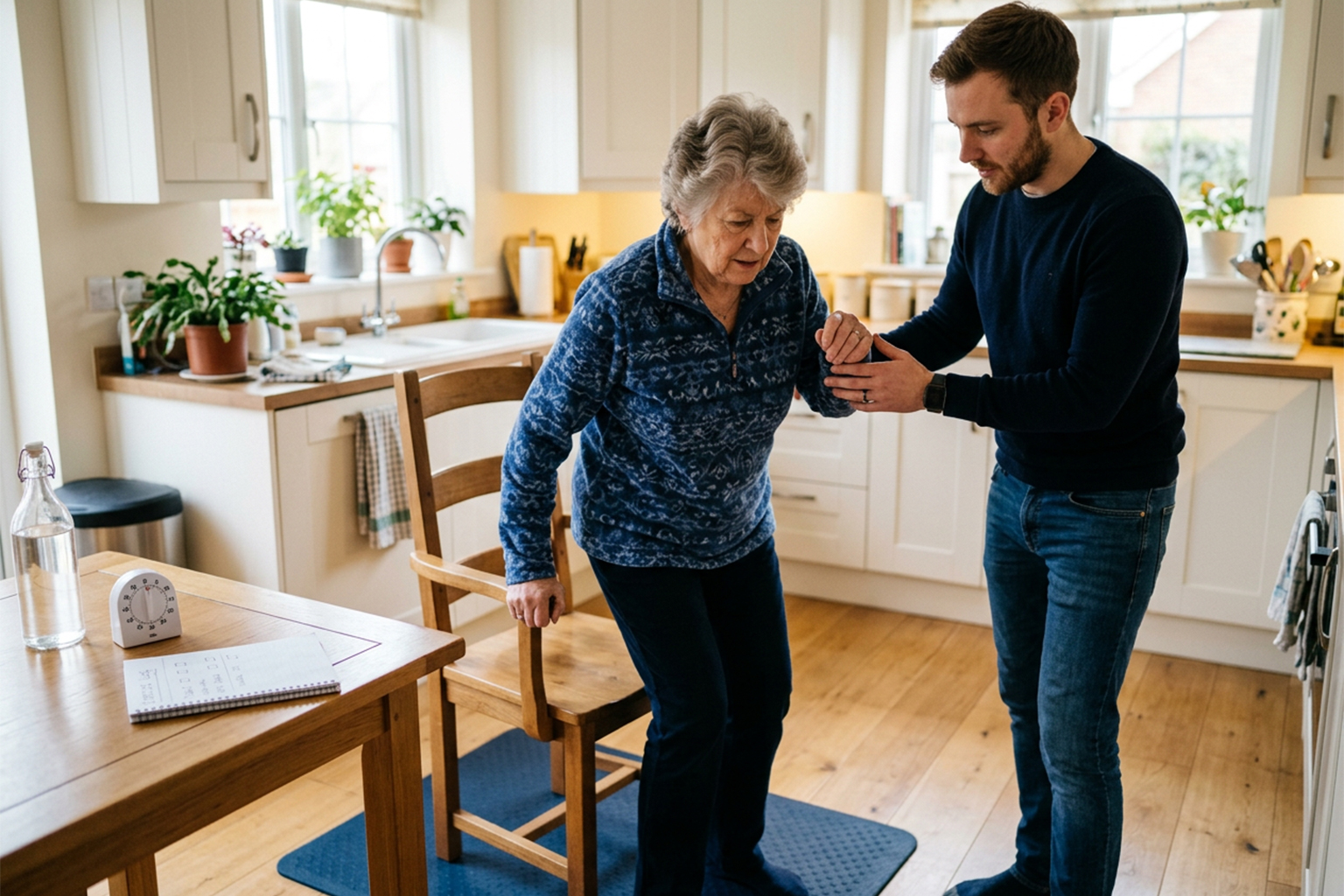
Begin with brief sessions—three to five minutes of focused movement several times a day rather than a single long workout. Examples include seated marches, heel raises while holding a chair, and gentle sit-to-stand repetitions; these target core strength, ankle stability, and leg power. Keep intensity at a level where you can speak comfortably and stop if pain spikes. Consistency builds neuromuscular patterns and reduces stiffness over time.
Record one or two simple metrics, such as repetitions or perceived effort, so you can see progress week to week. Small wins encourage continuation and help you adjust difficulty safely.
Adapt Your Home for Safer Movement
Reduce hazards and support movement with targeted adjustments that don’t require major renovations. Clear walkways of loose rugs and clutter, place a stable chair in common areas for sit-stand practice, and use non-slip mats in wet zones. Good lighting and reachable storage reduce bending and twisting that can challenge balance. These changes lower immediate risk and make practicing movement less daunting.
- Keep a lamp or nightlight near the bed for safe nighttime trips.
- Use a sturdy chair without wheels for balance work.
- Store frequently used items at waist height to avoid excessive reaching.
Simple, inexpensive tweaks often have outsized benefits by preventing falls and encouraging movement to become part of routine tasks.
Track Progress and Prioritize Safety
Noticeable improvement often comes in weeks, not days, so pace activities and allow rest when fatigue appears. Use a short checklist each day—time spent moving, exercise type, and any new symptoms—to make adjustments and protect recovery. If balance feels unreliable, practice near a countertop or with a family member nearby to spot you. Avoid pushing through sharp pain; that’s a signal to scale back.
Keeping a steady, careful approach preserves gains and reduces the risk of setbacks that prolong recovery.
When to Seek Professional Support
Therapists and clinicians can tailor progressions, teach safe techniques, and suggest equipment when recovery stalls or movement causes worrying symptoms. Ask for a clear short-term plan with measurable goals so home practice complements professional care. If you notice persistent dizziness, increasing pain, or sudden weakness, arrange a timely evaluation rather than guessing at causes.
Collaborating with a clinician helps you advance confidently and ensures exercises match your medical needs.
Conclusion
Small, safe practices at home add up to meaningful recovery over weeks. Focus on consistency, simple environmental fixes, and tracking modest gains. When in doubt, involve a professional to keep progress steady and secure.