Planning health coverage for your independent home exercise routine starts with understanding how your policy treats activity-related care.
Know what types of treatment are covered, which providers are in-network, and whether preauthorization is needed for certain services.
Small acute injuries and chronic condition management can be treated differently under a plan, so clarity prevents surprises.
This overview helps you align benefits with typical home fitness risks and costs.
Assess Your Coverage Gaps
Review your policy to identify who pays for urgent care, physical therapy, imaging, and telehealth visits after a workout-related incident. Look for exclusions or activity-related clauses that might limit coverage for sports or exercise injuries. Check deductible and out-of-pocket maximums, since frequent minor visits can add up quickly. Confirm whether rehabilitation services like physical therapy require a referral.
Make a short list of likely services based on your routine and compare them to plan documents. Where gaps appear, note options such as supplemental plans or flexible spending accounts.
Documenting and Filing Claims
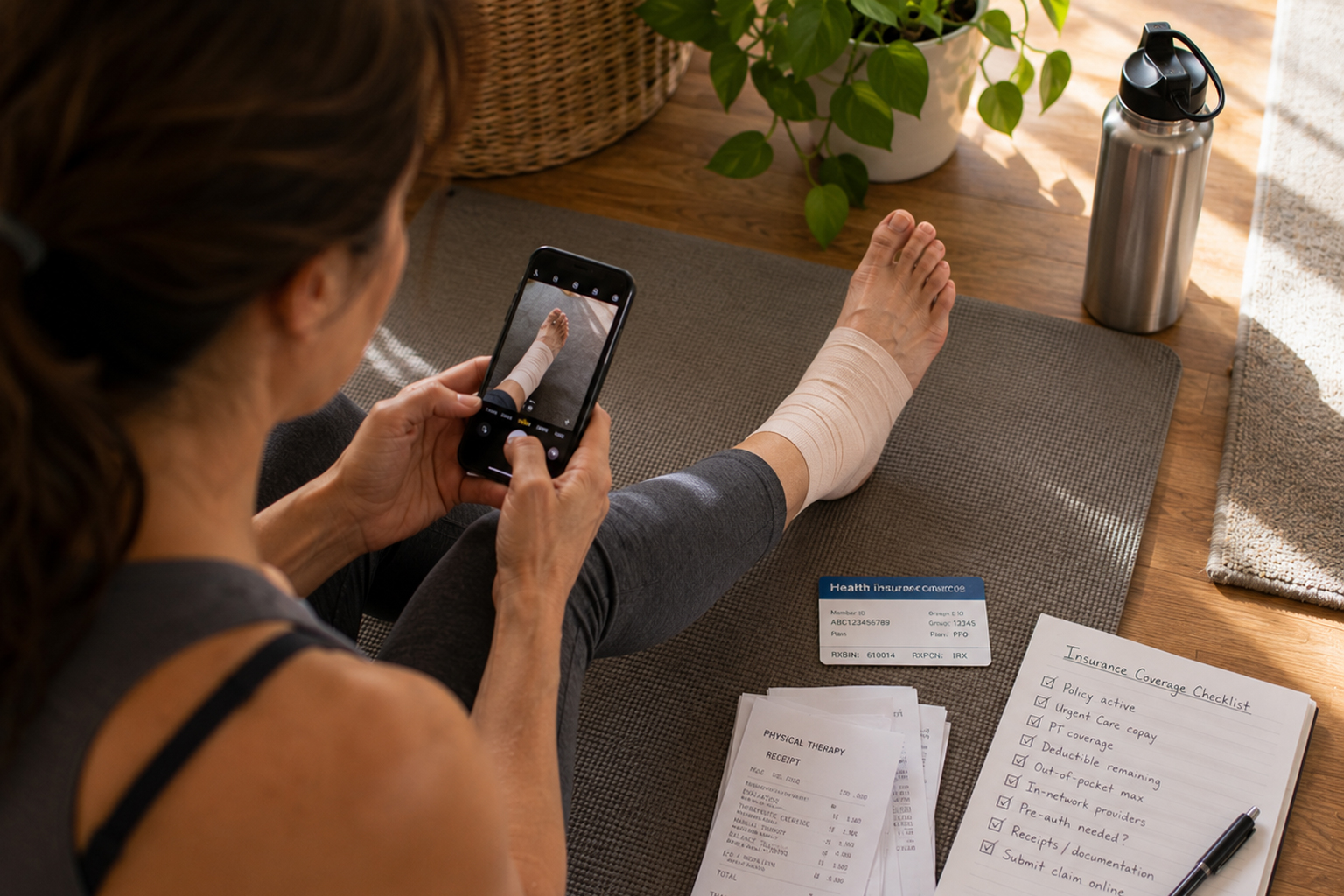
Accurate documentation is key when seeking reimbursement for care related to home workouts. Record the date, activity, symptoms, and any first-aid or home remedies used, then save medical records, bills, and provider notes. Photographs of the scene or injury can support a claim if the policy requires context. Early reporting to your insurer often reduces the chance of denial.
- Itemized bills and payment receipts
- Provider notes and referral letters
- Photos and a brief incident log
Follow the insurer’s claim timelines and use certified mail or secure portals when submitting documents. Keep copies of everything and log communications for reference.
Practical Steps to Strengthen Coverage
Consider preventive measures that insurers view favorably, such as documented fitness assessments, training programs, and consultations with licensed therapists. Explore rider options or short-term supplemental policies that cover sports or activity-related treatment if your base plan excludes them. Use in-network providers when possible to minimize costs and check whether virtual consultations are covered for minor injuries.
Regularly review benefits during open enrollment and update your approach as your activity level changes. Small plan adjustments can improve financial predictability.
Choosing In-Network Care and Telehealth
When you sustain an injury from a home workout, selecting in-network providers can significantly lower your out-of-pocket costs and speed claims processing. Compare provider directories and verify practitioners’ specializations, such as sports medicine or orthopedic care, before scheduling appointments. Telehealth options can handle minor sprains or consultations quickly, but confirm whether virtual visits count toward deductible or co-pay requirements. Keep a list of nearby urgent care centers that accept your plan for faster, lower-cost treatment when immediate attention is needed.
Confirm billing codes and ask providers to file claims on your behalf to reduce administrative burden. Small upfront questions can prevent surprise bills later.
Conclusion
Understanding your health plan’s treatment of home exercise injuries reduces stress and unexpected bills.
Create a simple coverage checklist and keep good records to support claims when they arise.
Review your options annually to ensure your plan evolves with your fitness routine.