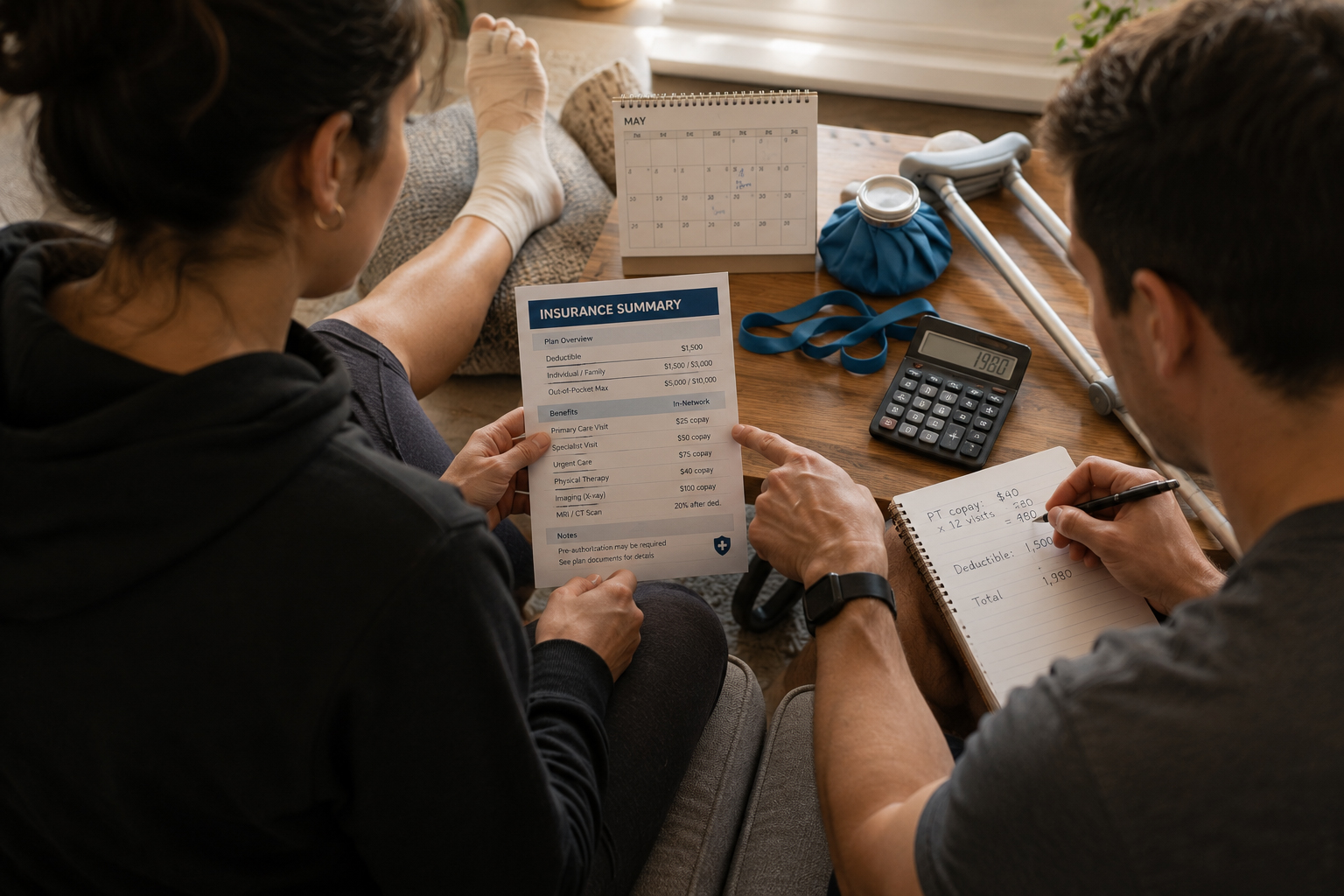
When a home workout goes wrong, the immediate concern is recovery — and the cost can add up quickly. Building a recovery budget that aligns with your health policy helps you avoid surprises and makes decisions clearer. This approach balances out-of-pocket planning with understanding benefits so you can prioritize care without financial stress. A modest amount of forward planning reduces delays and keeps treatment options open when you need them.
Estimate Potential Costs
Start by listing likely services after a common home fitness injury: urgent care, imaging, specialist visits, physical therapy, durable medical equipment, and possible prescriptions. Review your plan’s deductible, copays, coinsurance, and out-of-pocket maximum to understand how those services translate into personal expense. Use insurer tools or recent explanation of benefits statements to estimate typical allowed amounts and your share. Setting a conservative range gives you a practical target for an emergency recovery fund.
Keep this estimate flexible and revisit it annually or after any policy change. An adaptable figure prevents overcommitment while ensuring you can cover initial care without hesitation.
Understand Network and Provider Rules
Your policy’s network rules can dramatically affect costs; out-of-network care usually costs more and may require preauthorization for certain services. Identify local in-network urgent care centers, imaging facilities, and physical therapists so you can act quickly if injured. Verify whether telehealth or virtual physical therapy options count toward your deductible or have separate copays. Knowing the approval process for referrals and durable medical equipment helps you avoid claim denials and surprise bills.
Document contacts and keep a short list of preferred in-network providers within reach. That preparation short-circuits confusion when you need care and supports smoother claims processing.
Use Preventive and Ancillary Benefits
Many plans include preventive, wellness, or ancillary benefits that can lower recovery costs if used proactively. Check for covered preventive visits, exercise counseling, or discounts on fitness equipment that reduce injury risk and subsequent claims. Ancillary benefits like care management, case coordination, or early intervention programs may shorten recovery time and lower overall expenses.
- Preventive screening and counseling
- Covered physical therapy sessions limits
- Telehealth follow-ups and care coordination
Stack these benefits into your recovery budget to offset treatment costs and prioritize services that speed return to full activity.
Conclusion
Designing a recovery budget tied to your health policy turns uncertainty into manageable steps. Regularly update estimates, keep key provider contacts, and leverage preventive benefits to reduce overall cost. With a clear plan you can focus on recovery rather than unexpected financial strain.