Setting up a home gym brings convenience and consistency, but it also shifts responsibility for prevention and immediate care to you. Understanding how your medical insurance responds to exercise-related injuries reduces uncertainty and potential costs. This article outlines practical steps to evaluate coverage, document incidents, and manage claims. Use these guidelines to make informed choices before and after a workout mishap.
Assessing Policy Basics
Start by reviewing your plan’s emergency, urgent care, and rehabilitation benefits to see what applies if you are injured while exercising at home. Note deductibles, out-of-pocket maximums, and whether services like physical therapy require referrals or preauthorization. Confirm whether telehealth consultations are covered for initial triage, since remote advice can avoid unnecessary ER visits. Also check exclusions that could limit coverage for injuries sustained during certain activities.
Document these policy features in one place so decisions are easier when an incident occurs. A clear snapshot of benefits helps you choose the right provider quickly and contest denials with precise references.
Preparing Documentation and Evidence
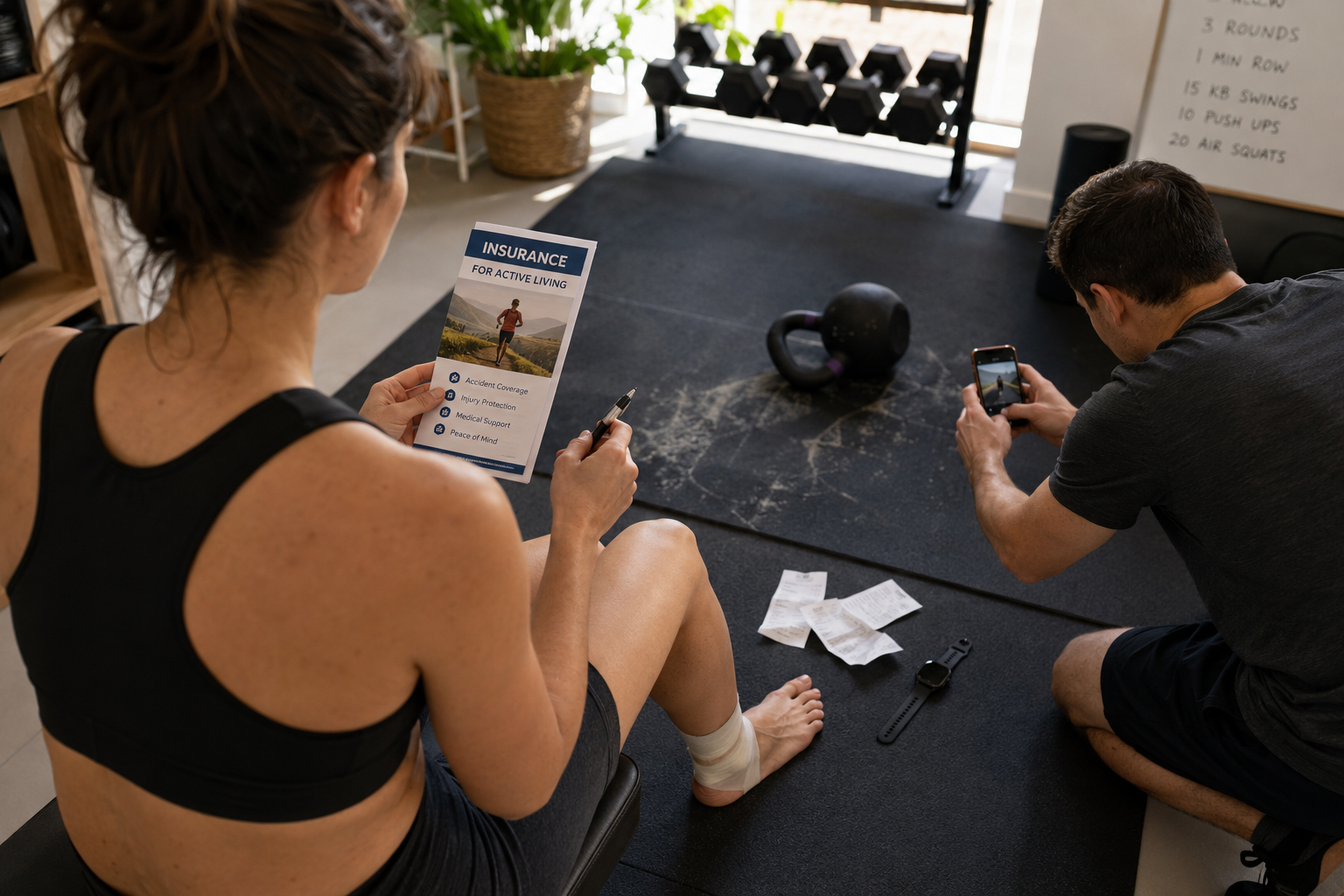
Accurate documentation supports a claim and speeds resolution. After an injury, record the date, time, and a short description of what happened, including equipment involved and witness contact information if available. Keep photos of the scene, any damaged equipment, and visible injuries, and save all receipts for medical visits and related expenses. If you use wearables or fitness apps, export relevant activity logs to corroborate your account.
Organized records make claim narratives persuasive and reduce back-and-forth with the insurer. Treat documentation as part of your safety routine rather than an afterthought.
Practical Steps When Filing a Claim
Begin by contacting your insurer promptly and follow their guidance on documentation and provider selection. Obtain referrals or prior authorizations when required, and retain copies of every communication, including claim numbers and representative names. If a claim is denied, request a written explanation and follow the appeal process with supplemental evidence and a clear chronology. Consider using an independent medical review if coverage interpretations remain disputed.
Acting quickly and methodically preserves your rights under the policy and often shortens resolution time. Keeping calm and following the insurer’s process improves the chance of a favorable outcome.
Conclusion
Preparing your medical plan for home gym risks reduces financial and health consequences after an injury. Review policy details, document incidents thoroughly, and follow the insurer’s claim process without delay. With these routines you can protect both your health and your finances while exercising at home.