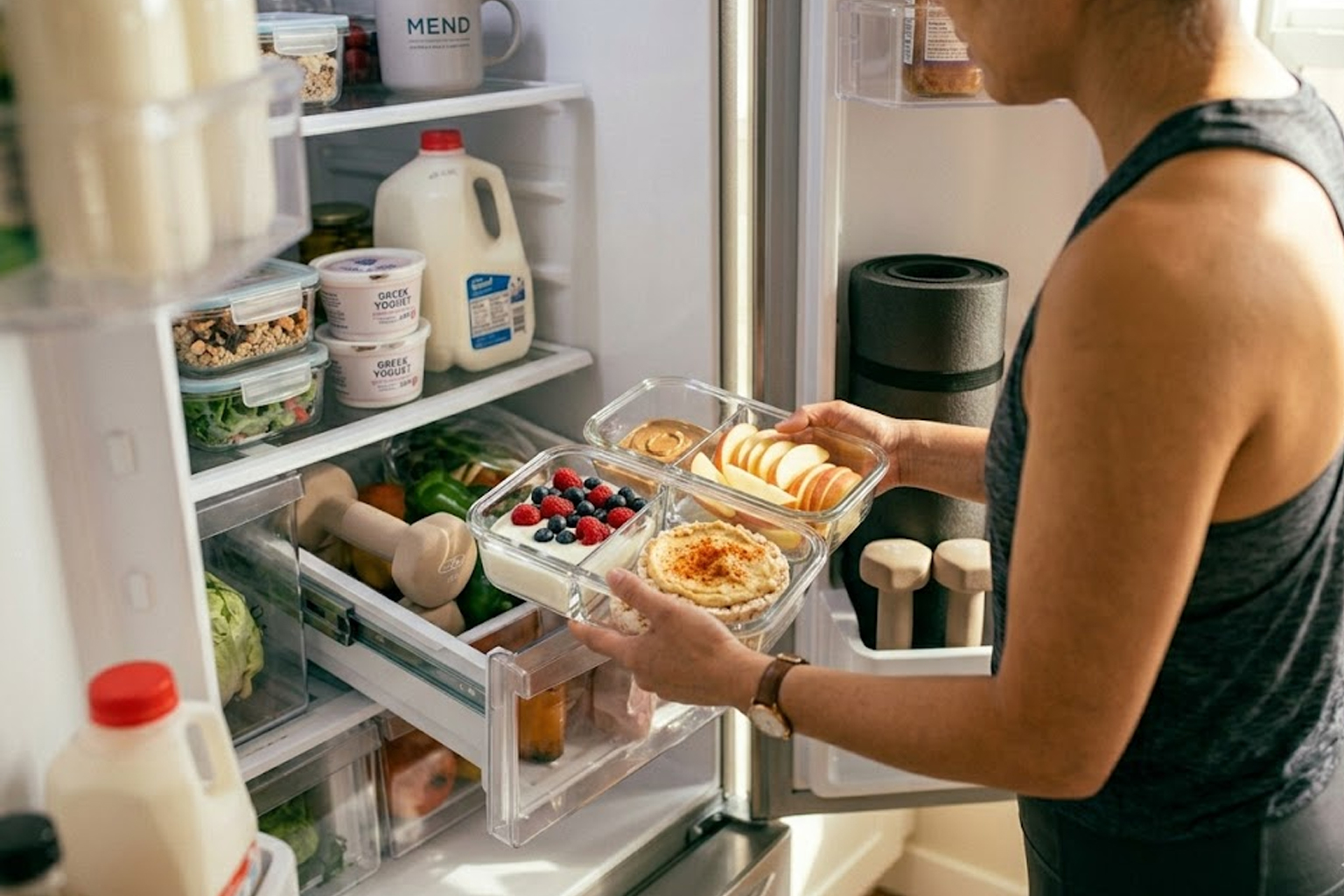
Consistent energy across the day starts with how and when you eat, not just what you eat. Small, predictable snack rhythms can prevent energy dips around at-home workouts and make recovery easier. Combining snacks with balanced meals helps stabilize blood sugar and keeps focus during training. These habits are simple to build and fit into busy home routines.
Why snack rhythms matter
Snack rhythms refer to the pattern of light eating between main meals, timed to your activity and appetite. When planned around workout times they provide quick usable fuel without weighing you down or disrupting sleep. Good rhythms are flexible: some days need two snacks, other days one; the key is predictability. That predictability supports consistent performance and reduces the urge to overeat later.
Start by observing when your energy drops and schedule a small snack shortly before or after that period. Small adjustments are easier to keep than large overhauls and add up quickly.
Structuring snacks and meals
Structure snacks and meals using three simple components: a protein source, a carbohydrate for quick energy, and a little healthy fat or fiber to extend fullness. For example, yogurt with fruit, a small turkey roll-up, or whole-grain toast with nut butter cover the basics without lengthy prep. Portion size should be modest — enough to bridge the gap to your next meal or to support a short training session. Avoid oversized portions that can cause sluggishness.
- Greek yogurt with berries and a sprinkle of granola.
- Apple slices with almond butter and a cheese stick.
- Rice cakes with hummus and sliced turkey.
These options work across morning, midday, and evening workouts and are simple to adapt to taste preferences. Keep a rotation so choices don’t become tedious.
Practical weekly prep tips
Weekly prep makes snack rhythms sustainable: batch-cook proteins, chop fruits and vegetables, and portion snacks into reusable containers. Keep a visible snack drawer or a small shelf in the fridge near your workout area to reduce decision friction before training. Plan snack timing into your weekly routine if you exercise at consistent times, and increase portion or carb choices on heavier training days. Remember that adequate hydration often supports energy just as much as food.
Investing an hour or two on meal prep each week saves time and keeps choices aligned with your goals. Over time the setup will support steadier performance and easier recovery.
Conclusion
Building simple snack rhythms around balanced meals helps stabilize energy and supports regular home workouts. Start by defining one reliable snack and one go-to meal for training days, then expand from there. Small, repeatable habits matter more than perfect nutrition.