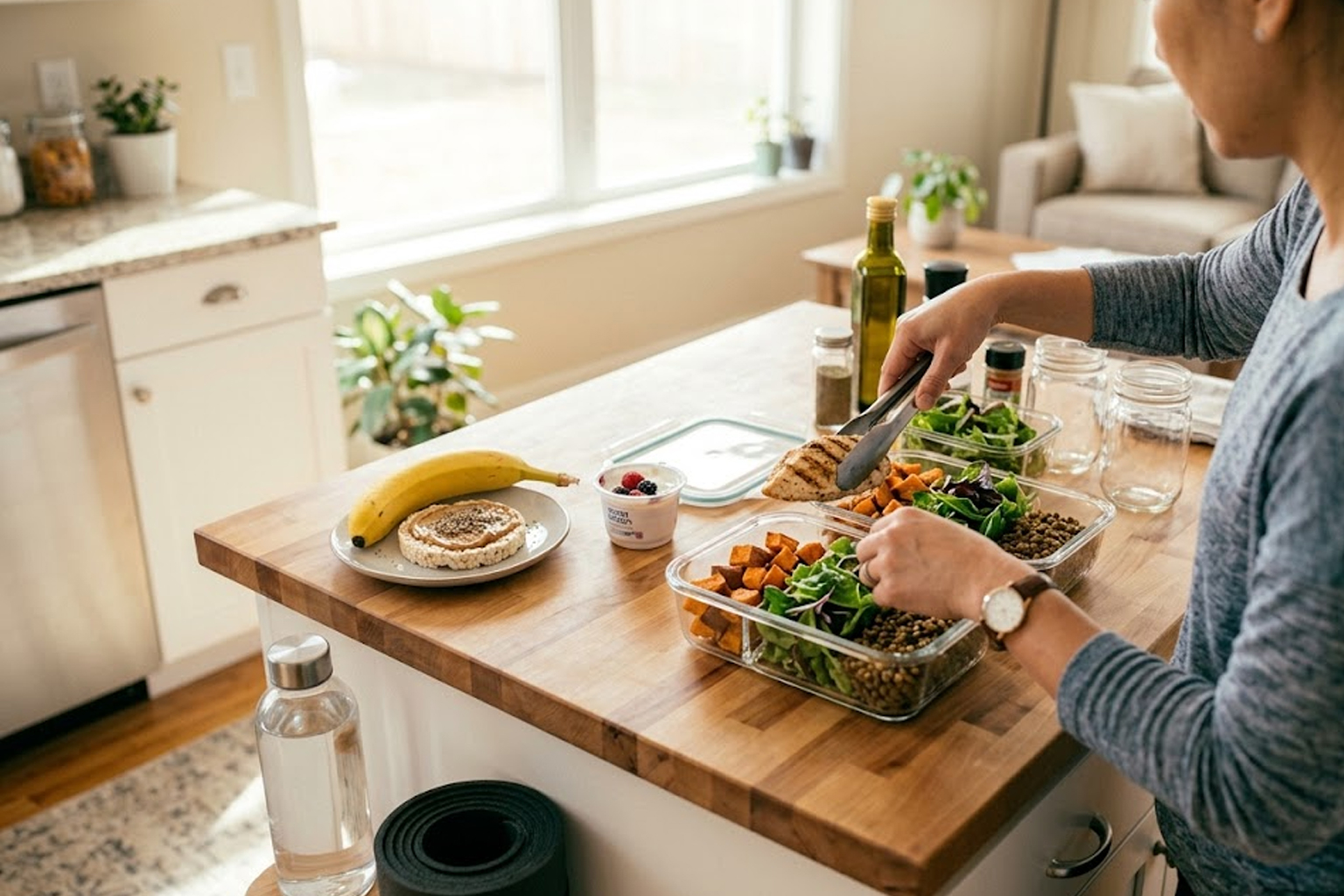
Keeping steady energy across frequent home workouts is about consistent, sensible meal patterns rather than rigid diets. Small adjustments to timing, portion balance, and ingredient choices can influence stamina and recovery. This article outlines practical food patterns you can use daily without extra shopping or complicated recipes. Use these ideas to plan meals that support both performance and everyday life.
Morning Foundation
Begin the day with a breakfast that balances protein, slow carbs, and a little fat to stabilize blood sugar and sustain concentration. Examples include oats with milk or a smooth blend of yogurt, fruit and nuts, or eggs with whole-grain toast. If you train early, opt for a smaller carbohydrate-forward snack 30–60 minutes before exercise, like a banana or a rice cake, then a fuller meal afterward. Prioritize protein within an hour after a strength session to support muscle repair.
These choices create a reliable starting point for morning sessions. They require minimal prep and suit flexible schedules.
Midday Recovery and Strength
For midday training, build plates around lean protein, vegetables, and a portion of whole grains or starchy vegetables to replenish glycogen. A simple bowl with grilled chicken, roasted sweet potato, and mixed greens meets those needs and helps regulate appetite. Plant proteins like lentils or chickpeas are equally useful and pair well with grains to provide complete amino acids. Aim for a moderate protein portion and include fiber to prolong energy.
A balanced lunch supports afternoon workouts and steady productivity. Small batch cooking at the weekend can make these meals effortless.
Snacks and Timing
Intelligent snacking keeps energy steady between meals and around workouts; think of snacks as mini-refuels rather than indulgences. Combine protein and carbs—yogurt with fruit, a small smoothie, or nut butter on apple slices—to blunt spikes and provide sustained fuel. Time a snack 30–90 minutes before higher-intensity sessions depending on personal tolerance. After workouts, prioritize a snack with both carbs and protein within an hour.
Consistent timing prevents energy crashes and supports recovery. Keep portable options on hand for convenience.
Hydration and Simple Swaps
Hydration is often overlooked but directly affects performance and perceived effort during at-home workouts. Replace sugary drinks with water or lightly flavored water and sip regularly throughout the day, increasing intake around exercise. Make small swaps—whole fruit for juice, Greek yogurt for sugary desserts, or mixed nuts for chips—to maintain nutrient density without extra effort. These adjustments reduce later energy slumps and support long-term habits.
Small, steady changes compound into reliable energy and better recovery. Focus on consistency rather than perfection.
Conclusion
Adopt practical meal patterns that fit your routine and workout timing to keep energy consistent. Use balanced meals, timely snacks, and hydration as the core tools to support home training. Over time these habits improve performance, recovery, and daily wellbeing.