Consistent meal timing supports steady energy for at-home workouts. Small changes to when and what you eat can reduce mid-session fatigue. This article outlines simple timing strategies and meal ideas that fit a home routine. Use these practical steps to make pre- and post-workout nutrition easier and more reliable.
Why meal rhythm matters
Meals scheduled around workouts stabilize blood sugar and help you feel alert. A predictable rhythm makes it easier to choose balanced plates instead of quick, low-quality snacks. Timing helps with digestion so workouts aren’t interrupted by discomfort. It also supports recovery when carbohydrates and protein are available soon after exercise.
Think of meal rhythm as part of your routine, like warmups and cool downs. Small, consistent habits add up over weeks of training.
Morning and pre-workout meals
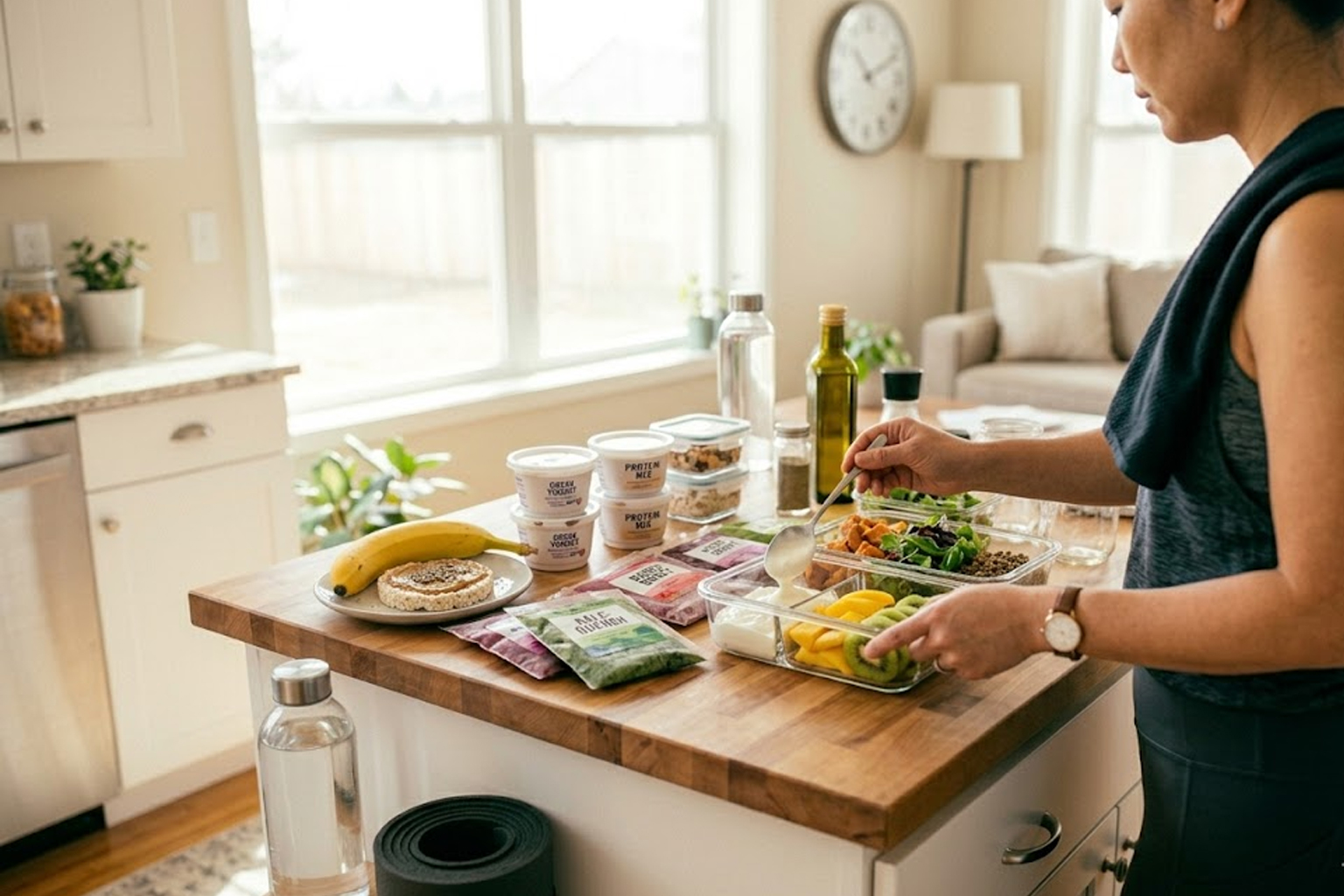
For morning sessions aim for a light, carb-focused snack 30–60 minutes before you start. Options like a banana with a spoonful of nut butter or a small bowl of oats work well. If you train later in the day, a balanced meal two to three hours beforehand provides steady fuel. Pair complex carbs with a modest protein source to reduce hunger during exercise.
Match portion size to workout intensity and your personal tolerance. When in doubt, start smaller and adjust upward as needed.
Post-workout and recovery meals
After strength or intense cardio aim to consume protein within an hour to support muscle repair. Include carbohydrates to replenish glycogen, especially if sessions are longer or frequent. Simple post-workout examples are yogurt with fruit, a turkey sandwich, or a smoothie with protein. Hydration and electrolytes matter too, so include water and a modest sodium source after heavy sweating.
A consistent post-workout habit speeds recovery and reduces next-day soreness. Plan easy-to-assemble options so you won’t skip this important step.
Practical planning tips
Practical planning makes timing realistic: batch-cook grains, pre-portion proteins, and keep quick snacks handy. Use the same small grocery list each week to avoid decision fatigue on workout days. Adapt portions and timing around family or work schedules rather than chasing ideal windows.
- Prepare three grab-and-go breakfasts for busy mornings.
- Portion out mixed nuts and dried fruit for quick energy.
- Freeze smoothie packs with premeasured fruit and protein powder.
Start with one change this week, such as a pre-workout snack or a ready post-workout option. Small wins build confidence and help these rhythms stick.
Conclusion
Simple, consistent meal timing is a practical tool to enhance energy and recovery for home workouts. Focus on predictable habits that fit your schedule and adjust portions for workout intensity. Over time these small changes support steadier performance and more reliable training progress.