Simplifying nutrition for an at-home fitness routine doesn’t need to be complicated. Good meals start with a few reliable building blocks and a plan that matches your schedule. Small adjustments to portions and composition can support energy, recovery, and overall progress. This article outlines practical approaches to create balanced daily meals without extra stress.
Core Principles for Practical Meal Design
Focus on three core components: protein for repair, carbohydrates for energy, and fats for satiety. Whole-food sources are preferable because they deliver fiber, micronutrients, and more sustained energy than overly processed options. Aim to include a vegetable or fruit at each main meal to boost vitamins and volume without many calories. Keeping portion sizes consistent across similar meals helps simplify calorie management and makes tuning intake easier over time.
These principles make it easier to assemble meals quickly by mixing and matching staples. When you repeat a few balanced combinations, planning becomes faster and less mentally taxing. Over time this consistency supports better performance and body composition goals.
Quick Meal Templates to Rotate Weekly
Templates reduce decision fatigue and ensure meals hit nutritional needs. Examples include a grilled protein, a generous serving of mixed vegetables, and a modest portion of whole grains; a stir-fry with lean protein, colorful veggies, and a small serving of noodle or rice; and a hearty salad with beans, seeds, varied greens, and a sliced protein source. Each template can be adapted with different seasonings, sauces, and cooking methods to keep flavors interesting without changing the nutrition fundamentals.
- Breakfast: Greek-style yogurt, fruit, and a sprinkle of nuts.
- Lunch: Grain bowl with protein, roasted vegetables, and a tangy dressing.
- Dinner: Baked fish or tofu, steamed greens, and a roasted sweet potato.
Rotate these templates through the week to maintain variety while keeping preparation time low. Swap ingredients seasonally to make use of fresher options and to keep costs reasonable.
Smart Shopping and Simple Prep Habits
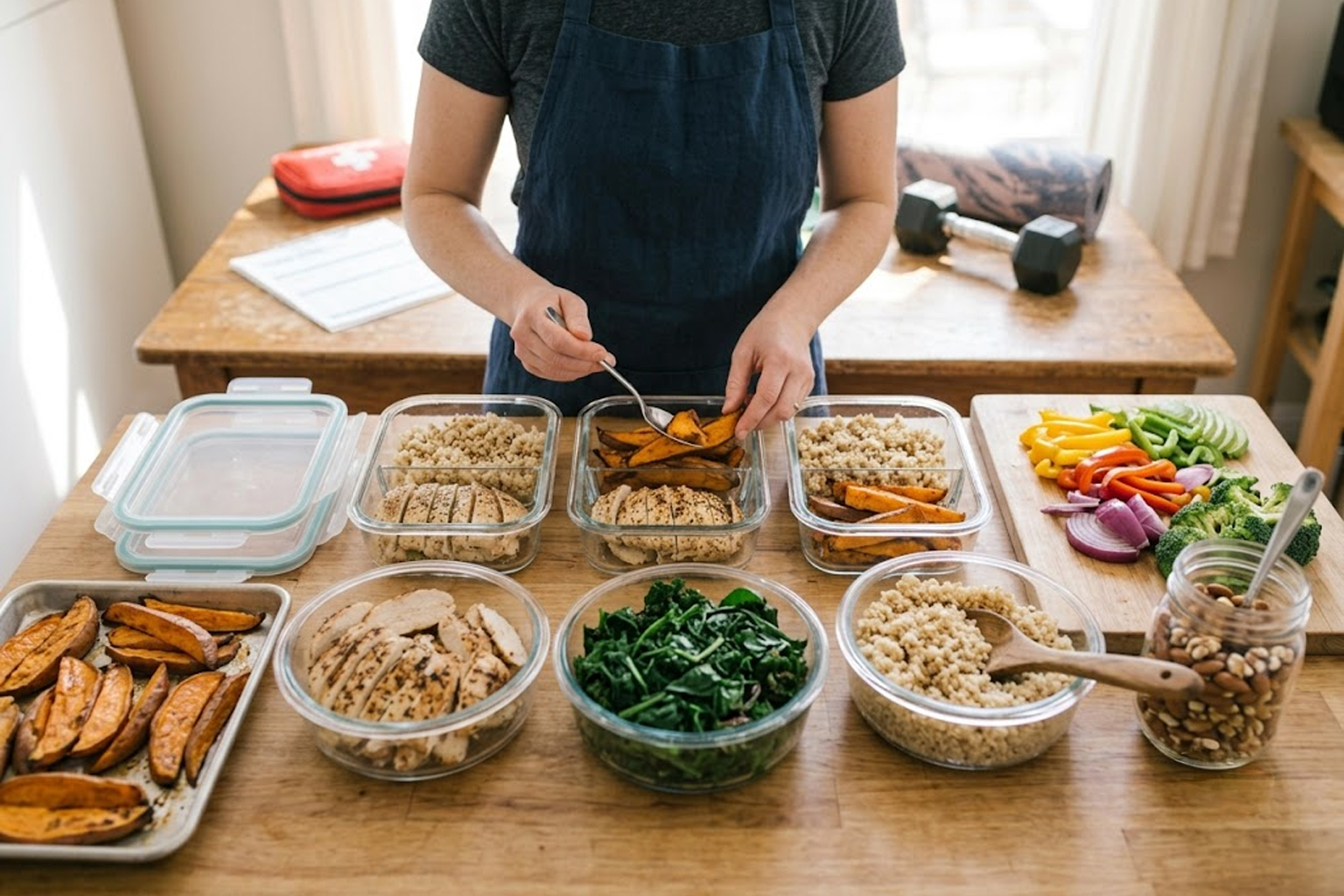
Spend a little time each week prepping components rather than full meals to maintain flexibility. Cook a batch of protein, chop vegetables, and portion out whole grains so you can assemble meals quickly. Keep a short shopping list focused on staples that pair well across templates to avoid waste and reduce decision-making at the store.
Label containers with dates and prioritize foods that will be used sooner. Small, consistent habits like these reduce kitchen friction and make it easier to stick to nutritious choices even on busy days.
Conclusion
Adopting basic meal templates and a few prep routines simplifies daily nutrition. Consistency with balanced building blocks supports energy and recovery for home workouts. Small changes maintained over time deliver steady results.