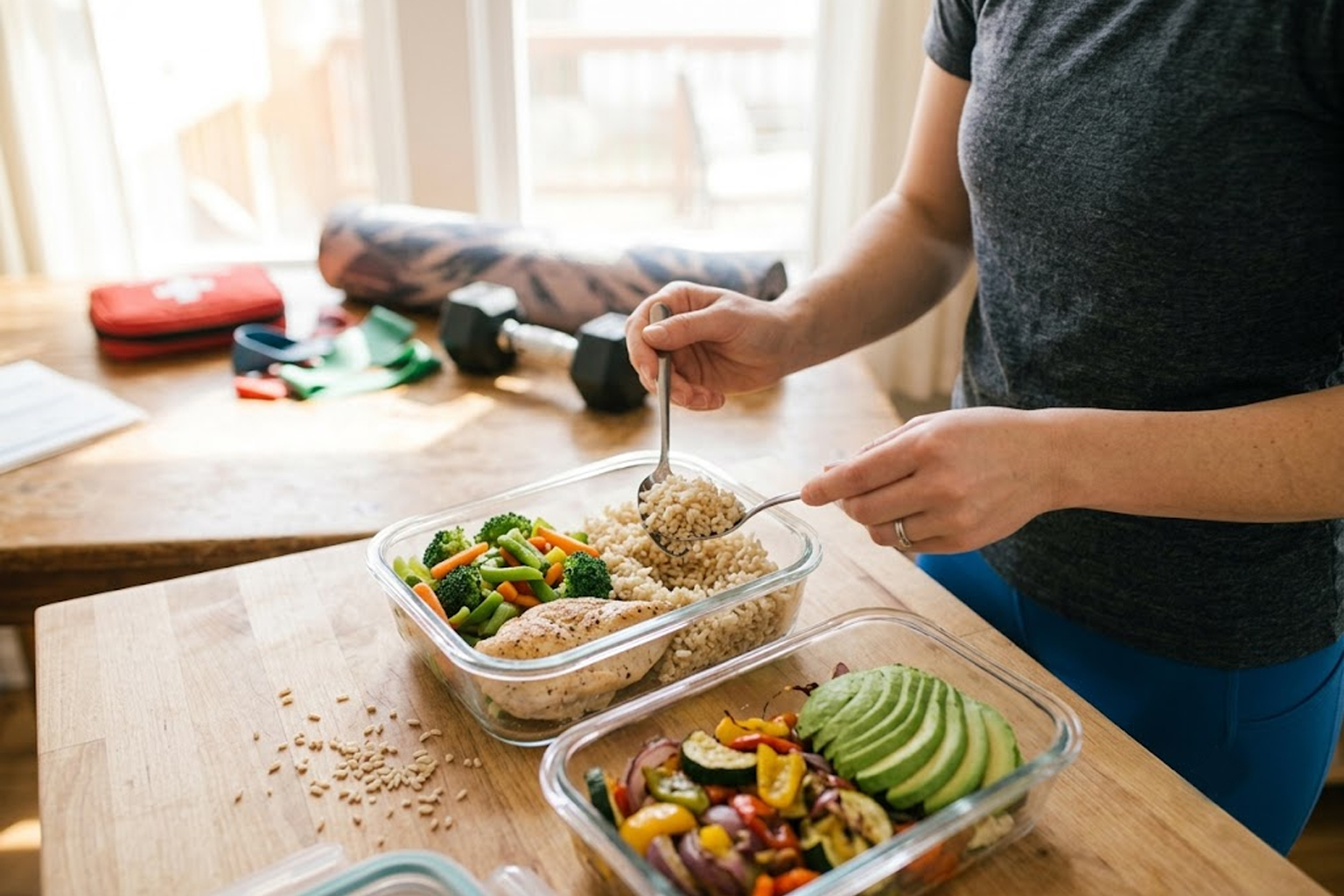
Consistent meals can simplify energy and recovery for regular home training.
Focusing on balanced components helps you stay satisfied and support strength gains.
Small, repeatable routines are easier to maintain than one-off plans.
This article outlines simple templates and practical adjustments for everyday use.
Core building blocks
Every reliable meal template starts with three core elements: protein, produce, and whole carbohydrates or healthy fats. Protein supports repair and maintenance after workouts, produce provides micronutrients and fiber, and carbohydrates or fats supply sustained energy depending on activity and preference. Aim to include a palm-sized portion of protein, a generous serving of vegetables, and a moderate serving of carbs or a fat source at most meals. These building blocks are flexible and can be mixed across ingredients you enjoy.
Keep portions consistent and focus on minimally processed foods to maximize nutrient density. Over time, this reduces decision fatigue and ensures steady progress toward fitness goals.
Daily templates for different training days
Adapting templates to training intensity helps you feel energized without overcomplicating meal prep. On heavier training days prioritize slightly larger carbohydrate portions around workouts, while lighter days can shift to more vegetables and fats to maintain satiety. Timing meals to include a balanced option before and a recovery-focused meal after sessions can improve performance and comfort. Simple swaps within the same template keep variety without adding planning stress.
- Higher intensity: lean protein + rice or potato + vegetables.
- Moderate day: protein + quinoa or whole grain + mixed salad.
- Light/rest day: protein + roasted vegetables + avocado or nuts.
These templates act as guidelines rather than strict rules and can be customized to taste and schedule. Use them to structure shopping lists and batch cooking.
Practical habits to keep it consistent
Batch cooking, portioning ingredients, and keeping a stocked pantry streamline adherence to meal plans. Prepare proteins and grains in advance, and rotate sauces or seasonings to keep flavors interesting without added work. Simple prep rituals, like chopping vegetables once or using frozen produce, save time and reduce friction on busy days. Tracking a few favorite combinations helps you build a reliable rotation and minimizes waste.
Small habits compound into reliable nutrition, making it easier to support ongoing home fitness routines. Prioritize consistency over perfection to sustain momentum.
Conclusion
Adopt simple, repeatable meal templates focused on protein, produce, and appropriate energy sources.
Customize portions and timing around training intensity to support performance and recovery.
Small habits like batch cooking and consistent shopping make healthy eating sustainable.