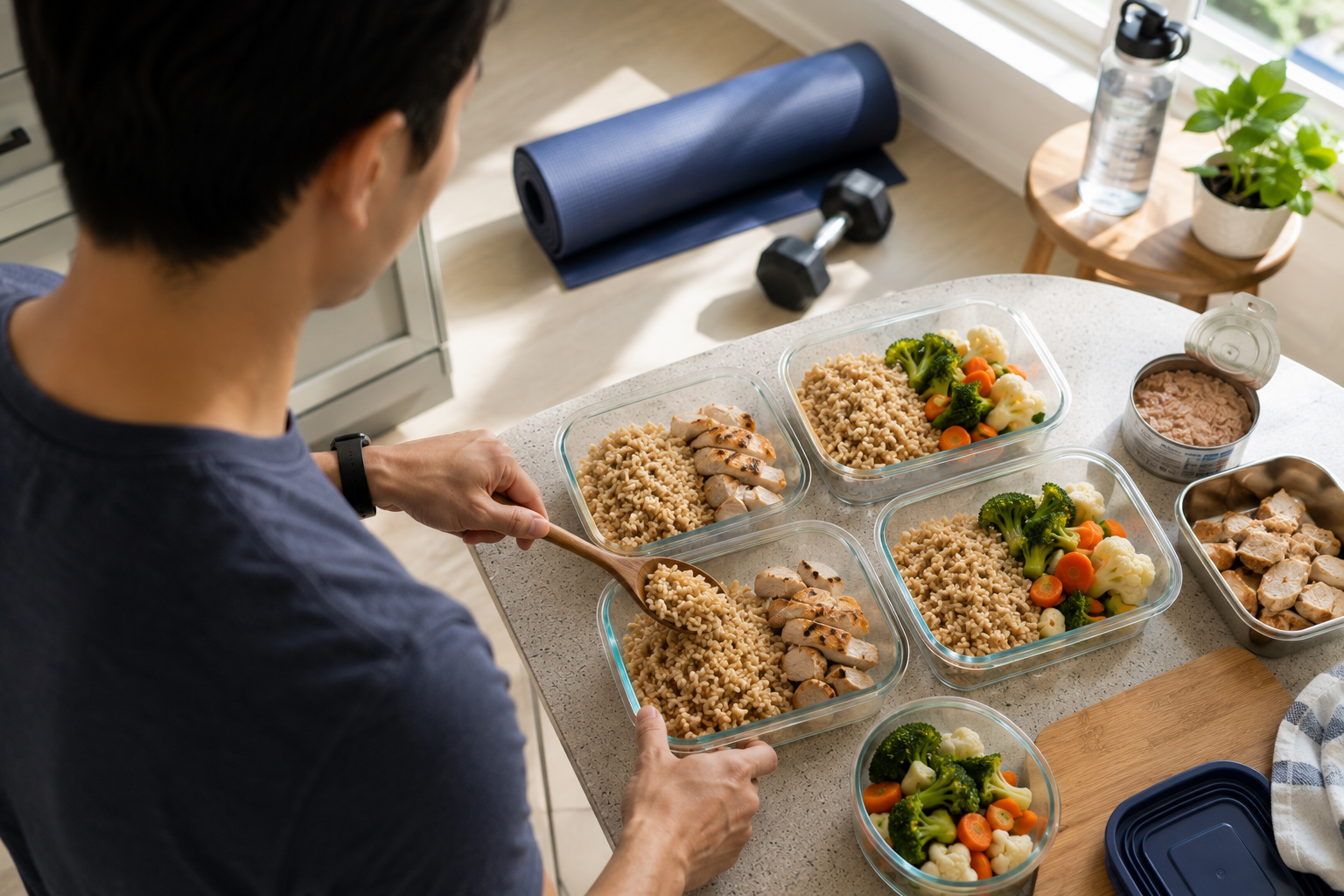
Supporting daily home workouts starts with practical meals that prioritize steady energy and recovery.
You don’t need complicated recipes or expensive ingredients to make meaningful changes.
A few consistent patterns—balanced proteins, vegetables, and modest carbs—cover most training days.
This article outlines simple structures and smart swaps to keep nutrition effective and affordable.
Why meal composition matters
Meal composition shapes how you feel during sessions and how quickly you recover afterward.
Prioritizing a source of protein with each meal supports muscle repair and satiety.
Including vegetables or fruit adds vitamins and fiber that sustain energy and aid digestion.
Carbohydrate portions tuned to workout intensity help replenish glycogen without excess.
Keeping portions sensible and consistent makes it easier to track progress and maintain energy.
Small adjustments across days can compound into noticeable improvements.
Affordable pantry swaps for quality nutrition
You can upgrade nutrition without raising grocery bills by choosing versatile staples.
Canned beans and lentils provide plant-based protein and fiber at low cost.
Frozen vegetables preserve nutrients and reduce waste, while whole grains like oats or brown rice offer slow-release energy.
Simple fats such as olive oil or nut butter add calories and support fullness.
- Canned tuna or sardines for budget-friendly protein and omega fats.
- Dry or canned legumes as a protein and carbohydrate base.
- Frozen mixed vegetables for ready-made micronutrients.
- Oats, whole-grain pasta, and brown rice for sustained energy.
Build meals around one protein, one starch, and one vegetable to keep shopping simple.
These swaps make it easy to meet nutrient needs without complicated planning.
Quick meal templates for busy days
Using repeatable templates saves decision fatigue and keeps daily intake balanced.
Aim for a template that combines about 20 to 30 grams of protein, a fist-sized portion of vegetables, and a palm-sized portion of carbohydrates for most training days.
For light sessions, reduce carbohydrates; for longer or intense workouts, increase them slightly.
These rules help you adapt without reinventing each meal.
-
- Protein + Veg + Grain: grilled chicken or tofu, steamed greens, and quinoa or rice.
- Bowl: canned beans, roasted vegetables, a drizzle of oil, and a small serving of potato.
- Snack-style: greek yogurt with fruit and a handful of nuts post-short workout.
Rotate a few templates through the week to cover different training needs.
Consistency, not variety, is the biggest ally for steady progress.
Conclusion
Simple, repeatable meal structures make it easier to support daily home training.
Focus on protein, vegetables, and appropriate carbs while using budget-friendly swaps.
Small, consistent choices over time lead to better energy, recovery, and long-term results.