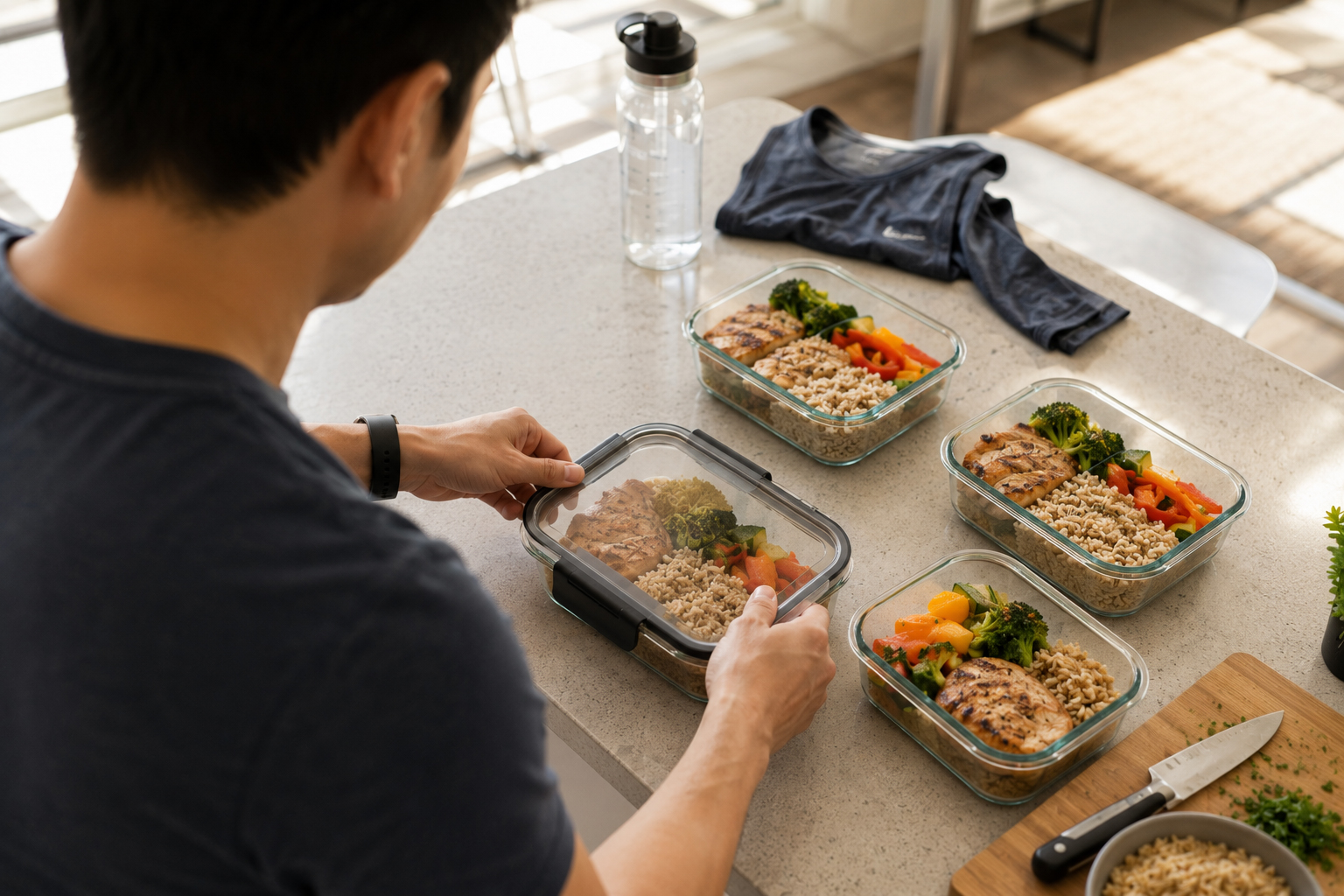
Consistent nutrition gives predictable energy for at-home training sessions.
Small, repeatable meal plans reduce decision fatigue and support progress.
This article outlines simple plate templates, grocery moves, and timing tips.
Each approach favors whole foods, practical prep, and flexible portions.
Use these ideas to build routines that match your schedule and goals.
Foundational Plate Structure
Build meals around a clear balance: lean protein, quality carbohydrates, and vegetables or fruits provide vitamins and fiber. Aim for roughly a palm-sized protein portion, a cupped hand of carbs, and two fist-sized vegetable servings at most meals. Healthy fats—an olive oil drizzle or a small handful of nuts—round out satiety and support recovery. This structure adapts across breakfast, lunch, and dinner while keeping macronutrients straightforward. Tailor carbohydrate amounts to workout duration and overall activity levels.
Keep portions consistent and adjust slightly for heavier or lighter training days. Consistency beats perfection when you are building energy habits. Monitor how meals affect your energy and tweak ingredients accordingly.
Smart Grocery and Prep Moves
Choose versatile staples that combine easily into balanced plates, such as eggs, canned beans, whole grains, frozen vegetables, and a protein source you enjoy. Batch-cook grains and proteins once or twice a week to shorten assembly time on training days. Pre-portion snacks like yogurt, fruit, or nut mixes to avoid over-eating and maintain steady fuel between sessions. Label containers with dates and portion cues to reduce uncertainty. Rotate staple options to avoid monotony and cover a broader nutrient range.
Shopping and prep habits create margin for consistency during busy weeks. Small upfront effort yields reliable meals when training intensity varies. Over time, you’ll learn which staples reliably fuel your sessions.
Timing and Portioning Around Workouts
Avoid heavy, high-fat meals immediately before short, intense sessions; instead favor a moderate carb-plus-protein snack 60–90 minutes beforehand. After training, prioritize protein combined with some carbohydrates to support muscle repair and glycogen replenishment. For evening workouts, shift larger meals earlier and use a lighter, protein-focused dinner if digestion affects sleep. Hydration and sodium balance also matter; include a salty snack or electrolyte option after long or sweaty sessions. Small pre-workout snacks can prevent energy dips without causing discomfort.
Experiment with timing to discover what leaves you energized rather than bloated. Adjust portions to match session length and perceived effort. Note how sleep and stress interact with nutrition to influence performance.
Conclusion
Reliable meal plans simplify choices and keep energy steady for at-home training.
Start with a balanced plate model, smart prep, and sensible timing adjustments.
Refine portions based on results and stick with patterns that feel sustainable.