Consistent nutrition makes home training more productive and enjoyable.
A clear daily meal framework reduces decision fatigue and keeps energy steady.
Small, repeatable habits around protein, carbs, and vegetables support recovery.
This article outlines practical approaches you can adapt to busy schedules.
Use these ideas to simplify meals while still meeting fitness goals.
Build a Balanced Plate
Start each main meal with a thoughtful balance of protein, fiber-rich carbohydrates, and vegetables to sustain energy and support muscle repair. Prioritize lean or plant proteins that are easy to portion and pair them with whole grains or starchy vegetables for workout fuel. Non-starchy vegetables provide micronutrients and volume, helping you feel full with fewer calories. Aim to visualize your plate rather than counting every nutrient to make choices faster.
- Protein examples: eggs, Greek yogurt, tofu, canned fish, legumes.
- Carb options: brown rice, sweet potato, quinoa, whole-grain pasta.
Keep staples on hand so assembling a balanced plate takes minutes instead of hours. Over time, consistent patterns become second nature and reduce the urge to skip meals or snack poorly.
Timing and Portion Tactics
Meal timing should support your workout schedule and daily rhythm, not rigid rules. A modest pre-workout snack with carbs and a little protein can improve performance, while a recovery meal within an hour of training helps replenish glycogen and initiate repair. Portion control matters more than precise timing for most home trainers — adjusting serving sizes to activity level is usually sufficient. Listen to hunger cues and pair them with simple templates to avoid under- or overeating.
- Quick pre-workout: banana with nut butter or a small yogurt.
- Recovery: lean protein plus a vegetable-forward grain bowl.
These practical timing habits protect energy and reduce cravings throughout the day. Experiment with what feels best and make small adjustments rather than overhauling your routine.
Prep, Shopping, and Simplicity
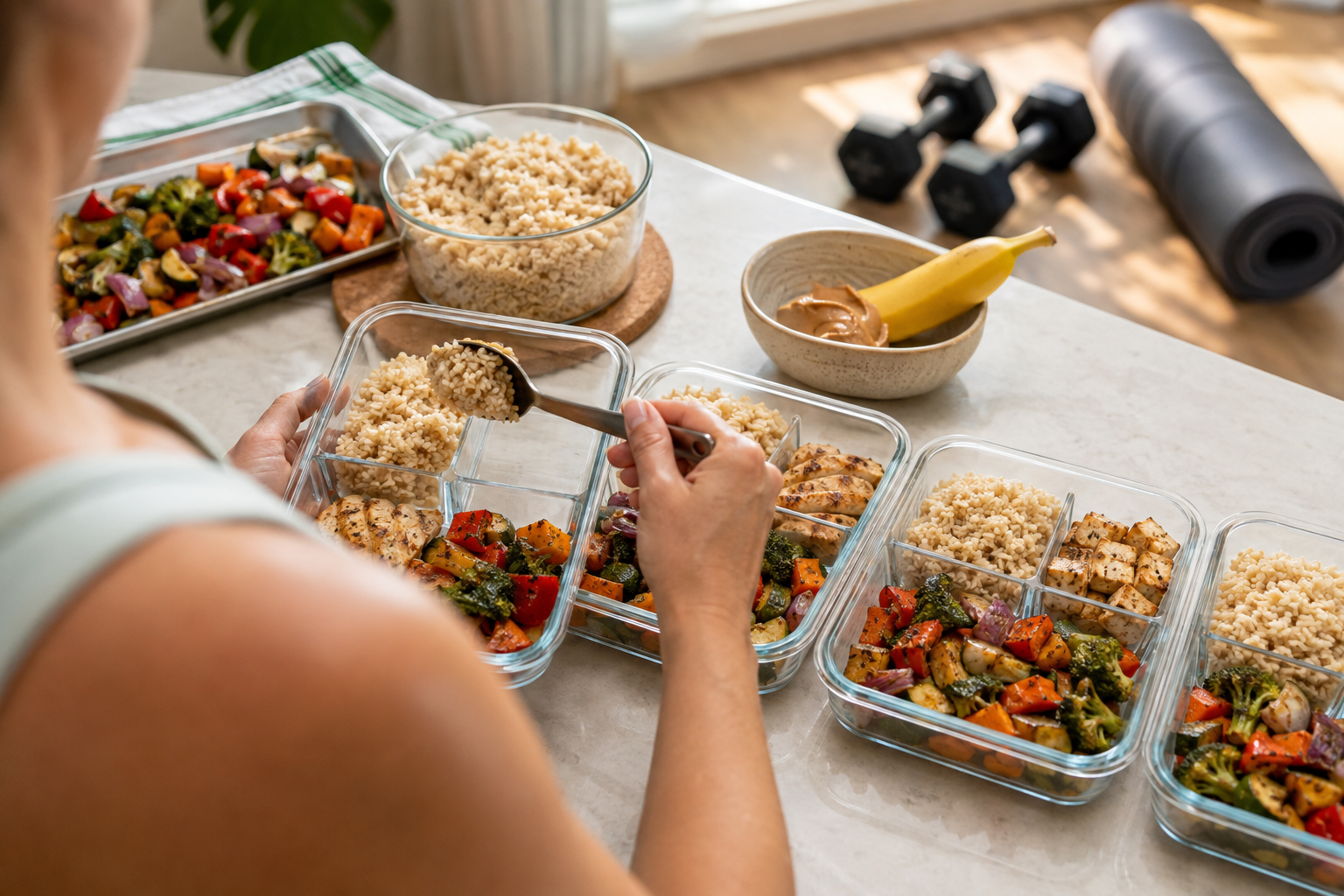
Meal prep lowers friction and makes healthy choices the default. Choose a handful of versatile ingredients you enjoy and rotate them weekly to avoid boredom while keeping shopping efficient. Batch-cook grains and proteins, chop vegetables in advance, and use simple seasonings to speed assembly. Simplicity increases adherence — a handful of reliable recipes can cover most weekly meals.
- Shop for shelf-stable proteins and frozen vegetables for convenience.
- Prep components: cooked grains, roasted vegetables, portioned proteins.
With a small set of go-to meals, you’ll waste less time and eat more consistently. Practical systems beat perfect plans when the goal is long-term progress.
Conclusion
Adopt a balanced plate approach and simple timing rules to support at-home training.
Prioritize a few versatile staples and short prep habits that reduce decision-making.
Consistency and simplicity will drive better results more than perfection.