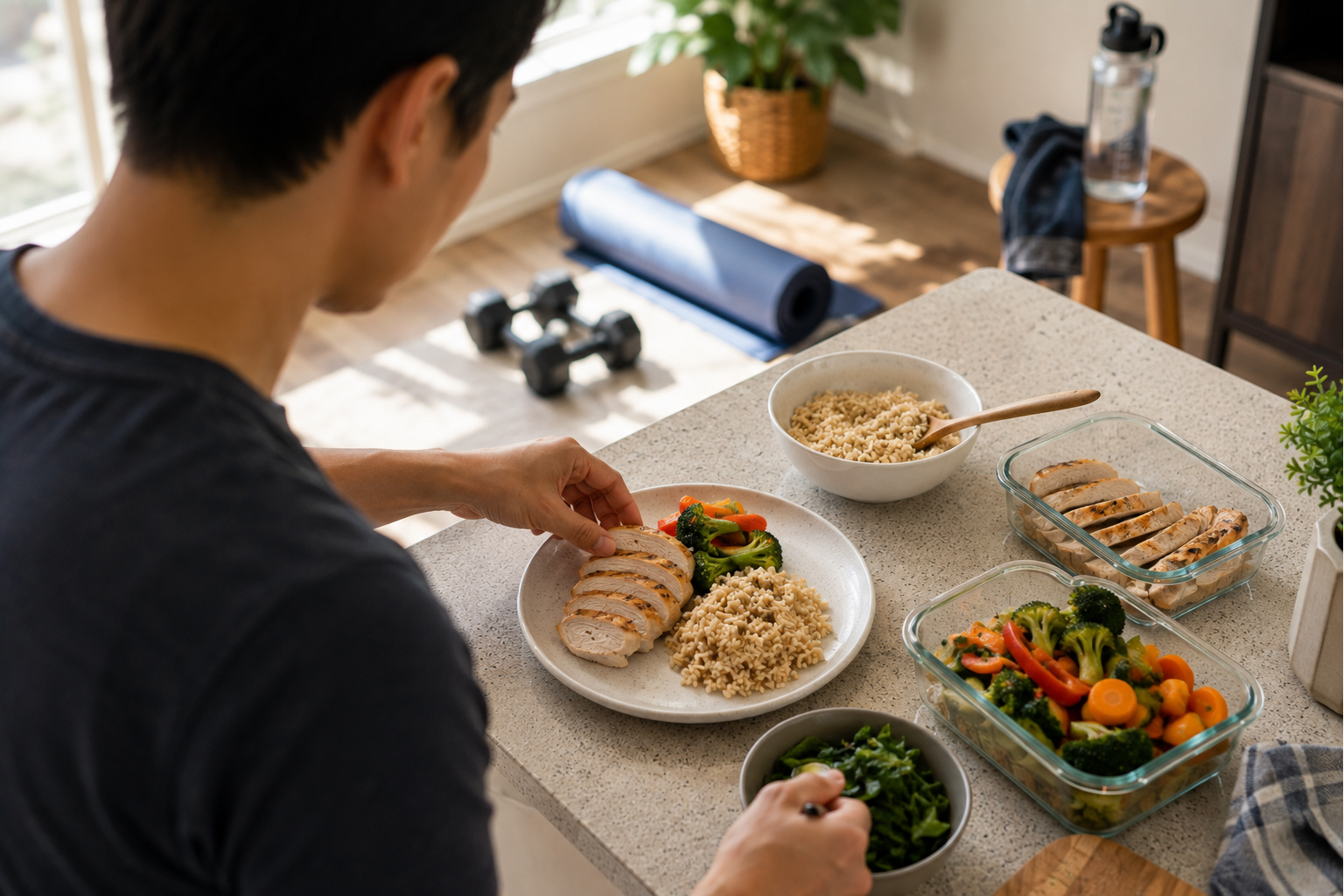
Creating consistent meal rhythms makes daily home workouts easier to support and maintain. Small, repeatable habits around timing and composition reduce decision fatigue and help you meet energy needs. This approach prioritizes simple plates built from a few reliable ingredients rather than complex recipes. Over time, predictable meals make progress more measurable and nutrition easier to manage.
Adopting rhythms doesn’t demand strict rules or calorie counting. It emphasizes structure and sustainability instead of perfection.
Fueling Foundations
Start with three components on most plates: a lean protein source, a fiber-rich carbohydrate, and a vegetable or healthy fat. Proteins support recovery and satiety while carbs provide usable energy for training. Vegetables and fats round out micronutrients and slow digestion for steadier blood sugar. Portion sizes will vary with goals, but the composition remains the same.
Keeping these foundations in regular rotation simplifies grocery shopping and meal prep. When components are predictable, building balanced meals becomes fast and flexible.
Timing and Portion Guidance
Schedule meals so that a substantial plate lands two to three hours before a harder workout and a recovery-focused meal follows within an hour after exercise. Pre-workout plates emphasize carbohydrates and moderate protein to fuel effort without discomfort. Post-workout meals prioritize protein and some carbohydrates to replenish glycogen and support repair. Smaller, nutrient-dense snacks can bridge long gaps between main meals.
Listen to your appetite and adjust portions based on energy output and daily activity. Consistency in timing helps regulate hunger and performance.
Smart Ingredient Swaps
Simple swaps keep variety without complexity: choose beans or lentils for budget-friendly protein, swap white rice for quinoa for extra fiber, or add canned tuna to a salad for quick protein. Frozen vegetables are as nutritious as fresh and save time on preparation. A handful of nuts or a drizzle of olive oil adds healthy fats that help you feel satisfied longer. These small changes can improve nutrient density without overhauling habits.
- Swap full meals occasionally with balanced smoothies for portability.
- Use a tub of Greek-style yogurt as a quick protein base.
Focusing on a few reliable pantry and freezer staples reduces friction when building meals. Consistent ingredients make it simple to mix and match plates through the week.
Quick Plate Examples
Try a morning bowl of oats with nut butter and fruit for steady energy before a light workout. For lunch, assemble a grain bowl with chicken, roasted vegetables, and a small portion of avocado. Dinner can be a simple stir-fry of tofu or lean meat with mixed vegetables and brown rice. These templates are easy to scale and adapt based on what’s in the kitchen.
- Oats + nut butter + banana
- Grain bowl + protein + veggies
- Stir-fry + rice + greens
Rotating a few quick plates keeps meal prep manageable and aligns nutrition with training demands. Regular practice turns these rhythms into lasting habits.
Conclusion
Establish simple, repeatable meal patterns that pair protein, carbohydrates, and vegetables. Time plates around workouts and favor easy ingredient swaps to stay consistent. Small, sustainable rhythms deliver steady energy and support progress at home.