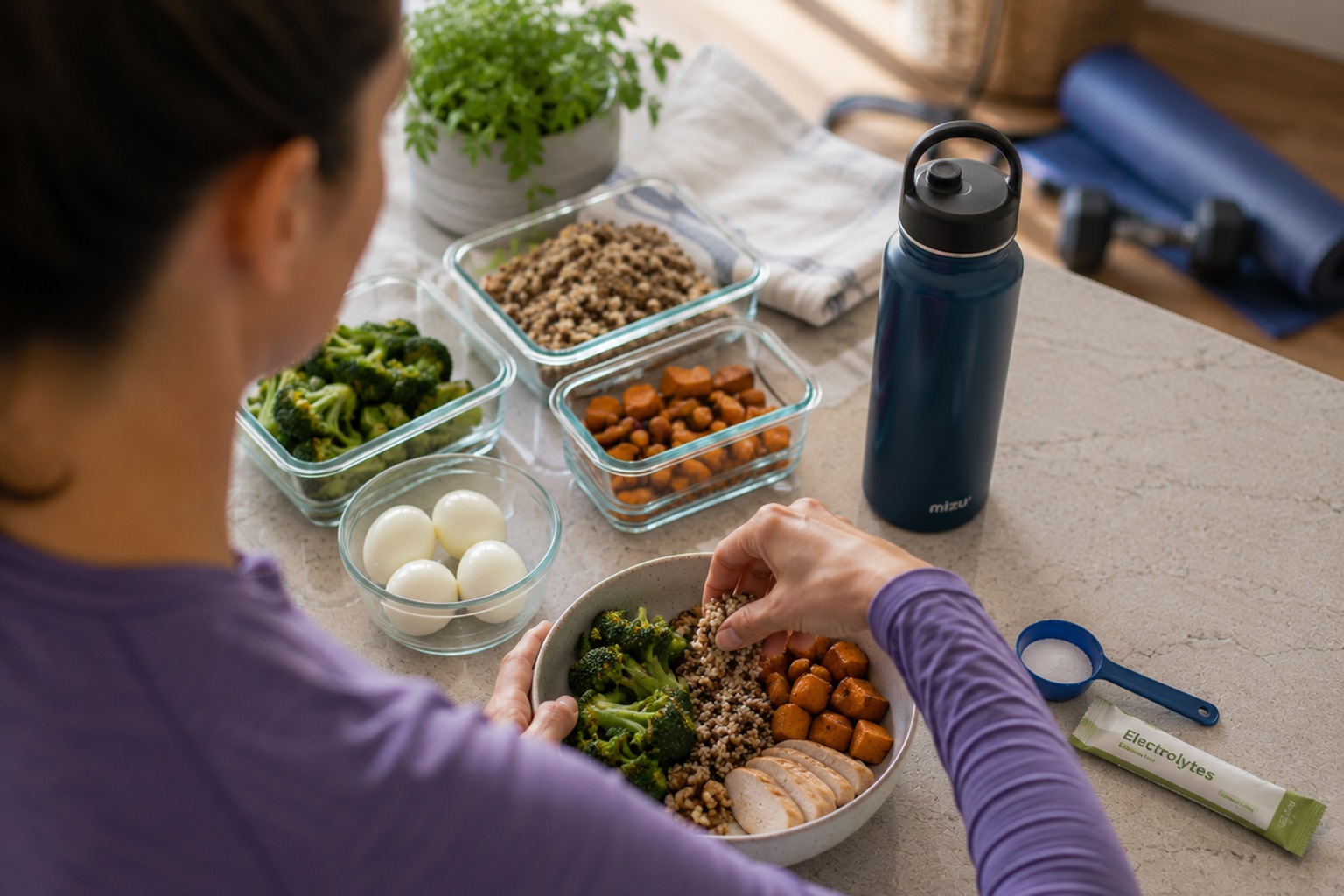
Small, consistent changes to how and what you eat can have an outsized effect on energy, focus, and recovery for home workouts. This guide outlines practical adjustments that require minimal prep but improve performance across the week. You do not need to overhaul your entire diet; think of strategic swaps and routine patterns instead. Read on for simple, scalable approaches you can use immediately.
Plan Meals Around Movement
Aligning meal timing with your training windows helps steady energy and reduces mid-session fatigue, especially when workouts happen at home without external cues. Aim to eat a balanced meal two to three hours before a moderate workout, or a small carbohydrate-plus-protein snack 30 to 60 minutes prior if time is tight, and monitor how different options affect perceived exertion. Hydration scheduling is part of this planning: sipping fluids throughout the day and adding electrolytes when you sweat heavily keeps performance reliable. Test one timing change at a time so you can learn what best supports your sessions.
Being deliberate about pre- and post-session intake removes guesswork on training days. Small adjustments in timing often translate directly into clearer energy and steadier focus during workouts.
Build Balanced, Compact Plates
When preparing meals that support frequent home training, prioritize three components on compact plates: protein to provide amino acids for repair, carbohydrates for immediate fuel, and a portion of vegetables or fruits for vitamins and fiber. Keeping portions reasonable but consistent helps maintain steady energy between sessions without feeling overly full; this is particularly useful when workouts are squeezed between work and home responsibilities. Include a small source of healthy fat for satiety and to slow carbohydrate absorption, which can prevent energy dips later in the day. These balanced plates can be assembled quickly with simple staples you likely already keep in your kitchen.
- Protein: eggs, canned fish, lean poultry, legumes
- Carbs: whole grains, starchy vegetables, fruit
- Produce: leafy greens, colorful vegetables, berries
Repeatable plate templates reduce decision fatigue and make it easier to eat well consistently. Over time, this creates a reliable foundation for consistent training energy.
Small Swaps That Improve Energy and Recovery
Simple ingredient swaps can sharpen workout energy without dramatic cost or effort: swap sugary snacks for fruit plus nuts, choose whole grains over refined options, and add a small protein source to snacks to extend sustained energy. After sessions, prioritize a recovery snack or meal that pairs carbohydrates with protein to support glycogen replenishment and muscle repair; aim for roughly a 3:1 to 4:1 ratio of carbs to protein for shorter, intense sessions. Batch-prep components like roasted vegetables, cooked grains, and portioned proteins to make post-workout choices fast and consistent. Pay attention to fiber and fat around training—too much immediately before intense work can slow digestion and affect comfort.
These modest swaps and prep habits compound quickly into fewer energy slumps and better recovery. Consistency matters more than perfection when supporting regular home workouts.
Conclusion
Make timing and composition small priorities rather than big projects. Try one adjustment at a time and note its effect on your energy and recovery. Over weeks, those small changes yield steadier workouts and clearer progress.