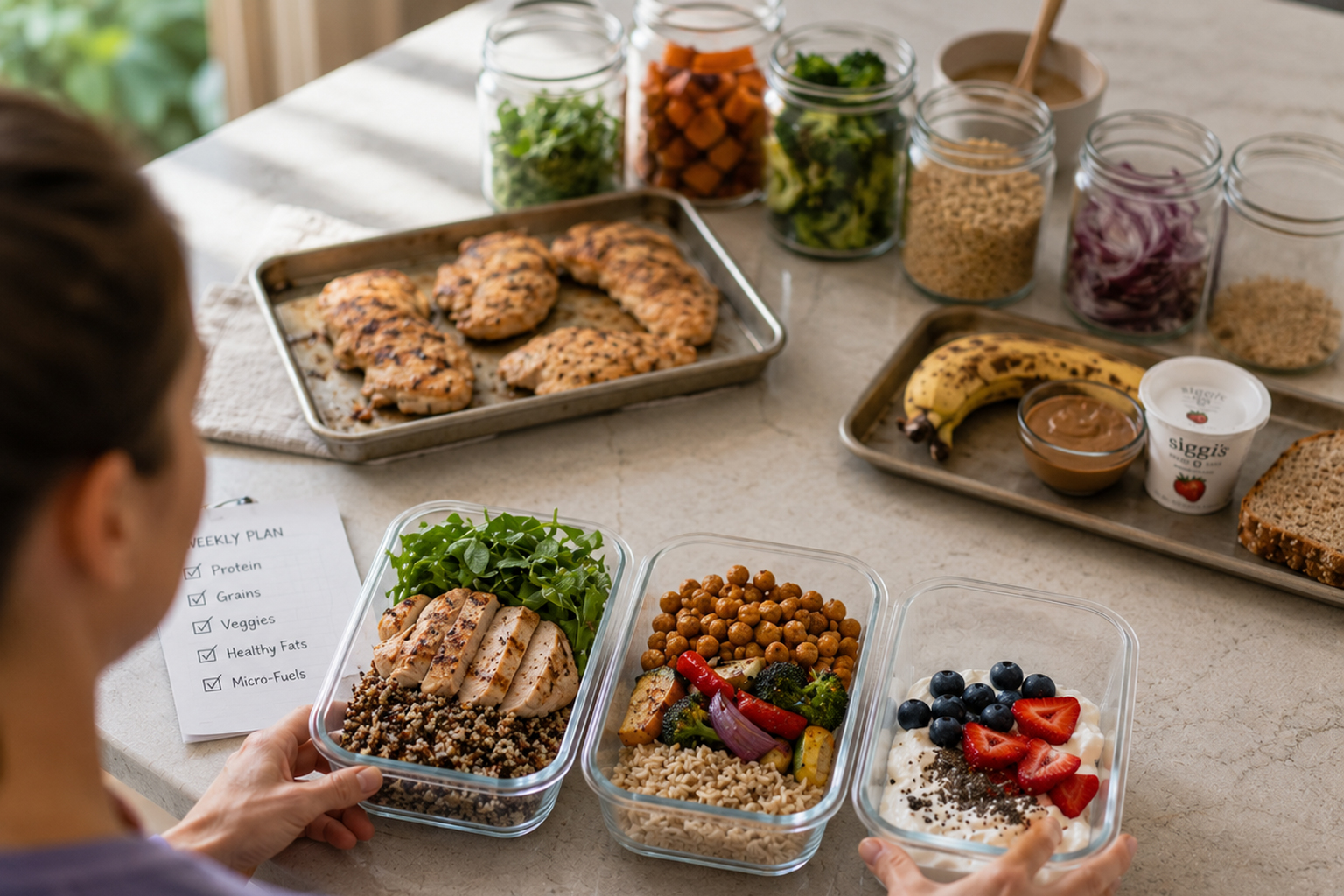
Simplifying what you eat can make consistent fueling for home workouts much more achievable. When meals are predictable and easy to assemble, it reduces decision fatigue and helps maintain steady energy across training days. This approach doesn’t mean boring food — it means reliable templates that you can tweak. The goal is to spend less time planning and more time moving with sufficient fuel.
Why simplification matters for home training
At-home routines often compete with work, family tasks, and inconsistent schedules, so complicated meal plans rarely stick. Simple meal designs reduce friction and make it easier to hit protein and carbohydrate targets that support performance and recovery. They also help avoid late-day energy crashes that derail evening sessions. Over time, straightforward meals build habits that sustain training progress without extra stress.
Keeping things simple also supports healthier grocery shopping, fewer impulse choices, and better portion control. A stable routine lets you measure progress and adapt without reinventing every meal.
Three plate templates to rotate
Using repeatable plate templates is one of the easiest ways to simplify meals while ensuring balanced nutrition. Each template centers on a protein source, a fiber-rich vegetable, and a carbohydrate or healthy fat, adjusted for portion size. Rotating a few favorites reduces cooking time and makes leftovers useful for next-day meals. You can mix seasonings and sauces to add variety while keeping the structure constant.
- Template A: Grilled or pan-seared protein + leafy greens + quinoa or sweet potato.
- Template B: Plant-based protein (beans or tofu) + roasted vegetables + brown rice.
- Template C: Eggs or yogurt + fruit + whole-grain toast or oats.
These simple templates cover pre-workout fueling, main meals, and recovery options with minimal decision-making. Swap components weekly to avoid monotony without changing the underlying habit.
Timing, micro-fuels, and snacks
Small, planned snacks bridge gaps when a full meal isn’t practical before a session. Aim for a modest mix of carbs and protein about 30–90 minutes before a workout for steady energy. Post-workout, a quick recovery mini-meal with protein and carbohydrates supports repair and reduces soreness. Keep portable options on hand to make these micro-fuels automatic and convenient.
Examples include a banana with nut butter, a small yogurt with berries, or a simple tuna sandwich. These choices are fast to prepare and travel-friendly for busy home routines.
Kitchen habits that keep it sustainable
Batch-cooking core proteins, pre-chopping vegetables, and using clear storage labels make simplified meals effortless to assemble. A short weekly shopping list based on your templates reduces waste and speeds meal prep. Investing 60–90 minutes on one day can produce multiple ready-to-eat components for the week. Minimalist cookware and a reliable set of seasonings further streamline the process.
Over time, these habits turn simple templates into automatic behavior that supports consistent training. They free mental energy for workouts rather than meal planning.
Conclusion
Simplified meal strategies create consistent fuel without a complicated plan. Use repeatable plate templates, planned micro-fuels, and basic prep routines to support energy and recovery. Small, sustainable shifts in how you shop and cook make regular home training far easier to maintain.