Consistent energy for home workouts begins with simple, repeatable meal choices. A focus on appropriate portions and macronutrient balance helps you train harder and recover faster. Small adjustments in timing around sessions can reduce fatigue and improve performance. Below are practical principles and easy templates to put into action this week.
Why meal composition matters
Meals that combine quality carbohydrates, lean protein and moderate healthy fats support both immediate workout energy and subsequent recovery. Carbohydrates replenish glycogen for higher-intensity efforts while protein supplies the amino acids needed for tissue repair and strength gains. Including fiber-rich vegetables and a source of healthy fat helps regulate blood sugar and keeps energy steady between sessions. Hydration and simple electrolytes also influence perceived effort during home workouts and should not be overlooked.
Understanding these roles lets you prioritize foods that match your session goals, whether power, endurance or mobility. You don’t need perfection—consistent, balanced plates matter more than one ideal meal.
Quick meal templates
Templates simplify decision-making and reduce prep time by giving you a reliable base to rotate. Each template below aims to deliver a mix of carbs for fuel, protein for recovery and fats for satiety, with room for seasonal produce and pantry staples. Use these as starting points and adjust portions based on workout length and intensity.
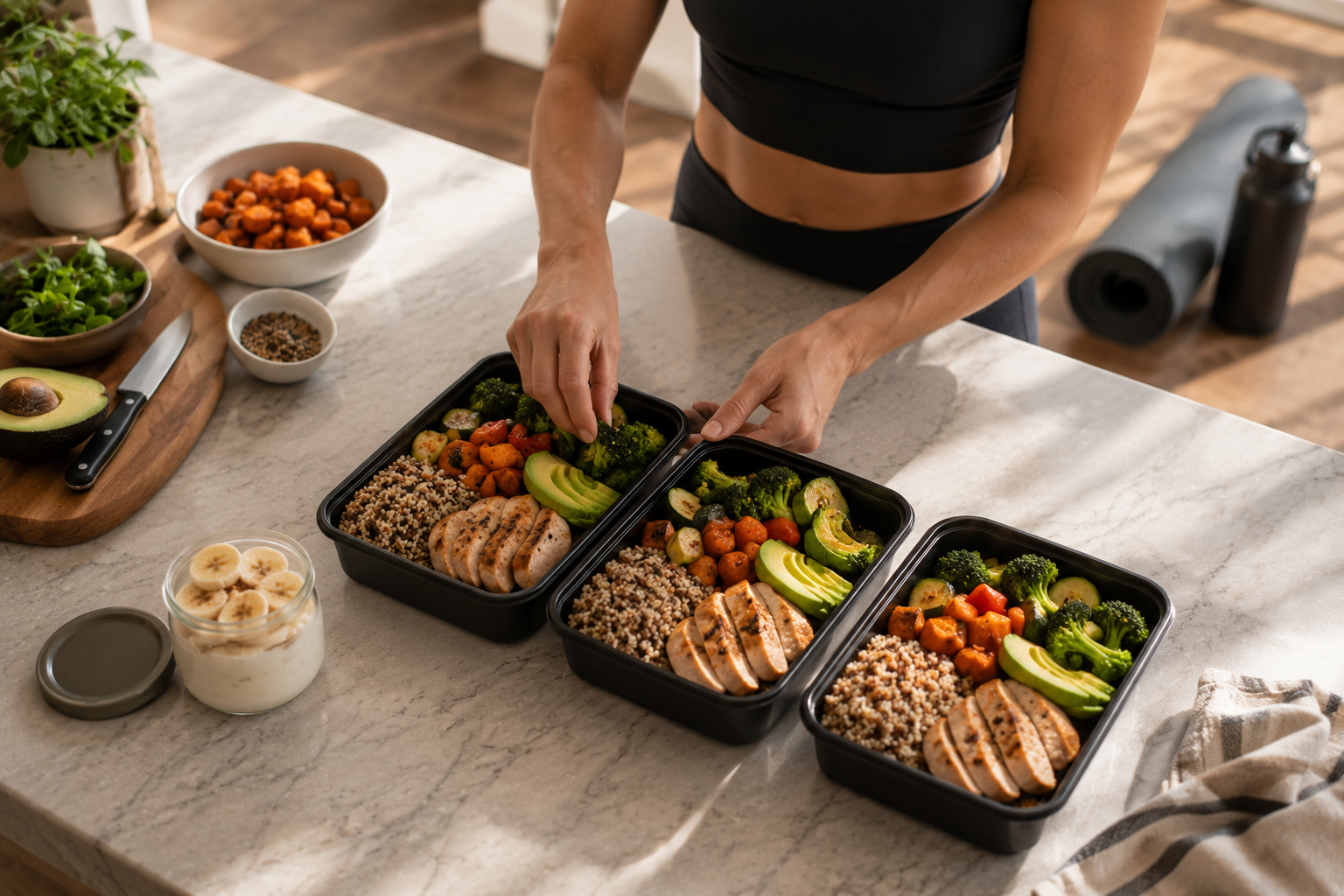
- Grain bowl: cooked whole grain, roasted vegetables, grilled lean protein, tahini or avocado.
- Wrap or sandwich: whole-grain wrap, lean sliced protein, leafy greens, hummus and a piece of fruit.
- Simple plate: baked potato or rice, steamed greens, pan-seared fish or beans, olive oil drizzle.
Rotate templates across the week to keep meals interesting and to ensure nutrient variety. Small swaps within these frameworks keep prep simple while adapting to appetite and time.
Snack strategies for short sessions
For brief, high-effort sessions, a light snack 30–90 minutes before can boost available energy without causing discomfort. Choose easily digestible carbohydrates paired with a small amount of protein—examples include yogurt with banana, a rice cake with nut butter, or a small smoothie. After the session, prioritize a snack that includes protein and carbs to jumpstart recovery and reduce late-day fatigue.
Keep portable, ready-to-eat options on hand to avoid skipping post-session nutrition. Consistent small snacks around workouts compound into better training quality over weeks.
Practical prep and timing
Batch cook core components like grains, roasted vegetables and proteins so assembling balanced plates takes minutes. Use portion containers to match your training days—larger carbohydrate portions on heavy days and smaller ones on light days. Plan meals and snacks around your most consistent workout times to avoid guesswork and last-minute poor choices. Simple tools like a timer for marinating or a one-sheet roast can save both time and mental energy.
Small planning steps reduce friction and make it easier to stick with supportive meal habits. Over time, these routines translate into steadier energy and clearer training progress.
Conclusion
Design plates around carbs for fuel, protein for repair and fats for steadiness. Use simple templates and light pre/post snacks tailored to session length. Consistent meal patterns make at-home training more effective and sustainable.