Fueling short home workouts doesn’t require elaborate recipes or exacting timing.
A balanced plate that includes protein, starchy carbs, and vegetables can sustain energy and aid recovery.
Small, consistent adjustments in portion and composition often have a bigger impact than strict diets.
This article outlines practical plate choices and simple rhythms you can use every day.
Why balance matters
Balanced meals stabilize blood sugar and supply steady energy for both moderate and intense home sessions. Protein supports muscle repair, carbs restore glycogen and vegetables provide fiber and micronutrients. Together these elements help avoid energy crashes and support consistent training adaptation over time.
Focusing on balance rather than perfection makes nutrition sustainable. Small wins in meal composition compound across weeks.
Composing a practical plate
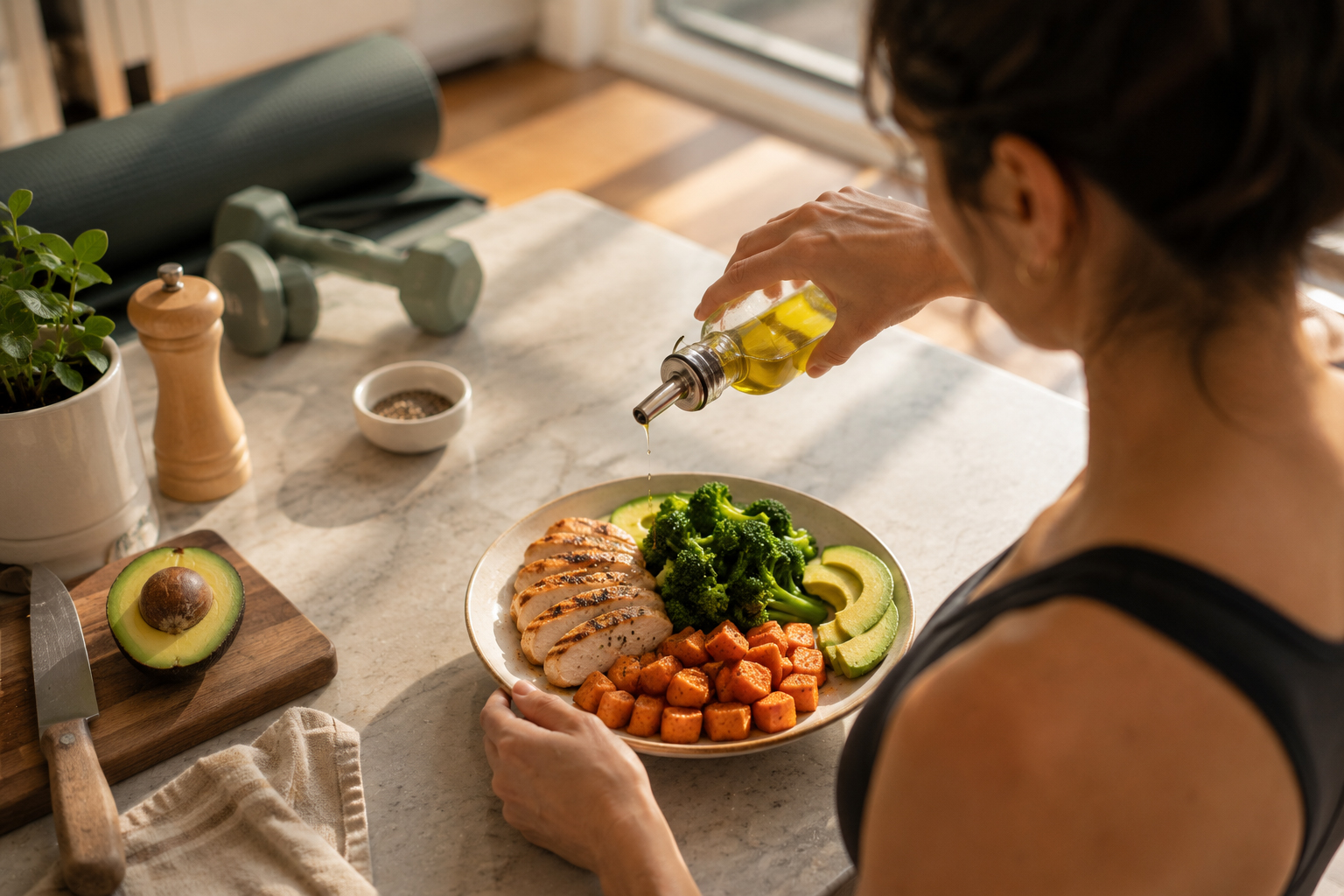
A practical plate is simple: about one quarter protein, one quarter starchy carbohydrate, and half vegetables or salad. For many home trainers, that translates to a palm-sized portion of cooked protein, a cupped-hand serving of rice or potato, and a generous pile of greens. Including a small source of healthy fat, like olive oil or avocado, supports satiety and nutrient absorption. Portion sizes can be adjusted based on session length and personal needs without changing the basic pattern.
Keep staples on hand so assembling this plate takes minutes. Over time you will learn exact portions that align with your energy demand.
Timing and simple examples
Aim to eat the balanced plate one to three hours before a planned home workout to ensure digestion is comfortable. For shorter sessions under 30 minutes, a lighter version of the plate or a small snack with carbs and protein can suffice. After training, a similar plate with slightly more protein helps recovery and maintains fullness until the next meal.
Examples include grilled chicken with sweet potato and steamed broccoli, or a chickpea salad with quinoa and mixed greens. These combinations are quick to prepare and easy to vary.
Practical tips for busy home trainers
Batch cooking proteins and grains once or twice a week simplifies meal assembly throughout the day. Keep frozen vegetables and simple dressings to speed up plate building when time is limited. Use measuring tools for a few weeks to learn portions, then relax the routine as you gain confidence. Hydration also plays a role; plain water before and after sessions supports performance more than sugary drinks.
Small planning habits reduce decision fatigue and keep plates consistent. Focus on reliable patterns that fit your schedule.
Conclusion
Adopting a balanced plate approach makes fueling home workouts straightforward and sustainable.
Simple portions of protein, starch, and vegetables cover most needs for energy and recovery.
Consistency and small adjustments over time lead to better performance and recovery.