After a home workout what you eat matters as much as how you move. Small, regular meals that combine protein, some carbohydrate and a bit of fat speed muscle repair and refill energy without demanding a chef’s attention. Choosing familiar ingredients—eggs, canned tuna, frozen vegetables, whole grains—keeps cooking simple and reduces decision fatigue. The goal is steady recovery: enough protein to rebuild, carbs to restore glycogen, and fluids to rehydrate.
Put protein where it’s visible
Put a clear protein source at the center of the plate so you don’t under-serve it. Aim for a portion roughly the size of your palm at each main meal: a piece of fish, a cup of beans, two eggs, or a scoop of Greek-style yogurt. Protein supplies the amino acids muscles need to repair after stress; spreading it across meals helps with daily synthesis. Keeping a cooked protein ready in the fridge makes it easy to assemble recovery-focused plates.
Practical steps work best: cook a tray of chicken or batch-roast chickpeas, and you’ll always have a base for quick dinners. That small upfront effort saves time and supports consistent intake.
Adjust carbohydrate to how hard you worked
Carbohydrate isn’t optional when you’ve pushed intensity or done longer sessions—your muscles need it to replenish. For lighter sessions, keep portions modest: a small baked potato, half a cup of rice, or a slice of whole-grain bread. After tougher workouts, scale up with a cup or more of cooked grains, a larger sweet potato, or a hearty bowl of oatmeal. Pairing carbs with protein improves glycogen recovery and helps promote better next-day performance.
Think in simple swaps: double the rice or add fruit after a long or hard session, and keep it smaller after a short, gentle session. Those small adjustments match fuel to effort without overcomplicating meals.
Three fast plate combos from pantry and fridge
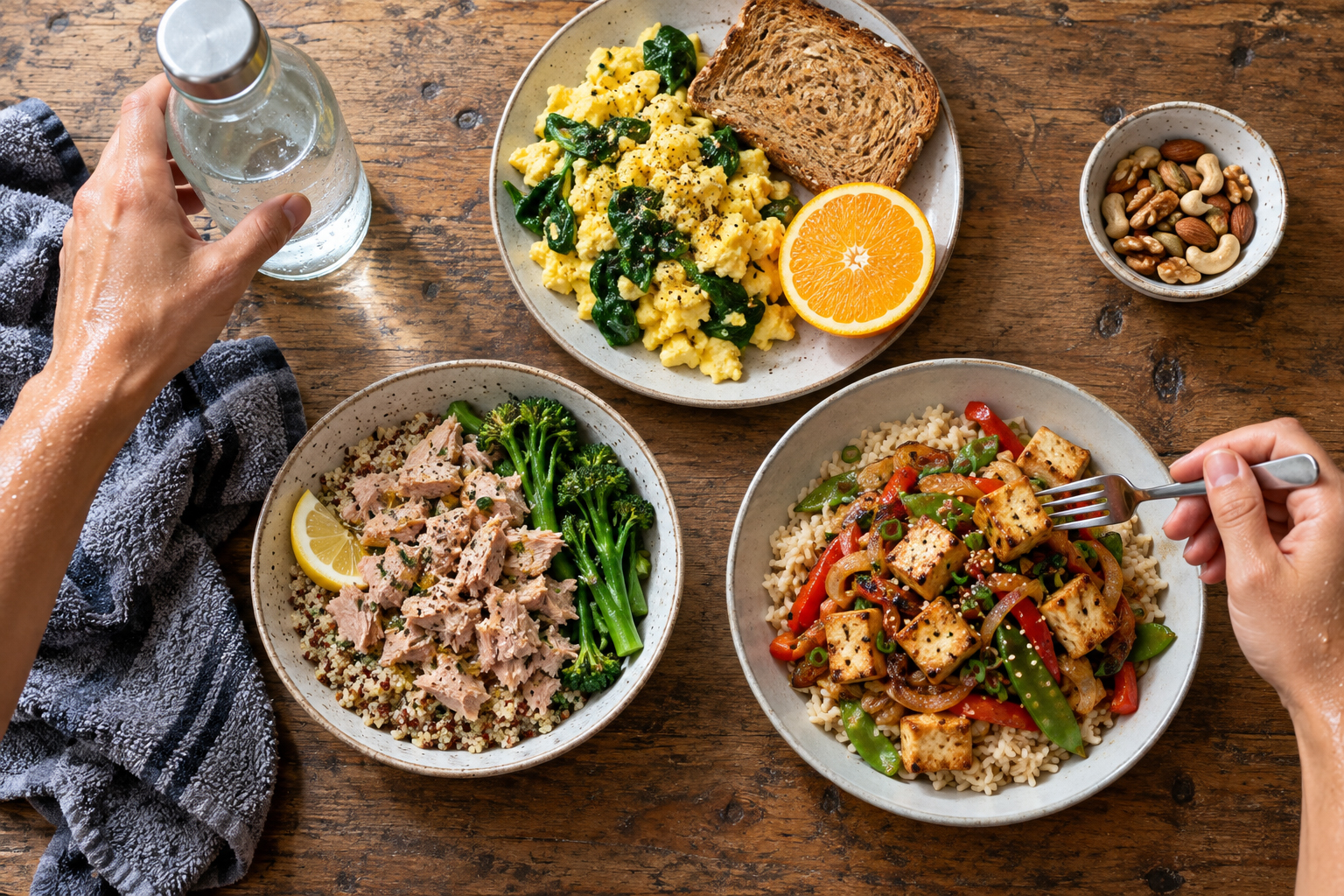
Simple combinations reduce decision-making and keep recovery consistent. Try scrambled eggs with spinach and toast for a quick protein-carb mix, canned tuna tossed with olive oil, lemon and quinoa for a ready bowl, or a stir-fry of tofu, frozen veg and brown rice for a balanced dinner. These mixes use durable staples so you can build a decent recovery meal any night.
- Egg + whole-grain toast + fruit
- Tuna + quinoa + steamed greens
- Tofu stir-fry + brown rice
Keep seasonings, a citrus or vinegar, and a handful of nuts on hand to change flavors fast. Small variations keep meals interesting and sustainable.
Timing, hydration and sleep matter too
Eating within 60 to 90 minutes after a solid workout is convenient and often effective, but what matters more is the total intake over the next few hours. Drink water steadily; a salty snack with fluids can help if you sweat a lot. Don’t overlook sleep—adequate rest amplifies the repair effects of your meals and training.
Make a simple routine: rehydrate first, eat a balanced plate within a couple of hours, and prioritize sleep the same night. That rhythm supports recovery without a complicated plan.
Conclusion
Recovery meals don’t need to be elaborate—reliable, familiar combinations work best. Focus on a visible protein, adjust carbs to effort, and keep hydration and sleep consistent. With a few staple ingredients and a routine, you’ll support repair and feel ready for the next session.