Short on time but still want food that actually supports your at-home training? You don’t need complicated recipes or specialty powders to get meals that help performance and recovery. With a few dependable combos of protein, starch, and vegetables you can build breakfasts, lunches, and dinners that are satisfying and supportive. This piece walks through practical plates you can assemble from common ingredients and simple timing tips to make them work for your schedule.
Breakfast and Morning Snacks That Carry Energy
Start with a protein anchor like eggs, Greek-style yogurt, or canned tuna, and pair it with a quick carbohydrate: oats, a slice of toast, or a banana. Add a handful of nuts or a spoonful of nut butter for healthy fats that slow digestion and keep blood sugar steadier. These builds are flexible — swap flavors and textures depending on what you have on hand, but keep the basic balance intact.
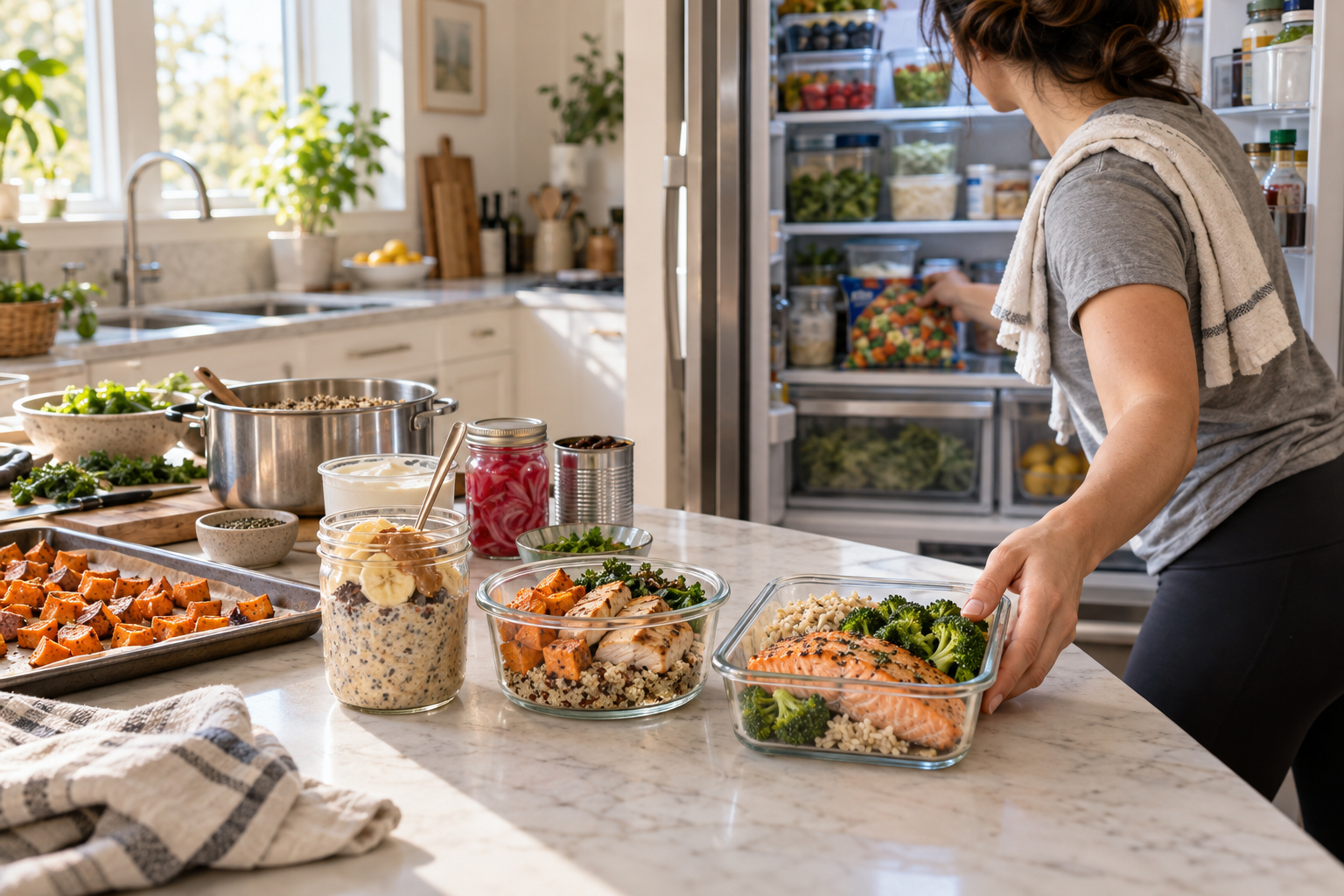
For a grab-and-go option, prep small jars of yogurt, oats, and fruit the night before. That way you’ll be fueling well before a morning session without extra thinking.
Lunches That Support Midday Sessions
Lunch should restore what morning activity used and set you up for afternoon workouts. Aim for a palm-sized portion of lean protein, a cupped hand of whole grains or starchy vegetables, and two fistfuls of greens or colorful cooked vegetables. Dressings, sauces, or a melting cheese help with calorie density when training intensity increases, but they don’t need to be elaborate.
Batch-roast a tray of sweet potatoes, cook a pot of quinoa, and grill a few chicken breasts on Sunday; assembling bowls during the week takes minutes. Keep a jar of pickled veggies or chopped herbs to brighten flavors and prevent mealtime boredom.
Dinners and Recovery Meals That Help Repair
After evening workouts, prioritize a bit more protein and some carbohydrates to refill glycogen and support muscle repair — think fish or tofu, rice or potatoes, and a cooked vegetable. Including a source of omega-3s or vitamin-rich veggies can support sleep quality and inflammation management without extra work. Simple one-pan dinners or sheet-pan proteins with mixed vegetables keep cleanup easy and make consistent recovery more likely.
When you’re tired, look for shortcuts: frozen vegetables, pre-cut salad mixes, and canned beans are honest helpers. They let you assemble a nourishing plate in under 20 minutes on most nights.
Conclusion
Focus on repeatable combinations: protein, carbohydrate, and vegetables, tailored to how hard you trained and how soon you’ll train again. Small preparations—batch cooking, simple pantry staples, and a few flavor boosters—make healthy plates effortless. Build a handful of go-to meals and you’ll find it much easier to support consistent home workouts.