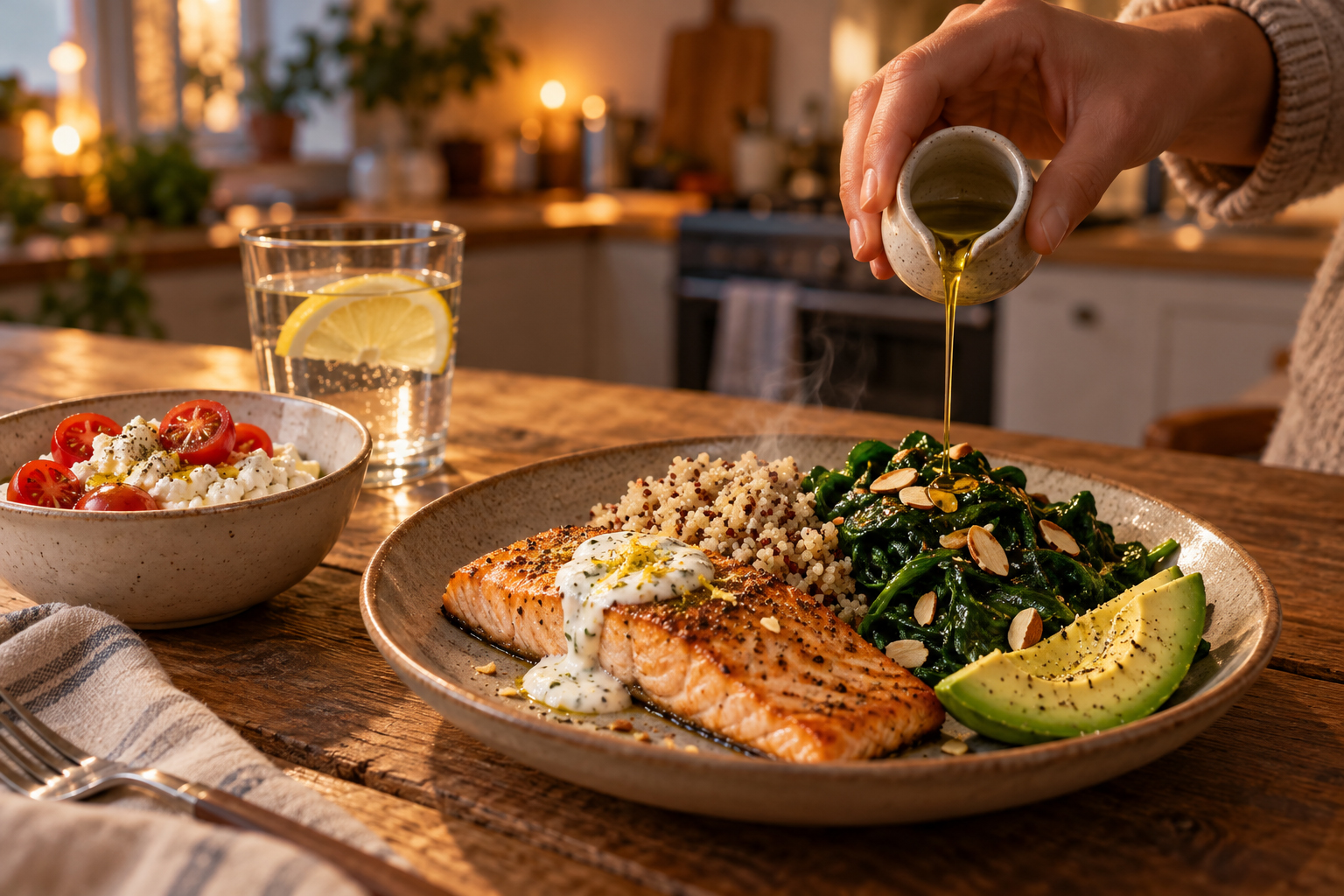
After a tough at-home session you want dinner that repairs muscle, replenishes energy and doesn’t demand an hour of cooking. Keep the plan simple: prioritize a solid protein, add a modest portion of carbohydrate and fold in vegetables for vitamins and minerals. Small tweaks to familiar ingredients get better recovery without complicated recipes or specialty groceries. Below are practical plate ideas you can assemble from common pantry and fridge staples.
Build a Protein-First Base
Your evening meal should center on a reliable protein source to support muscle repair. Choose something you can cook quickly or repurpose from leftovers: grilled chicken, canned tuna warmed in a skillet, a pan-seared salmon fillet, or a tofu stir-fry. Aim for a palm-sized portion for most adults; pair it with a small drizzle of olive oil or a simple yogurt-based sauce to increase calories and aid absorption of fat-soluble nutrients. If you’re short on time, scrambled eggs or a quick bean-and-cheese skillet work equally well.
Protein quality and timing matter more than perfection: eating within two hours of training helps, but what matters most is a consistent habit. Rotate protein types across the week to cover a broader nutrient profile.
Add Carbs and Color for Replenishment
Carbohydrates refill glycogen and make workouts feel easier the next day; they don’t need to be large portions. Choose a starchy side like roasted sweet potato, brown rice, or a slice of whole-grain bread—about a cupped handful or one medium starch serving. Add vegetables—steamed greens, roasted Brussels sprouts or a simple salad—to supply potassium, vitamin C and fiber that support recovery and digestion. These elements together help muscles recover and reduce next-day soreness.
- Combo idea: salmon + quinoa + sautéed spinach
- Quick swap: baked potato + cottage cheese + tomato
- Vegetarian: lentil curry + brown rice + cucumber salad
Small plate swaps like these keep meals varied and make it easier to meet recovery needs without extra effort. Use what’s on hand rather than chasing new ingredients.
Hydration, Fat and Timing That Aid Sleep
Finish your plate with a source of healthy fat and pay attention to fluids to support overnight repair. A handful of nuts, a tablespoon of olive oil over a salad, or avocado on the side adds calories and helps with vitamin absorption. Avoid stimulants late in the evening and limit heavy, high-fiber meals right before bed if they disrupt sleep. Aim to finish a substantial meal one to two hours before lying down.
Nighttime quality is part of recovery: better sleep improves muscle repair and next-day energy. Keep dinners calm, balanced and satisfying.
Conclusion
Choose a protein-first plate, add a modest portion of carbs and include vegetables for micronutrients. Finish with a bit of healthy fat and hydrate well to support overnight repair. Simple, repeatable dinners like these make consistent recovery after home workouts realistic.