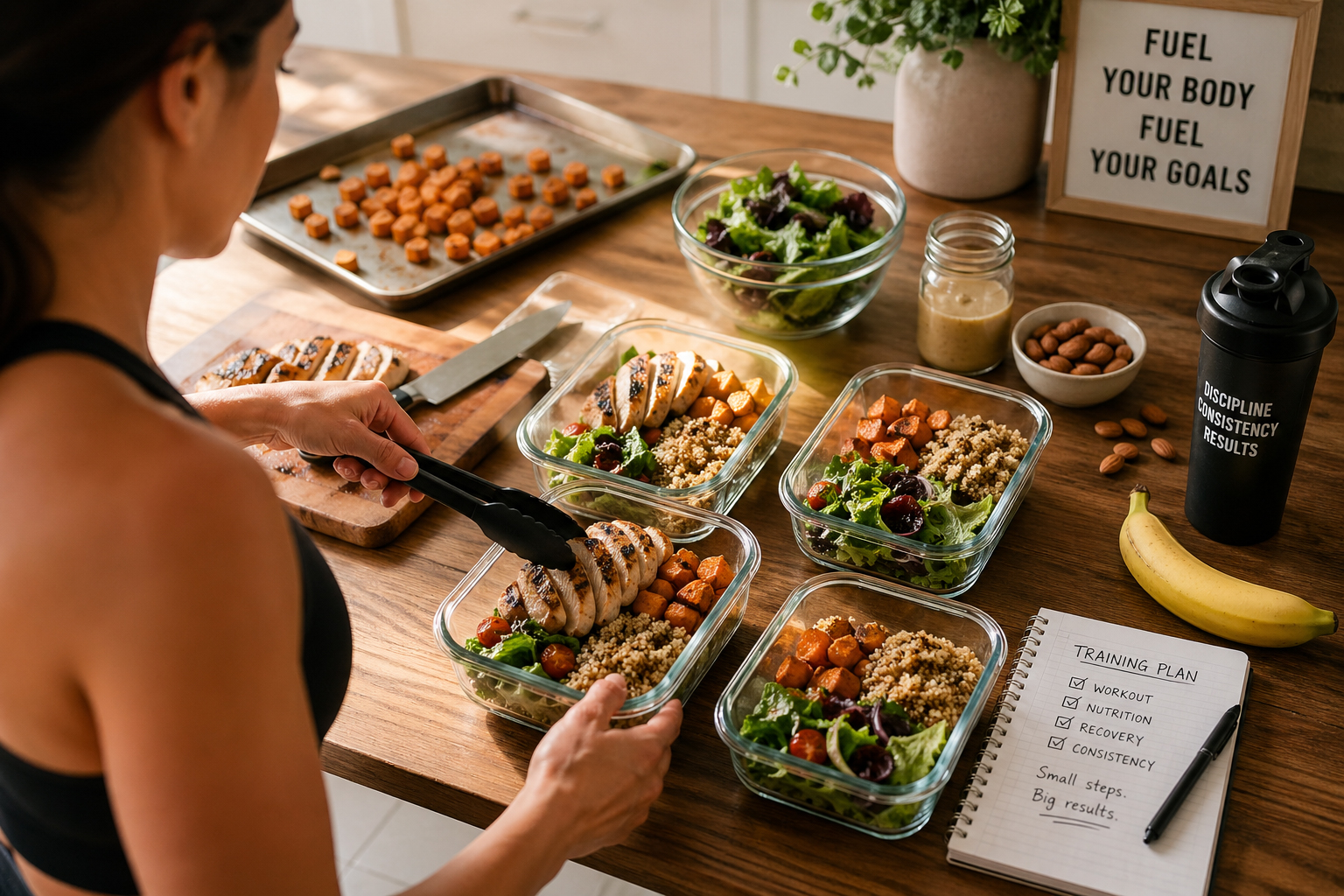
Designing meals that consistently support home exercise helps energy, recovery, and progress. With modest planning, everyday food choices can match training intensity and time availability without adding stress. When you prioritize balance and simplicity, workouts feel easier and recovery is faster. This piece lays out practical components, timing advice, and prep habits you can adopt this week.
Why balanced home meals matter
Balanced meals provide a steady supply of nutrients your body needs before, during, and after sessions. Carbohydrates supply accessible energy for higher-intensity efforts while protein supports repair and muscle maintenance over time. Healthy fats and fibre slow digestion and help with satiety so you stay energized between meals. Together, these elements reduce mid-workout fatigue and support steady progress across weeks.
Consistency matters more than perfection; small, repeatable choices beat occasional extremes. Aim for a pattern that matches your schedule and activity level to make nutrition sustainable.
Building three-component meals
Create simple plates using three components: a quality protein, a filling carbohydrate, and a vegetable or healthy fat. Examples include a grain bowl with beans and avocado, a lean protein with sweet potato and steamed greens, or an omelet with whole-grain toast and salad. Portion sizes should align with your goals and appetite, increasing carbohydrate intake on heavier training days. This structure makes balanced eating intuitive and adaptable to what’s in your kitchen.
Using the same components in different combinations keeps meals interesting without complicating shopping or preparation. Focus on variety over time rather than variety every single meal.
Practical timing and snacks
Timing doesn’t need to be rigid, but sensible windows can improve performance and recovery. Aim for a modest meal two to three hours before exercise, and a protein-rich snack or meal within an hour after training. Simple pre-workout choices like yogurt with fruit or toast and nut butter are easy to digest yet energizing. Post-workout, prioritize protein and some carbohydrates to kickstart repair and replenish stores.
Small, planned snacks keep energy stable on busy days and prevent overeating at the next meal. Choose portable, balanced options to make on-the-go nutrition straightforward.
Simple meal prep habits
Batch-cooking grains, roasting vegetables, and portioning protein can save time and reduce decision fatigue. Keep a short list of staples you enjoy and rotate them each week to prevent boredom and ensure nutrient variety. Use leftovers creatively—combine roasted vegetables and protein into salads, wraps, or grain bowls for fast meals. A little prep reduces friction on training days and makes consistent fueling much easier.
Start with one habit, like cooking a protein source twice weekly, and build from there to avoid overwhelm. Small, steady changes compound into reliable nutrition routines.
Conclusion
Adopting sustainable meal patterns makes home exercise more productive and enjoyable. Prioritize balanced plates, practical timing, and basic prep habits to remove barriers. Over time, simple routines translate into steady gains in energy, recovery, and fitness.