Building consistent movement habits at home supports long-term function and reduces the burden of recurring musculoskeletal issues.
Small, intentional practices can compound into meaningful improvements without requiring long workouts or special equipment.
This article outlines practical steps to assess, plan, and adapt a home-based movement routine that emphasizes safety and steady progress.
Use these ideas to create a dependable daily framework that fits your life.
These brief ideas are practical and adaptable for most people seeking improved function and comfort.
Assess Your Baseline and Goals
Begin by identifying current capacities and realistic goals so you can track progress and avoid setbacks.
Note how activities of daily living feel, which movements provoke symptoms, and what tasks you want to improve.
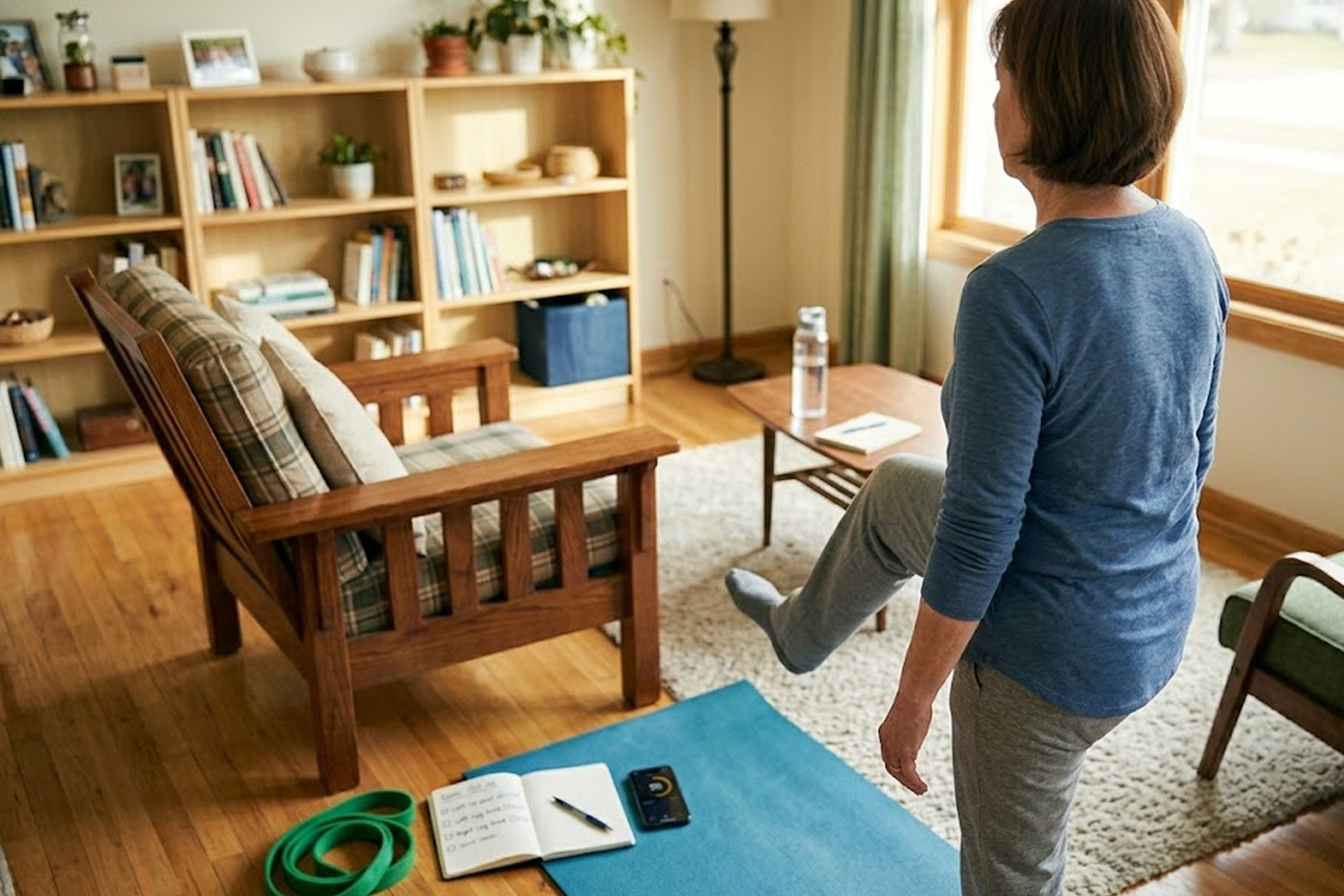
Simple self-checks — range of motion, single-leg balance, and tolerance for walking or stair climbing — give a baseline you can repeat.
Record observations weekly to guide adjustments.
- Range of motion checks in key joints.
- Balance time on each leg.
- Tolerance for short walks or stairs.
These brief measures take minutes but provide clear feedback.
They help you choose appropriate exercises and set achievable targets.
Build a Daily Scaffold
Outline a short daily routine that mixes mobility, controlled strength work, and light aerobic activity.
Keep sessions brief — 10 to 30 minutes — and prioritize quality of movement over volume.
Start with mobility and breathing to prepare tissues, then add two to three strength or stability exercises that target the areas you want to improve.
Consistency is more important than intensity in the early weeks.
- Mobility and breathing routines.
- Low-load strength or resistance exercises.
- Short cardiovascular or walking sessions.
Rotate exercises to avoid overuse and maintain interest.
Gradually increase difficulty every one to two weeks.
Manage Flare-Ups and Progression
Expect variability; flare-ups are common but manageable with a plan.
When pain increases, scale back intensity, shorten sessions, or switch to gentler options like walking or gentle swimming.
Use pacing: break activities into smaller chunks and include scheduled rest to prevent overexertion.
Consult a professional if symptoms are severe or progressive.
- Reduce load and duration.
- Use alternative low-impact activities.
- Focus on restoration before increasing intensity.
A simple adjustment often prevents longer setbacks.
Reassess goals after a stable two-week period.
Optimize Your Space and Habits
Make your home environment support movement by creating a small, accessible area for exercise and storing modest equipment nearby.
Improve ergonomics at commonly used workstations and set reminders to change posture or stand briefly every hour.
Small cues and a tidy space reduce friction and encourage regular practice.
Incorporate movement into daily routines like standing while on phone calls.
- Keep a mat, resistance bands, and a chair handy.
- Use timers or phone prompts for movement breaks.
Environmental tweaks make consistency more likely.
They also reduce barriers when motivation dips.
Conclusion
Start small and prioritize consistency over speed.
Track simple metrics and adjust based on response.
Over time, steady, sustainable practices yield meaningful functional gains.