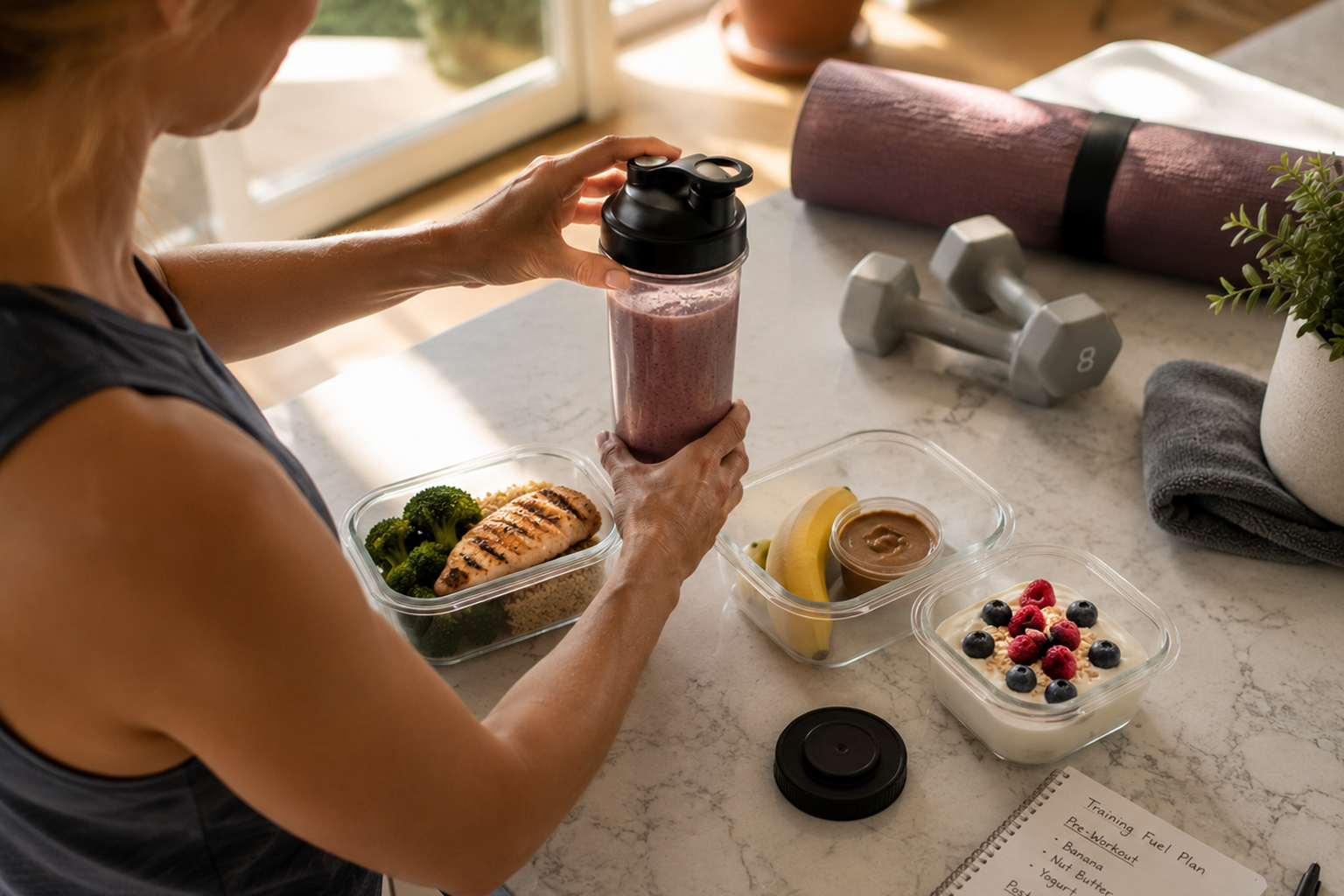
Creating a simple, reliable eating schedule can make at-home training feel easier and more productive. When meals and snacks are predictable, energy dips become less frequent and recovery windows become clearer. This article outlines practical timing strategies and meal templates that fit busy days and short home sessions. Use the guidance below to match your food choices to workout timing without overcomplicating the kitchen.
Why a Simple Schedule Matters
Consistency in meal timing stabilizes blood sugar and helps you avoid extreme hunger right before a workout, which can sap effort and focus. A predictable pattern makes grocery lists and meal prep faster, supporting regular exercise without extra planning overhead. For many people, establishing a morning snack plus a main meal pattern reduces midday crashes that otherwise derail training. Simple rhythms also help you tune portion sizes and macronutrient balance over time.
Start by mapping your training window and work commitments, then place small, repeatable eating moments around those blocks. The goal is to minimize guesswork so the kitchen supports, rather than disrupts, your exercise routine.
How to Structure Meals and Snacks
Think in three practical categories: pre-workout fuel, main meals, and recovery-focused meals. Pre-workout choices should be light and carbohydrate-forward if your session is within 60–90 minutes, while longer gaps call for a balanced meal with protein, carbs, and some fat. Main meals can remain flexible but aim for a protein source, vegetables or fruit, and a whole-grain or starchy vegetable to sustain energy. Recovery meals or snacks should include protein with some carbohydrates to help muscle repair and replenish glycogen stores.
Keep portions consistent and adjust based on session intensity and duration; a brief bodyweight circuit needs less fuel than a longer strength or cardio block. Over time, these simple rules let you refine amounts and timing for better performance.
Quick Meal Ideas for Pre- and Post-Workout
Practical options reduce friction and support regular practice. For pre-workout fuel try a banana with a tablespoon of nut butter, a small yogurt with fruit, or a slice of toast with hummus — all quick, portable, and easy to digest. Post-workout choices can include a grilled chicken salad with quinoa, a smoothie with milk and protein powder, or a cottage cheese bowl with berries and oats for a balance of carbs and protein.
- 30–60 minutes before: fruit, yogurt, small toast.
- Within 90 minutes after: protein plus carbs like chicken and rice or a recovery smoothie.
- Daily staples: eggs, canned beans, frozen vegetables, whole grains.
Rotate a handful of these options to keep shopping simple and prep time minimal so meals consistently support training goals.
Conclusion
Adopting a balanced snack and meal schedule removes guesswork and supports steady energy for home training. Small, repeatable food choices around workouts help performance and recovery without major lifestyle changes. Start with a few reliable options and adjust timing to match your personal routine and progress.