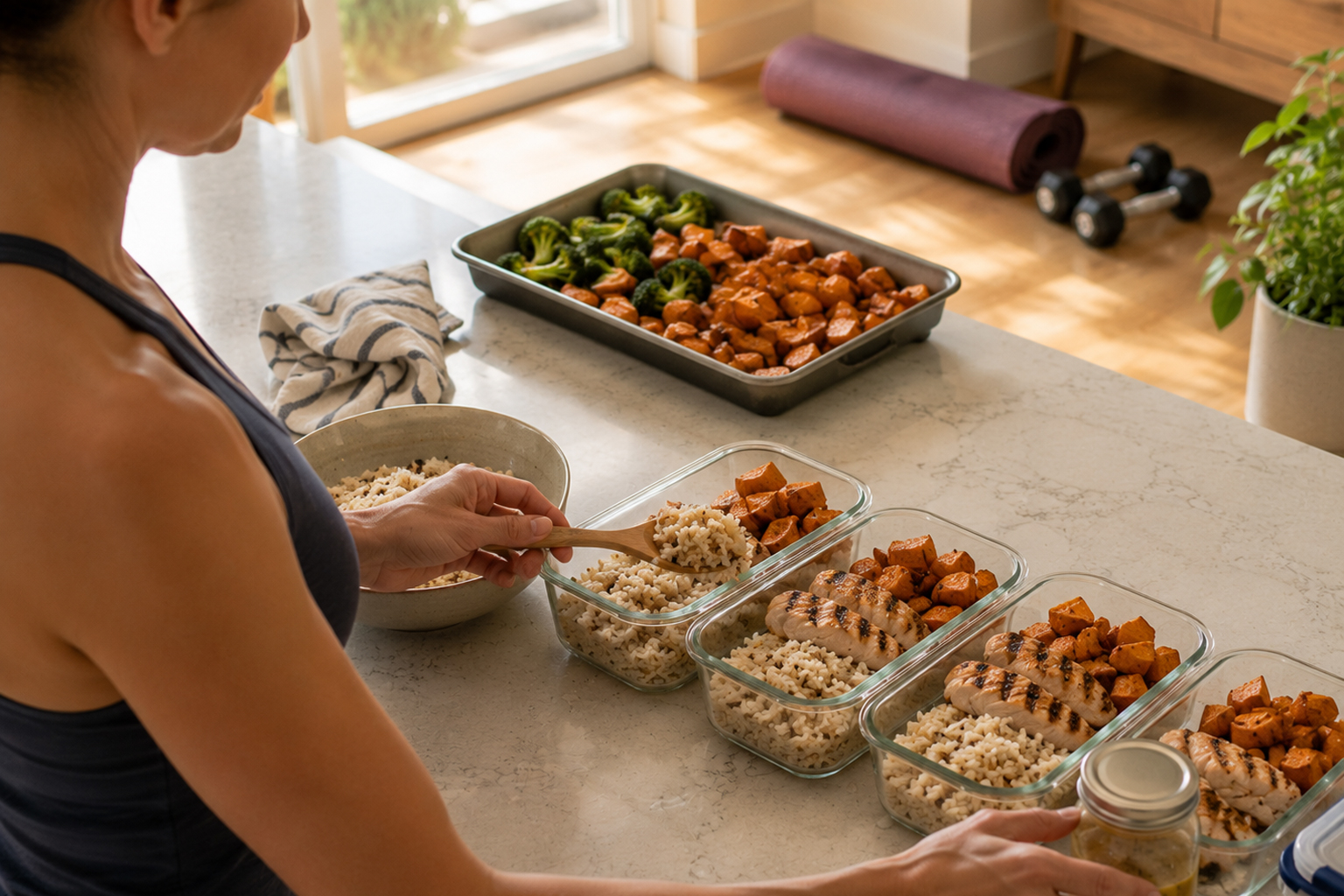
Batch cooking saves time and ensures consistent, workout-supporting meals across busy weeks.
When you prepare foundations—grains, proteins, and roasted vegetables—you remove daily decision fatigue.
This approach also makes it easier to match portion sizes and nutrient balance to training days.
The tips below are practical, kitchen-friendly ways to plan and store meals that directly support at-home training.
Why batch cooking helps training
Consistent fueling supports performance and recovery, and batch cooking creates a steady supply of prepared components you can combine quickly. When ingredients are prepped, it is simpler to assemble balanced plates that include protein, carbohydrates, and vegetables rather than relying on convenience foods. Having predictable meals reduces the chance of skipping a post-session snack or eating something low in nutrients. That reliability helps preserve training consistency and energy over time.
Batch cooking also reduces stress around timing. If you know a meal that pairs well with your session is ready, you can focus more on the workout itself. It becomes easier to control portions and adjust macronutrient ratios for heavier training days.
Key components to prep
Choose versatile staples that mix and match across meals so you can create variety without extra effort. Aim to prepare one or two proteins, one grain or starchy base, and a few roasted or steamed vegetables each week. Flavorful sauces and dressings stored separately extend options and prevent monotony. Pre-portion components so you can assemble meals aligned with your energy needs on any given day.
- Proteins: grilled chicken, baked tofu, or stewed legumes.
- Carbs: rice, quinoa, sweet potatoes, or whole-grain pasta.
- Veggies & greens: roasted root vegetables, steamed greens, and sliced salad items.
- Extras: nuts, seeds, hummus, and simple dressings for flavor and calories.
These building blocks let you pair items for quick pre- or post-workout meals and snacks without much additional cooking. Small adjustments can tailor a plate for recovery or energy.
Schedule and storage tips
Set one or two weekly cooking sessions—one for proteins and one for sides—to keep the routine manageable. Use airtight containers and label them with dates so freshness is easy to monitor. Freeze portions intended for later in the week to preserve quality and rotate older items forward to avoid waste. Clear labeling helps you grab the right pre-workout or recovery option quickly.
Simple organization in the fridge and freezer means less time planning and more time training. A little structure in storage improves meal quality and consistency across the week.
Conclusion
Batch cooking reduces daily decision-making and keeps balanced meals within reach on training days.
With a few staples prepped, assembling nutrient-focused plates becomes fast and reliable.
This steady approach supports performance, recovery, and long-term consistency.