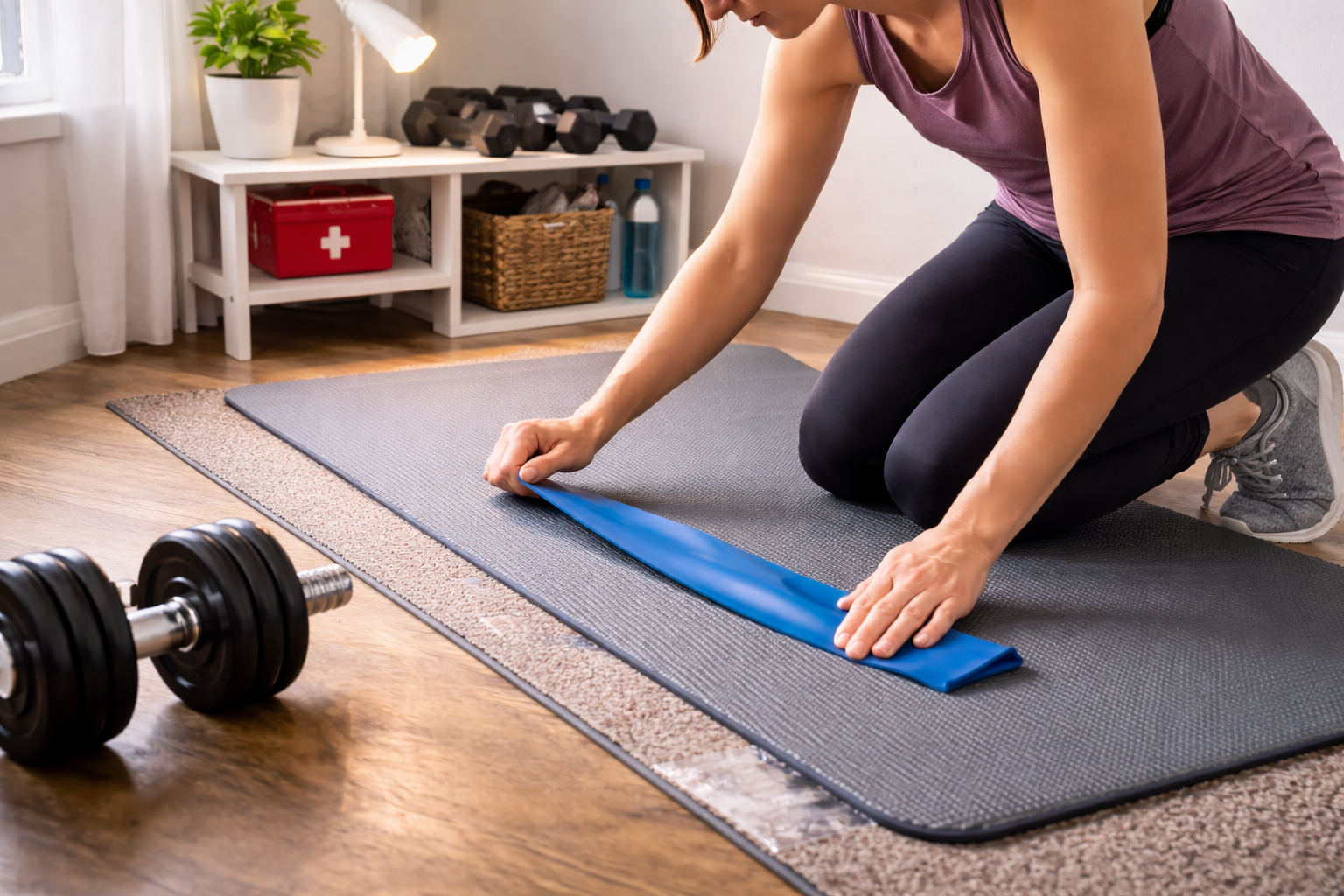
Creating a home environment that supports consistent, low-injury exercise starts with small, intentional adjustments. Minor changes to layout, lighting, and equipment maintenance can reduce common hazards and extend the lifespan of both your body and gear. A resilient exercise space supports steady progress by making safe choices the default option rather than an extra step. This article outlines practical, easy-to-implement steps to help you exercise more sustainably at home.
Assess Your Environment
Begin by evaluating the area you use most for movement and identify any immediate risks such as clutter, low ceilings, or trip hazards. Consider how much room you need for each activity and whether furniture, rugs, or cables interfere with safe ranges of motion. Pay attention to ventilation and temperature, since comfort influences effort and adherence. A clear, dedicated zone encourages focused sessions and reduces accidental strain.
- Measure clear floor space for common exercises.
- Secure loose rugs and tape down cables.
- Keep a small storage zone for gear when not in use.
Making these assessments habitual helps you adapt the space as routines evolve. Regular tidying should become part of your exercise workflow to keep the area consistently safe.
Choose and Maintain Equipment
Invest in versatile, durable items that match your fitness goals and available space. Lightweight dumbbells, resistance bands, and an exercise mat are practical options for most users and require limited storage. Regular inspection and maintenance prevent equipment-related accidents and keep performance reliable. Replacing worn bands, checking non-slip surfaces, and tightening loose screws are simple steps that extend usability.
- Inspect bands for fraying before each session.
- Clean mats and check underside grip regularly.
- Store weights on racks to avoid floor clutter.
Routine care reduces both risk and long-term replacement costs. A small maintenance habit is an easy investment in safer training.
Adopt Progressive Movement Habits
Structure sessions around gradual progression, prioritizing quality over load to lower the chance of overuse injuries. Warm-ups, mobility work, and controlled cool-downs help prepare tissues for stress and support recovery between sessions. Track intensity and volume to avoid abrupt jumps that commonly lead to setbacks. When pain or persistent soreness appears, reduce intensity and reassess movement patterns before returning to previous levels.
Consistent, measured progress is the most reliable path to durable fitness. Building habits that respect recovery will keep you training longer with fewer interruptions.
Optimize Surfaces and Lighting
Choose flooring that balances cushioning with stability to protect joints while allowing solid foot contact for balance. Adjustable lighting and glare-free illumination reduce the likelihood of missteps and help maintain proper alignment during exercises. If possible, create zones with slightly different surfaces for stretching versus loaded movements to match task needs. Thoughtful surface and lighting choices lower everyday friction in the training process.
Small upgrades like a brighter bulb or a denser mat can have outsized safety benefits. Prioritizing these elements makes movement easier and more reliable.
Conclusion
Small, consistent adjustments to your home environment yield lasting improvements in exercise durability and comfort. Prioritize clear space, maintained equipment, and gradual progression to reduce common setbacks. These practical steps help you stay active and resilient over the long term.