Busy schedules and daily home workouts can make balanced eating feel like a chore, but low-prep meals close the gap between intention and action. When food is simple to prepare and consistently available, it’s easier to support recovery and sustain energy across training days. This article outlines practical approaches to build nutritious, low-effort plates that pair well with regular exercise at home. The goal is reliable nutrition you can actually follow, not perfection.
Why low-prep meals help home training
Low-prep meals reduce decision fatigue and remove barriers that often derail consistent fueling for workouts. They cut the time between hunger and nourishment, making it less likely you’ll skip a recovery meal or rely on low-quality options. Simplicity also encourages repetition, which builds habits around protein, vegetables, and a modest carbohydrate source. Over time, these consistent choices support better recovery, stable energy, and gradual performance gains.
Keeping food straightforward makes it easier to track what you eat and spot gaps in nutrients. That visibility helps you adjust portion sizes and macronutrient balance without complex meal plans or fancy ingredients.
Building balanced low-prep plates
A practical plate combines protein, fiber-rich vegetables, and a carbohydrate or healthy fat to match your training goals and appetite. Focus on a few reliable staples you enjoy so assembling meals feels automatic rather than burdensome. Choose versatile proteins like canned fish, rotisserie chicken, or pre-cooked legumes, then add a raw salad, microwaved frozen veggies, or a simple grain. Keep portion cues consistent: a palm-sized protein, a fist of vegetables, and a cupped-hand of carbs is a useful starting guide.
- Staples: canned beans, eggs, frozen vegetables, quick-cook grains.
- Simple combos: grain + veg + protein; salad + beans + olive oil.
Using repeatable combos reduces planning time and helps you maintain a steady intake without elaborate recipes.
Quick batch and assembly tips
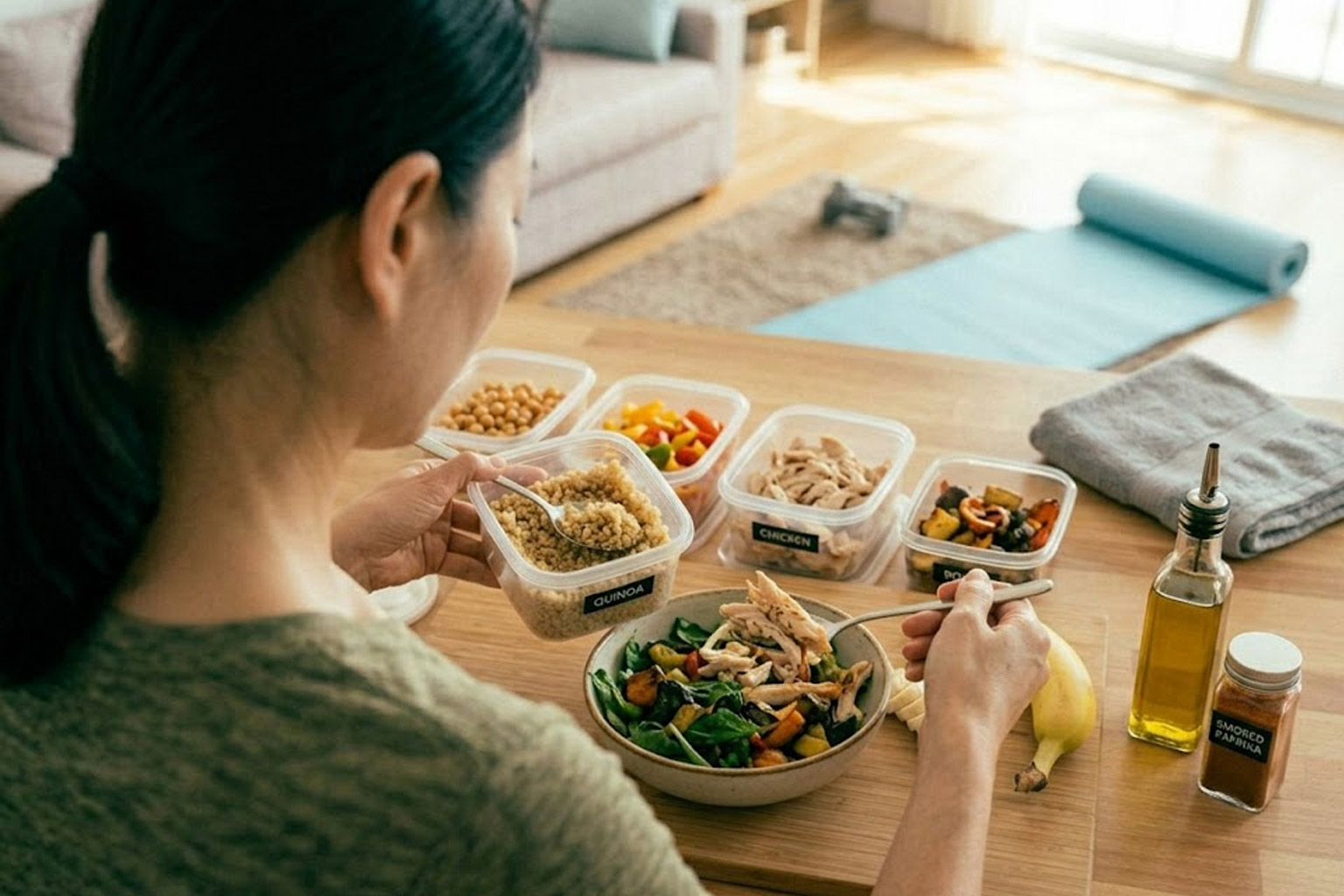
Batch cooking a base component once or twice a week pays dividends: roast a sheet pan of mixed vegetables, cook a pot of quinoa, or poach several eggs. Store components in clear containers so assembling a meal takes under five minutes. Invest in a few multi-purpose condiments—olive oil, a vinegar, a spice blend—to keep flavor varied without extra work. Small habits like keeping ready-to-eat fruit and pre-washed greens visible increase the odds you’ll choose them.
- Prep window: 60–90 minutes weekly for several ready meals.
- Assembly: mix-and-match containers for 3–5 quick meals.
These small efficiencies make it realistic to recover well after workouts and sustain regular training without spending hours in the kitchen.
Conclusion
Low-prep meals bridge the gap between good intentions and everyday recovery by making nutritious choices immediate and easy. With a few staple ingredients and minimal weekly prep you can support energy, muscle repair, and training consistency. Prioritize simple, repeatable plates that fit your schedule and taste to keep progress sustainable.