Starting or maintaining an exercise routine while managing a health condition requires thoughtful pacing and attention to safety. Small adjustments to intensity, frequency, and movement choices can make home fitness both effective and sustainable. This article outlines practical steps to protect your recovery while progressing strength, mobility, and endurance. The guidance is intended to be general and to encourage discussions with your care team.
Assessing Limits and Setting Goals
Begin by clarifying current capabilities and realistic short-term goals. Consider pain levels, energy patterns, and any physical restrictions that affect daily activities. Use simple measures such as perceived exertion and activity logs to track responses to exercise. Consulting a healthcare professional or physical therapist can help establish safe starting points and priorities.
Set specific, measurable, and adjustable goals that focus on function rather than performance. Emphasize consistency and small improvements to avoid setbacks. Regular reassessment ensures goals stay aligned with recovery.
Structuring Safe Sessions
Design sessions that include warm-up, focused work, and cool-down to reduce injury risk. Warm-ups can be gentle mobility and breathing exercises that prepare the body without causing strain. During the main portion, alternate lower-intensity movements with brief rest or lower-effort periods to manage fatigue. Finish with stretching or relaxation to support recovery and restore calm.
Keep sessions brief and frequent rather than long and infrequent when managing health conditions. Prioritize quality of movement and symptoms monitoring over duration or intensity. Adjust parameters based on daily readiness.
Choosing Equipment and Modifications
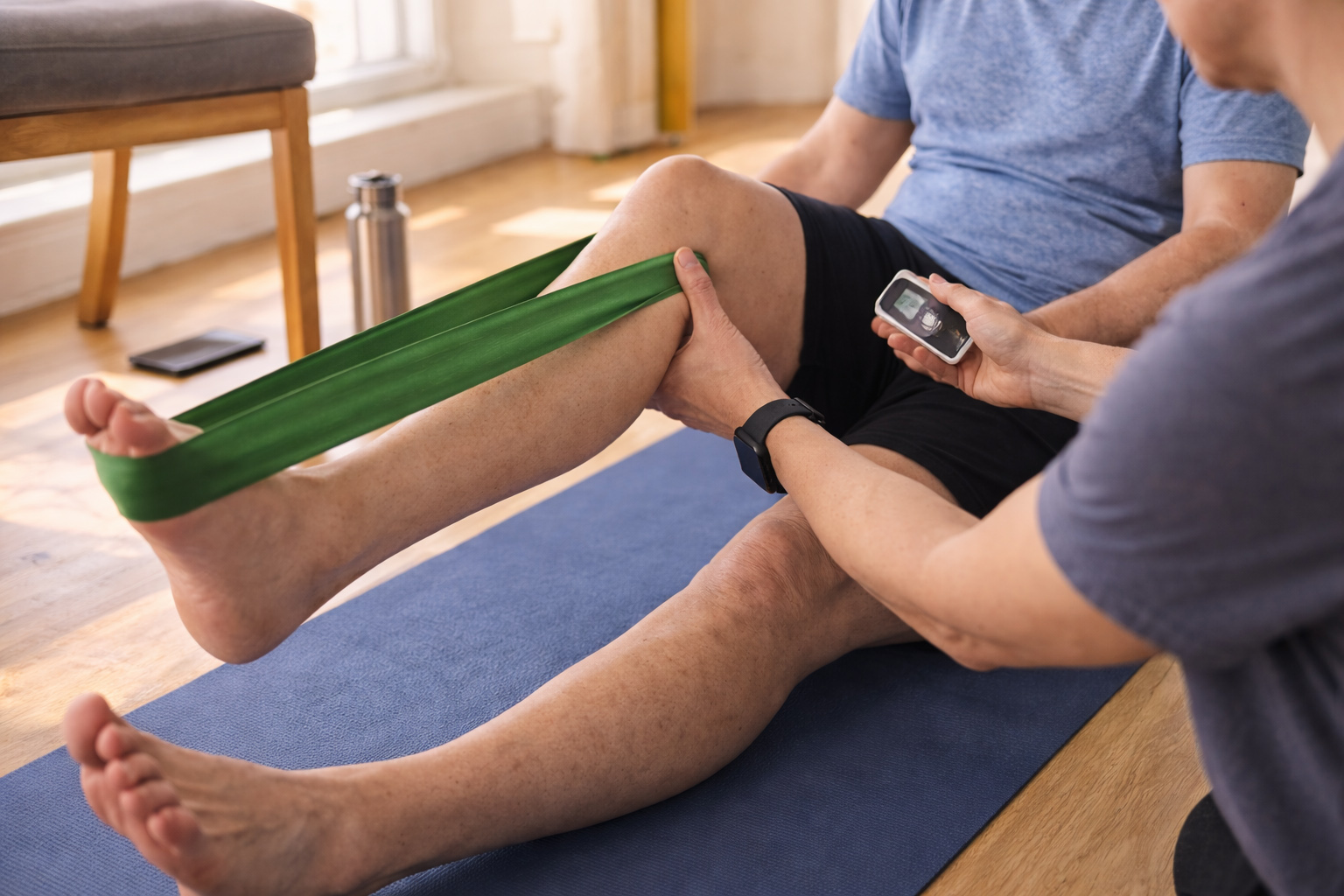
Select simple tools and environment adjustments that increase safety and function at home. Items like a stable chair, a mat, resistance bands, or light handheld weights can support proper technique while limiting risk. Modify movements by reducing range, slowing tempo, or performing supported variations to maintain benefit without overloading tissues.
- Check footwear and floor surfaces for stability.
- Use props for balance and alignment as needed.
- Keep water and a phone nearby for safety.
Small modifications often allow continued participation even when symptoms fluctuate. Focus on movements that transfer to daily tasks to maximize practical benefit.
Monitoring Progress and Red Flags
Track progress with objective markers such as repetitions, walk time, or ease of daily tasks alongside subjective measures like energy and discomfort. Expect gradual improvement and be prepared to scale back when symptoms increase or new concerns emerge. Recognize red flags such as worsening pain, dizziness, or unusual shortness of breath and pause exercise if they occur.
Regularly reviewing your program encourages safe progression and reduces the chance of setbacks. Communicate changes with healthcare providers to refine the approach over time.
Conclusion
Balancing careful pacing with protective strategies makes home exercise a viable part of recovery. Start modestly, monitor responses, and prioritize function and safety over rapid gains. With consistent, measured steps you can build resilience while minimizing risk.