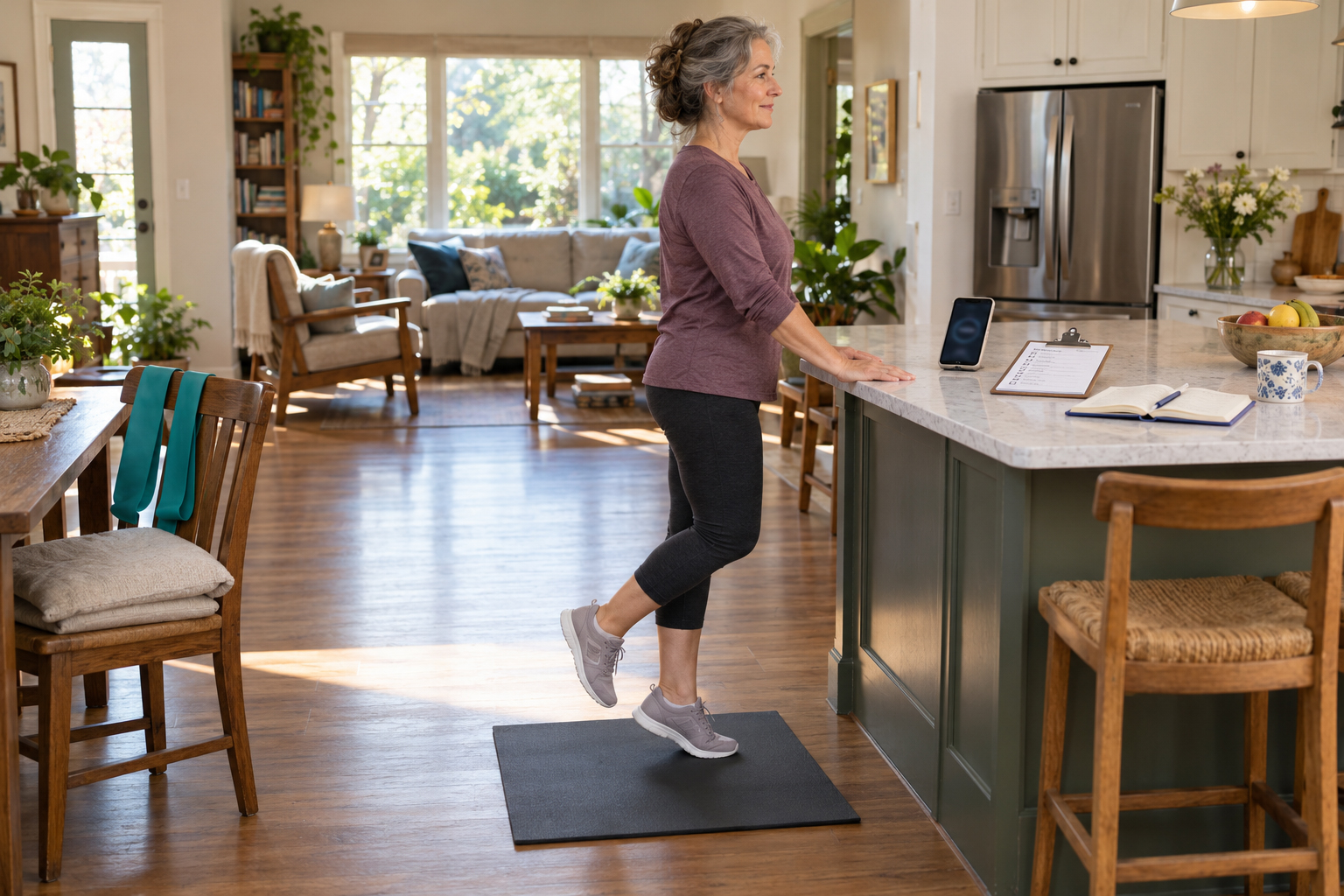
When you’re recovering at home, small habits make the difference between steady progress and setbacks. This guide focuses on short, repeatable movement practices you can do without special skills or long sessions. The aim is to protect healing, reduce fatigue, and keep daily tasks manageable. Read on for practical steps you can try today.
Start Small and Build Consistency
Begin with brief sessions that fit into your day: five to ten minutes, two or three times daily. Short, focused movements are easier to repeat and less likely to provoke pain or overwhelm your energy reserves. Pick one or two gentle exercises that mimic everyday needs, such as sitting-to-standing or step taps. The goal is consistency rather than intensity.
- Schedule sessions after a rest or light meal when energy is steadier.
- Use a kitchen timer or phone reminder to keep habits regular.
Over time, add one more repetition or an extra set rather than extending a single session by much. Small, reliable gains stack into meaningful improvement.
Make Your Space Work for You
Arrange a few clear zones where movement is safe and accessible: a solid chair for sit-to-stand practice, a clear pathway for balance steps, and a counter-height surface for support. Remove loose rugs and tuck cords away to reduce tripping hazards. Good lighting and a stable surface make short practices less risky and more comfortable.
- Keep frequently used items within easy reach to avoid unnecessary reaching or twisting.
- Place a non-slip mat where you practice standing or marching in place.
These small environmental changes make it easier to repeat habits without second-guessing safety.
Focus on Functional, Daily Movements
Choose movements that reflect everyday tasks: getting in and out of a chair, carrying a light load, stepping over thresholds. Practicing these actions in short bursts helps you rebuild strength and confidence where it matters. Work on control, tempo, and alignment rather than heavy resistance.
- Practice slow sit-to-stands to improve leg strength and balance.
- Do heel raises while holding a counter to strengthen ankles.
Functional practice translates directly into easier, safer days at home and reduces the chance of compensatory strains.
Use Simple Equipment and Time Your Effort
You don’t need fancy gear: a sturdy chair, resistance band, or lightweight pillow are often enough. Keep a short checklist nearby so you can rotate exercises without thinking too hard. Time-limited efforts—like two minutes of gentle marching—help manage fatigue and prevent overexertion.
- Choose tools that add just enough challenge without compromising form.
- Stop or shorten a set if pain increases or breathing gets heavy.
Simple equipment and clear limits let you practice safely and progress steadily.
Listen to Your Body and Track Small Wins
Recovery isn’t linear, and sensations can change day to day. Notice patterns: what feels better after activity, and what needs more rest. Keep a brief log of what you did and how you felt; that record helps you adjust pacing and celebrate improvements.
- Note one positive outcome each week, such as easier stairs or less stiffness.
- Scale back a bit when symptoms flare and resume progression when tolerable.
Attentive tracking keeps progress realistic and encourages steady confidence with movement.
Conclusion
Short, safe practices done regularly can protect healing and rebuild everyday function. Keep sessions brief, choose functional moves, and adjust your space to reduce risk. Small steps add up to real improvements in mobility and comfort.