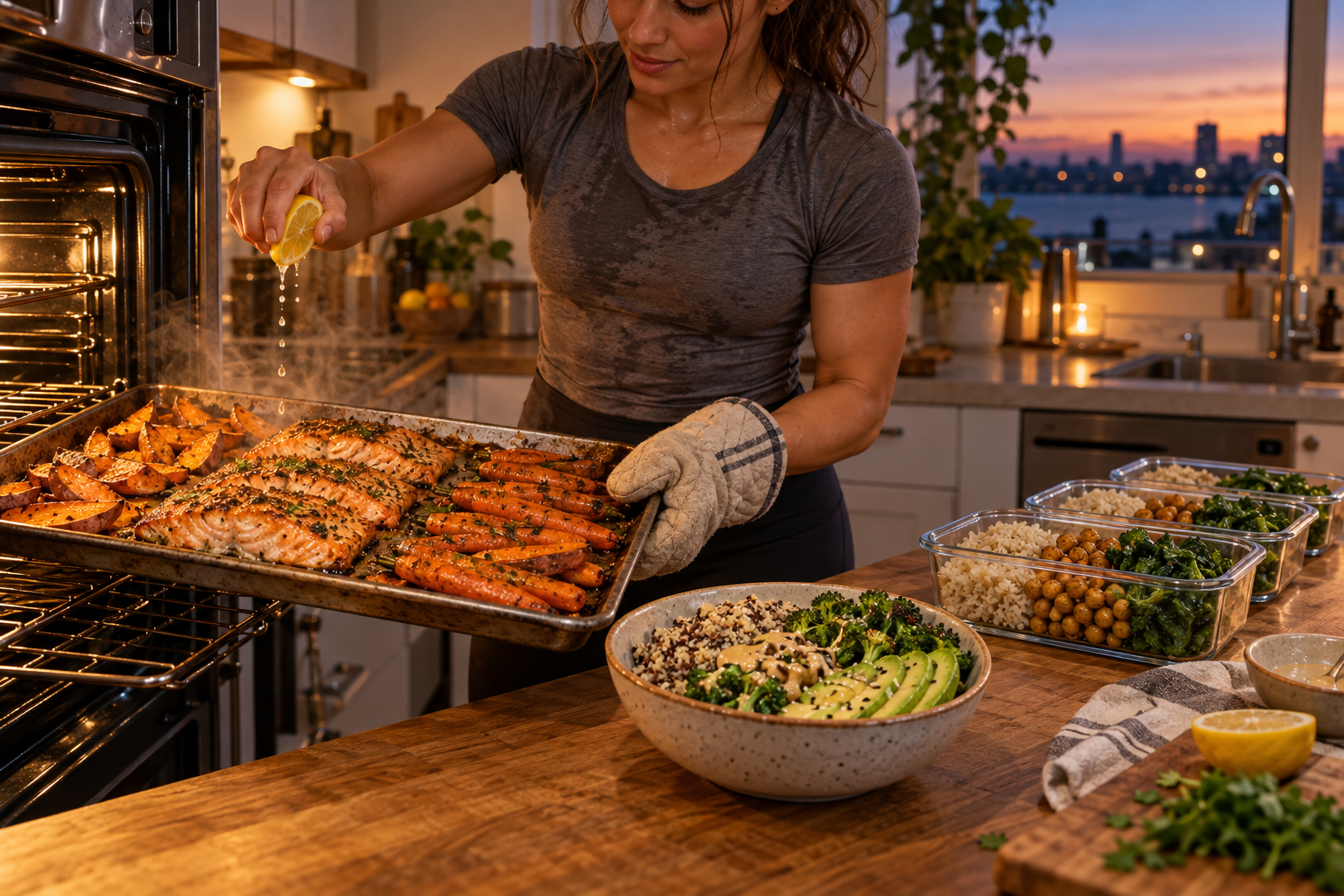
After a home workout you want dinner to do work without creating extra fuss.
Small changes to what you plate tonight can speed muscle repair and restore energy for tomorrow.
This article focuses on practical, kitchen-friendly dinners that emphasize protein, vegetables, and simple carbs.
No exotic ingredients, just reliable combinations you can prepare in 20–35 minutes.
Priorities for a Repair-Focused Dinner
Start by centering the meal on a protein source that’s easy to portion and cook: eggs, canned fish, tofu, lean poultry, or a quick pan-seared steak all work well. Complement protein with a vegetable packed with vitamins and fiber; roasted or sautéed greens, peppers, or carrots are both fast and forgiving. Add a modest portion of carbohydrate to replenish glycogen—rice, sweet potato, or whole-grain pasta are sensible choices that pair with most proteins. Finish with a small amount of healthy fat, like olive oil, avocado, or a sprinkle of nuts, to aid nutrient absorption and flavor.
These elements help balance immediate recovery needs and satiety so you don’t overeat later. Think in terms of plate sections rather than exact grams unless you want precise tracking. Keeping meals regular and predictable makes it easier to hit weekly protein goals.
Three Fast Dinner Templates
Templates turn decision fatigue into repeatable results. Use them as blueprints and swap ingredients depending on what’s in your fridge or pantry. Each template is designed to be ready in roughly 20–35 minutes and scales easily for leftovers. Focus on timing so proteins don’t overcook and vegetables stay bright.
- Grain bowl: cooked quinoa or brown rice, roasted chickpeas or grilled chicken, steamed broccoli, tahini drizzle.
- Sheet-pan dinner: salmon or tofu, mixed root vegetables, a squeeze of lemon and herbs, roasted at once.
- Skillet plate: scrambled eggs or tempeh, sautéed spinach and tomatoes, a side of toast or roasted potato.
Rotate these templates through the week to keep variety without complex recipes. They adapt well to batch-cooking and make packed lunches useful for recovery on non-training days.
Smart Prep and Reheat Habits
Prep saves time when you’re tired after training. Chop vegetables, cook grains, and portion proteins ahead of time so dinner assembly is mostly reheating and tossing together. Use airtight containers to keep elements separate so textures stay right when you reheat or eat cold.
- Store sauces and dressings separately to prevent sogginess.
- Reheat gently on the stovetop or oven to preserve protein texture.
Small prep steps make it more likely you’ll eat a repair-focused dinner rather than skipping a meal or grabbing something less nourishing. Over time these habits simplify daily meal choices and support consistent recovery.
Conclusion
Choose a protein-first plate, pair it with veggies and a modest carb, and keep portions consistent.
Use a handful of templates to remove guesswork and rely on simple prep to cut nightly cooking time.
These small shifts help your muscles repair faster and keep energy steady between sessions.