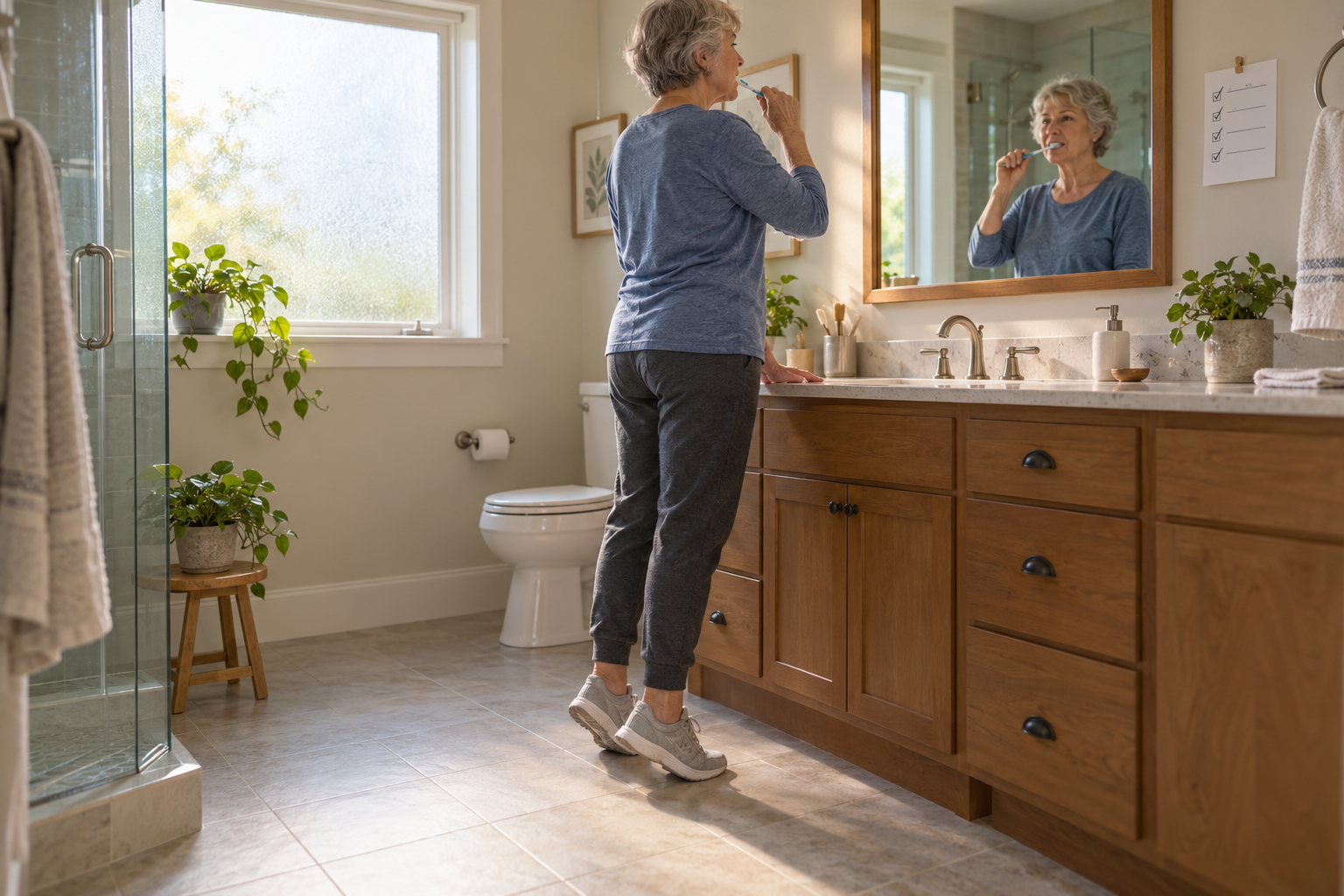
Recovering confident, pain-managed movement at home doesn’t need long workouts or special equipment. Small, consistent practices that focus on balance, hip and ankle control, and safe transitions can make daily tasks easier. Start by choosing two to three brief exercises you can do every day, and pair them with an ordinary routine like brushing teeth or making coffee. Over weeks, these tiny habits compound into measurable improvements in steadiness and comfort.
Start with a realistic baseline
Before you add anything to your day, note what feels difficult now: standing from a low chair, turning to reach, or walking a short distance without stopping. Use simple checks — time how long you can stand on one foot with support nearby, or count steps walked without pain increasing — to establish a starting point. This gives a clear reference so small gains become visible and encouraging. Keep these initial notes somewhere handy so you can compare them weekly.
When progress is slow, small wins still matter and are worth recording. If anything causes sharp pain or a sudden increase in symptoms, pause and seek professional advice.
Design short, targeted daily practices
Choose two or three 3–5 minute activities that address your main limitations and feel doable every day. Options include slow sit-to-stand repetitions from a chair at a steady pace, controlled heel-toe raises beside a countertop, and short walking bouts with intentional posture and relaxed breathing. Focus on quality: controlled movement, even tempo, and steady breathing matter more than speed or reps. Keep each session brief enough that it feels easy to repeat tomorrow.
Consistency beats intensity when rebuilding functional movement. Stick to the same two to three moves for several weeks so they become routine and measurable.
Make the home supportive and track simple progress
Small environmental tweaks reduce risk and encourage practice: place a sturdy chair in a clear spot for sit-to-stand work, keep a non-slip rug-free path for short walks, and ensure good lighting for turns and transitions. Use a visible checklist or a calendar to mark days you completed the mini-session; seeing a streak motivates continuation. If balance feels unsteady, keep a stable surface within reach during exercises and avoid multitasking while moving. Gradually increase challenge only when your baseline checks show consistent improvement.
Tracking and tiny environmental changes reinforce safer movement and make it easier to build confidence. Adjust the setup as your ability improves to keep progress steady.
Conclusion
Short, focused daily practices plus modest home adjustments help rebuild balance and comfort without overwhelming effort. Measure simple baselines, repeat small sessions consistently, and tweak the environment to support safer movement. Over weeks, these modest habits add up into noticeably steadier, more confident everyday movement.