A small, sensible change at dinner can help your muscles recover and leave you sleeping better the same night. Focus on a modest protein portion, a mix of slow carbs and vegetables, and a bit of healthy fat to round things out. You don’t need complicated recipes or long ingredient lists—pick reliable staples and repeat them. This approach keeps cooking simple while giving your body what it needs to rebuild.
Protein First, Easily
Prioritizing protein at dinner supports muscle repair without forcing a large plate. Aim for a palm-sized portion of lean meat, fish, tofu, tempeh, or a legume-based serving; that usually provides 20–30 grams, which fits most evening recovery needs. If you prefer dairy, a Greek-yogurt-based sauce or a small cottage cheese side works well and adds calcium for bone health. Timing matters less than total daily intake, but pairing protein with your evening meal helps overnight repair during sleep.
Keep preparation straightforward: grill, roast, or pan-sear with minimal seasoning and use leftovers for quick lunches. You’ll eat more consistently if the meal is easy and repeatable.
Carbs, Veggies, and Sleep-Friendly Choices
Include a modest serving of slow-digesting carbs—sweet potato, brown rice, quinoa, or whole-grain pasta—to refill glycogen without spiking blood sugar. Add fiber-rich vegetables for micronutrients and to support digestion; think roasted broccoli, sautéed greens, or a simple salad. A small portion of magnesium-rich foods like spinach, pumpkin seeds, or bananas can help with muscle relaxation and sleep quality. Avoid oversized portions and heavy sauces late at night to prevent discomfort that interferes with rest.
Hydration is part of the picture: a glass of water with the meal and a light electrolyte snack if you sweated heavily during training helps recovery. Keep caffeine and late alcohol to a minimum for better sleep.
Quick Dinner Builds and Swaps
Build dinners from interchangeable blocks so you can mix and match without thinking too hard: one protein, one grain or tuber, one vegetable, and a flavorful fat or sauce. That simple blueprint scales for cooks with ten minutes or an hour. Use sheet-pan roasting, one-pot simmering, or a stir-fry to speed things up and reduce cleanup. Leftovers can become bowls, wraps, or scrambled additions for the next day.
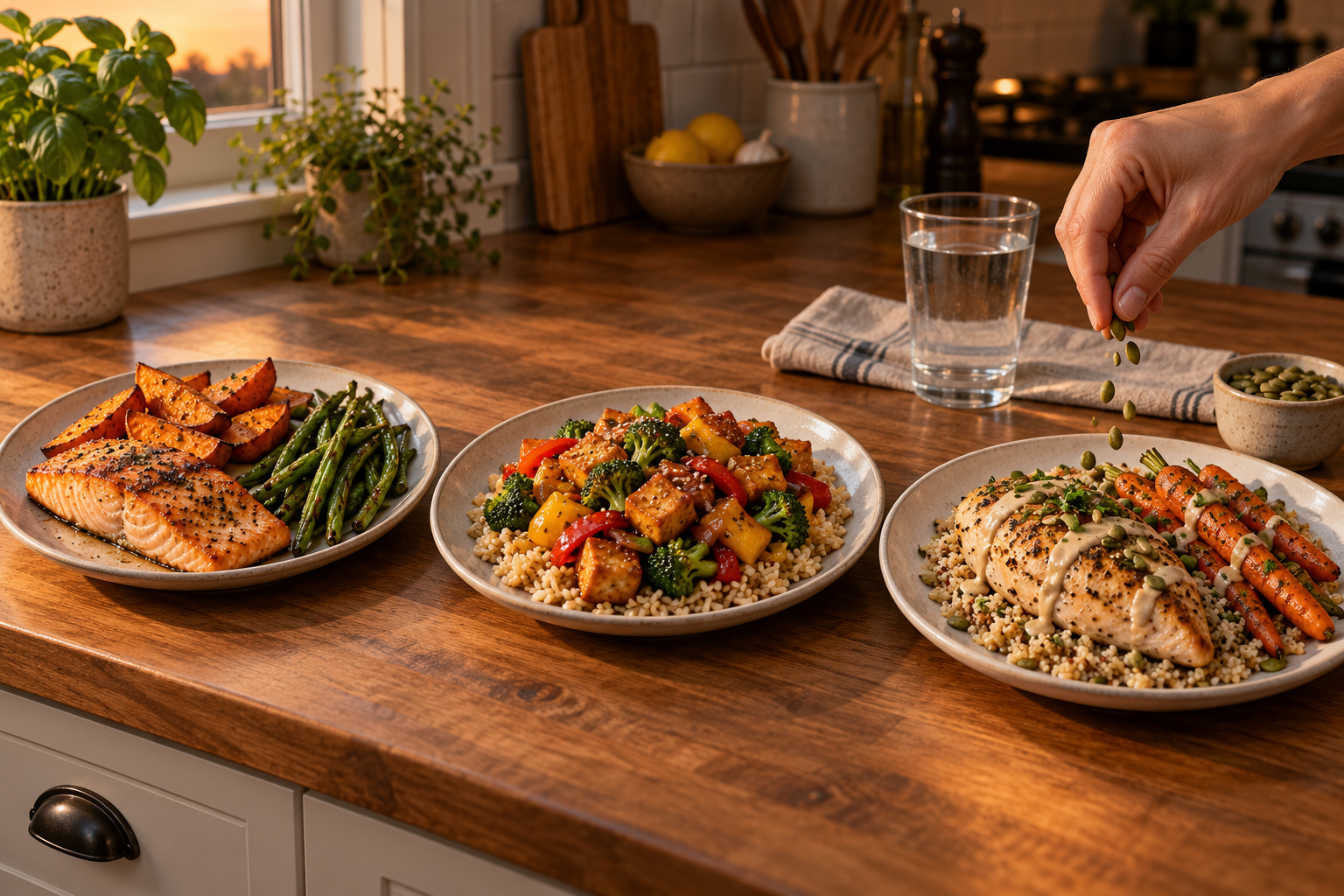
- Sheet-pan salmon, sweet potato wedges, and green beans.
- Tofu stir-fry with brown rice and mixed vegetables.
- Chicken, quinoa, roasted carrots, and tahini drizzle.
These swaps keep variety while sticking to the recovery principles, so you stay consistent long term. Simple repetition beats complicated one-off dinners.
Conclusion
Small, repeatable dinners—protein-forward with modest carbs and veggies—support overnight repair and better sleep.
Choose easy cooking methods and staple swaps to make recovery practical.
Consistency matters more than perfection; build meals you will actually eat.