

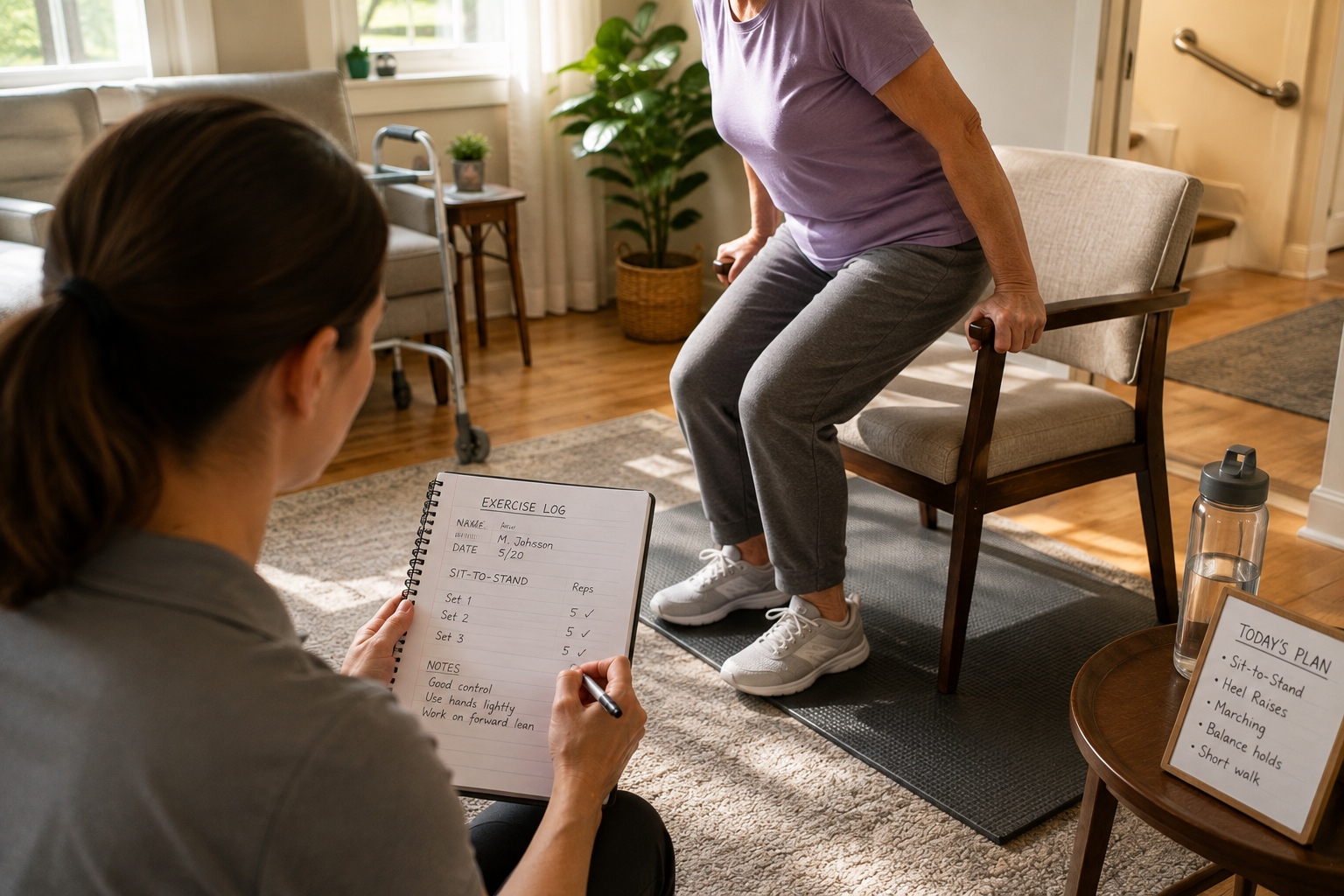
Recovering movement at home benefits from a clear, gradual plan tailored to current ability and comfort. Establishing safe progression prevents setbacks while building strength, balance, and confidence. Small, consistent steps are more effective than bursts of activity that may cause fatigue or pain. This article outlines a practical framework to plan and advance mobility work at home safely.
Assessment and Clear Goals
Begin by assessing baseline abilities: walking tolerance, range of motion, balance, and any pain or swelling. Note daily tasks that are currently difficult and rank them by priority so goals stay meaningful and achievable. Discuss limitations with a clinician if available, and factor in any precautions or restrictions. Establish short-term milestones that support a longer-term aim of independent, safe movement.
Setting measurable, realistic goals keeps motivation steady and progress trackable. Revisit these goals weekly to confirm they remain appropriate and adjust as needed.
Designing Progressive Home Exercises
Select a mix of gentle mobility, strengthening, and balance exercises that match your assessment and goals. Start with low-intensity movements and increase repetitions, range, or resistance slowly — typically no more than a 10% change per week. Focus on exercises that mimic daily tasks, such as sit-stand repetitions, step practice, and controlled weight shifts. Consistency matters more than intensity; short daily sessions often yield better outcomes than sporadic longer workouts.
- Begin with seated and supported standing exercises.
- Progress to unloaded standing balance and short walking intervals.
- Add light resistance or longer distances as tolerance improves.
Use simple timing and repetition targets to guide progression and reduce guesswork. Keep a brief exercise log to document changes and any symptoms.
Managing Environment and Safety
Prepare your home to reduce fall risk and support practice by clearing pathways and securing loose rugs. Use stable furniture or handrails for support during early balance work and ensure lighting is adequate for movement sessions. Choose footwear or go barefoot if safe and appropriate to improve proprioception. Keep assistive devices nearby and learn safe techniques for transfers and getting up from the floor.
- Organize a consistent practice space with needed equipment within reach.
- Remove tripping hazards and improve surface traction where possible.
Prioritizing a controlled, clutter-free environment lets you focus on movement quality rather than avoiding obstacles. Regularly reassess the space as your mobility changes.
Tracking Progress and Adjusting
Track objective markers like distance walked, number of repetitions, and perceived exertion to gauge improvement. Note any increases in pain, fatigue, or instability and pause progression until you consult a professional if issues persist. Celebrate small gains to maintain motivation and use setbacks as information to refine the plan rather than as failures. Periodic reassessment helps ensure exercises remain relevant and challenging.
Adjust frequency, intensity, or exercise selection based on progress and comfort. Gradual, evidence-informed changes sustain long-term mobility improvements.
Conclusion
Build a gradual, measurable plan that matches current ability and specific daily goals.
Prioritize safety, consistency, and environment to support steady gains.
Review progress regularly and adapt the plan to maintain forward momentum.










