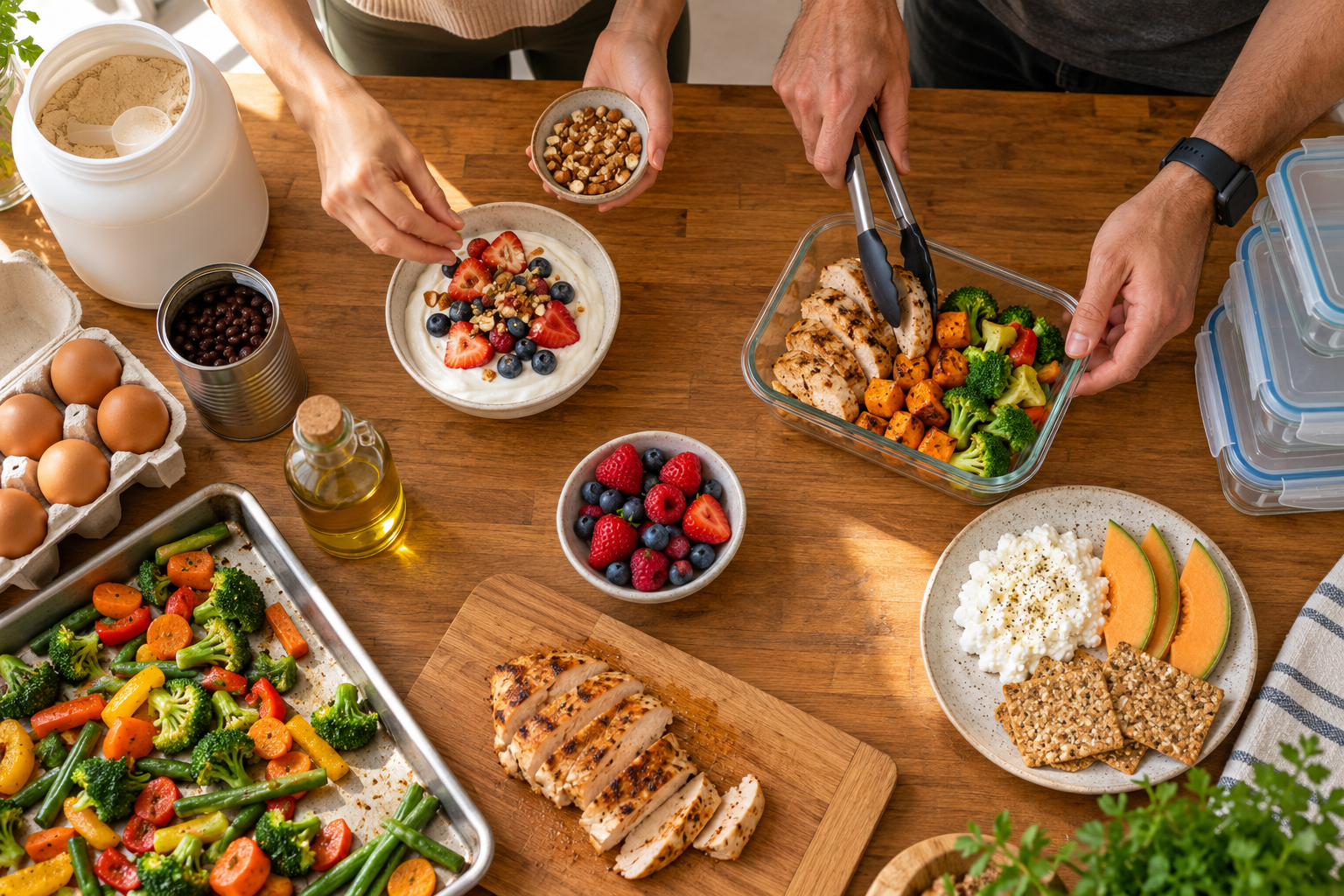
Small changes at the plate can make your at-home training feel easier and more consistent. Focused tweaks—more protein here, a bit more starch there—give steady energy without overcomplicating grocery lists. This piece lays out simple, usable meal fixes you can start tonight. No fancy ingredients, just reliable swaps that support performance and recovery.
Quick Protein-First Breakfasts
Start with a protein priority rather than an elaborate recipe. Think Greek yogurt or cottage cheese topped with fruit and a handful of nuts, or scrambled eggs with spinach and a slice of toasted whole-grain bread. These choices provide amino acids to limit morning muscle breakdown and carbohydrates to top off glycogen stores for a midday session. If mornings are rushed, a simple smoothie with milk, a scoop of protein powder, banana, and oats works as a portable option.
Stick to familiar combinations you enjoy so consistency is realistic. Small prep habits, like portioning fruit and nuts the night before, remove friction and make sticking with protein first easier.
Midday Meals That Don’t Slow You Down
Midday plates should balance protein, fiber, and moderate carbs so you avoid the post-lunch slump. A bowl of canned tuna or grilled chicken over a bed of mixed greens, roasted sweet potato cubes, and a drizzle of olive oil fits the bill. Grain bowls with quinoa, roasted vegetables, and a boiled egg provide slow-burning energy without leaving you bloated. Keep sauces light and portion starch to the level of your activity—larger portions on heavier training days, smaller on rest days.
Batch-cook a few bases like roasted vegetables, grains, and a simple protein to mix-and-match during the week. That way you can assemble balanced lunches in minutes rather than making snap poor choices.
Simple Post-Workout Dinners and Snacks
After a training session, aim to combine protein and carbohydrate within an hour when you can. Examples: a quick stir-fry with tofu, mixed veggies, and brown rice; a turkey sandwich on whole-grain bread with a side salad; or cottage cheese with sliced melon and whole-grain crackers as a light option. Include a colorful vegetable or salad to supply micronutrients and help with recovery.
Keep a handful of reliable staples—eggs, canned beans, frozen vegetables, plain yogurt—so you can rebuild a meal without a shopping trip. These staples make it easy to prioritize repair and replenishment without a fuss.
Conclusion
Practical plate tweaks are what keep at-home training consistent and enjoyable. Focus on protein-first choices, sensible portions of carbs, and simple prep routines. With those habits your meals will better support your workouts and recovery.