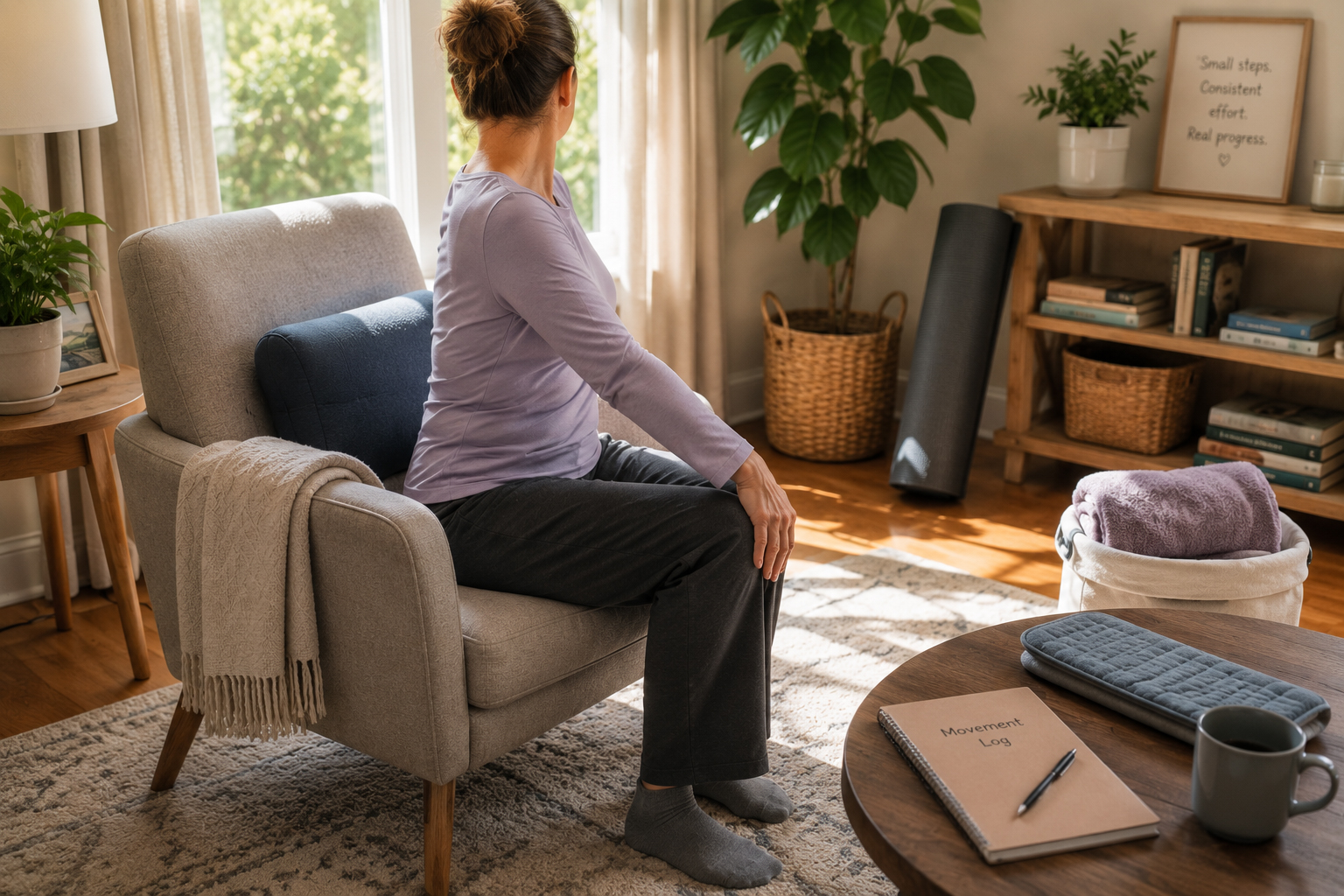
Chronic musculoskeletal discomfort often responds best to steady, practical changes made at home.
Small, consistent adjustments in movement, rest, and environment can reduce strain and build resilience.
This article outlines actionable practices you can apply without special equipment or medical treatments.
Follow these steps to create a safer daily rhythm and support gradual improvements in mobility.
Understanding gentle home care
Start by framing recovery as a gradual process focused on consistency rather than quick fixes. Learn to notice patterns: which tasks provoke stiffness, and which ease discomfort. Aim for neutral alignment during common activities and break tasks into shorter, manageable segments. Simple awareness reduces unnecessary loading and lowers the chance of flare-ups.
Begin with realistic goals that fit your day. Small, repeated successes reinforce habit and reduce anxiety about movement.
Movement, pacing, and micro-practices
Build a daily movement menu that mixes gentle mobility, low-load strengthening, and short walks. Use micro-practices: two or three minute mobility breaks every hour, slow controlled basic exercises, and light resistance when tolerated. Emphasize pain-guided progression: discomfort that subsides within hours is acceptable, but avoid sharp or worsening pain. Maintain variety to support endurance and joint health.
Consistency matters more than intensity in early stages. Adjust frequency and load based on how your body responds.
Environment, ergonomics, and recovery
Optimize frequently used spaces to reduce awkward postures: raise work surfaces, use supportive seating, and keep commonly needed items within reach. Organize rest and sleep setups to maintain neutral spine alignment and reduce morning stiffness. Incorporate short recovery rituals such as gentle stretching or heat application after activity, as those often aid unwinding and confidence. Simple changes can have outsized effects over time.
Document what setup choices help most. Gradually standardize effective adjustments across your living spaces.
Tracking progress and knowing when to seek advice
Keep a simple log of activity, perceived effort, and symptom patterns to learn what helps and what provokes setbacks. Note duration, intensity, and any changes after treatments or setup adjustments so you can spot trends over weeks. Use clear, measurable short-term goals — for example, increasing tolerated walking time by five minutes each week — and celebrate small gains to maintain motivation. If progress stalls, revisit pacing and exercise choices rather than pushing through persistent worsening.
Seek professional advice if you experience persistent worsening, new neurological symptoms, or loss of function. Early consultation can help refine a program and rule out issues that benefit from targeted assessment.
Conclusion
Small, steady home practices build durable comfort over time.
Focus on consistent, manageable steps that respect your current tolerance.
With thoughtful pacing and a supportive setup, daily movement becomes less daunting.